Precision Tweezers
Stainless Steel Tweezers
| Product family | Precision hand tweezers |
|---|---|
| Main construction | Stainless steel |
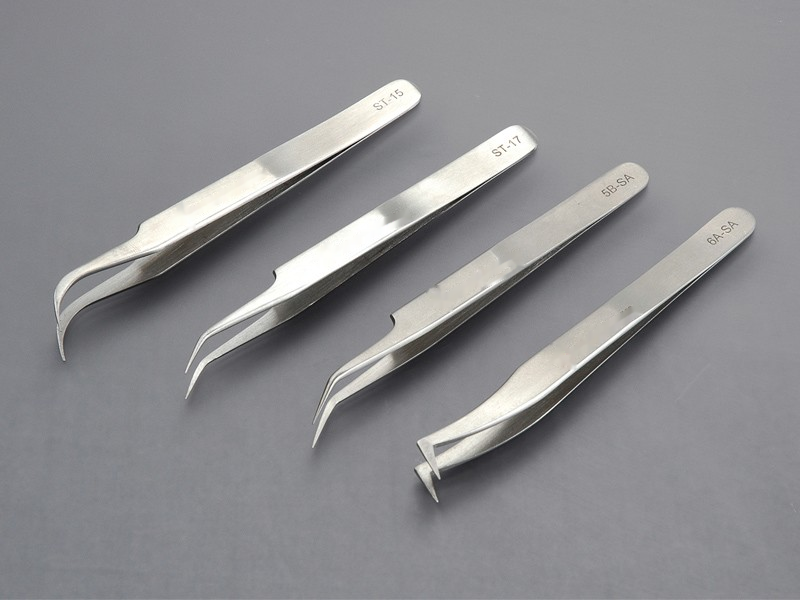
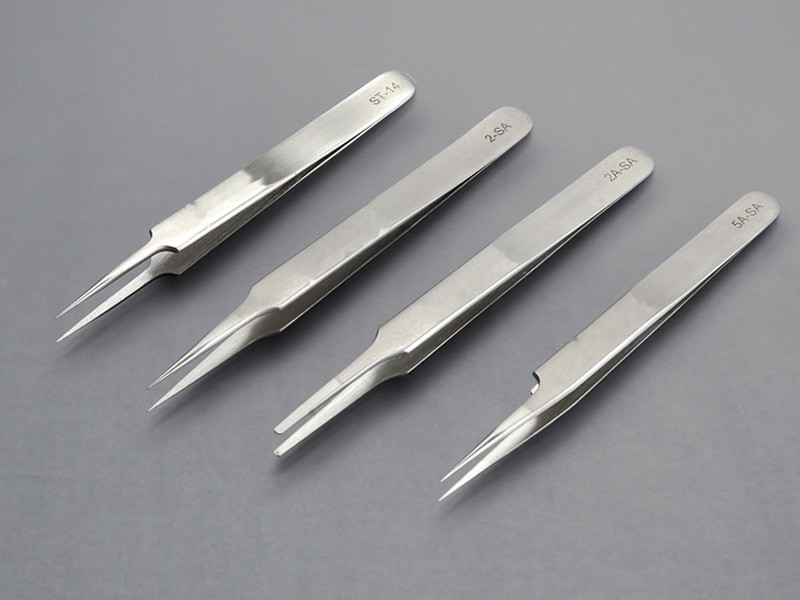
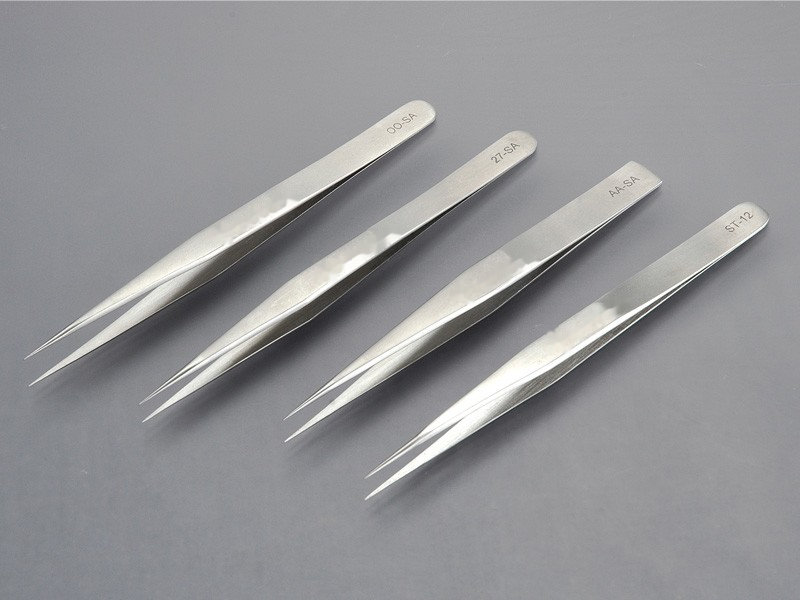
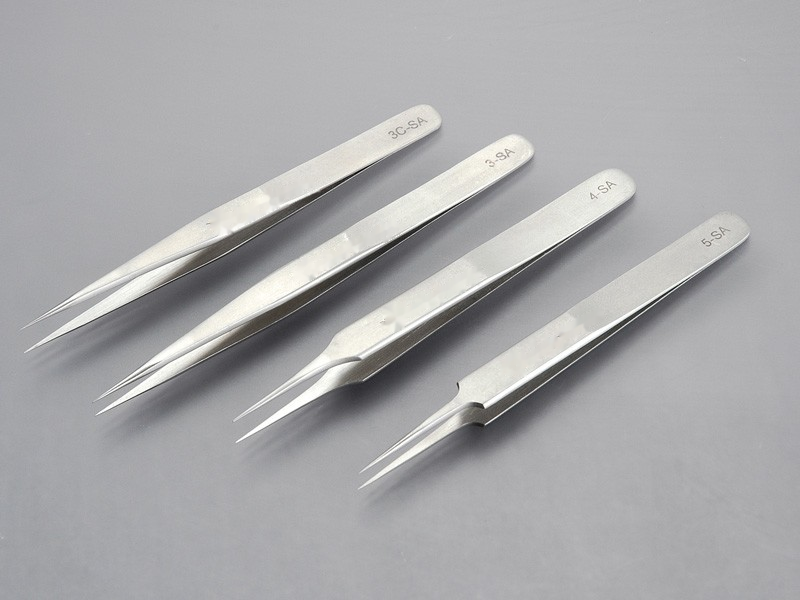
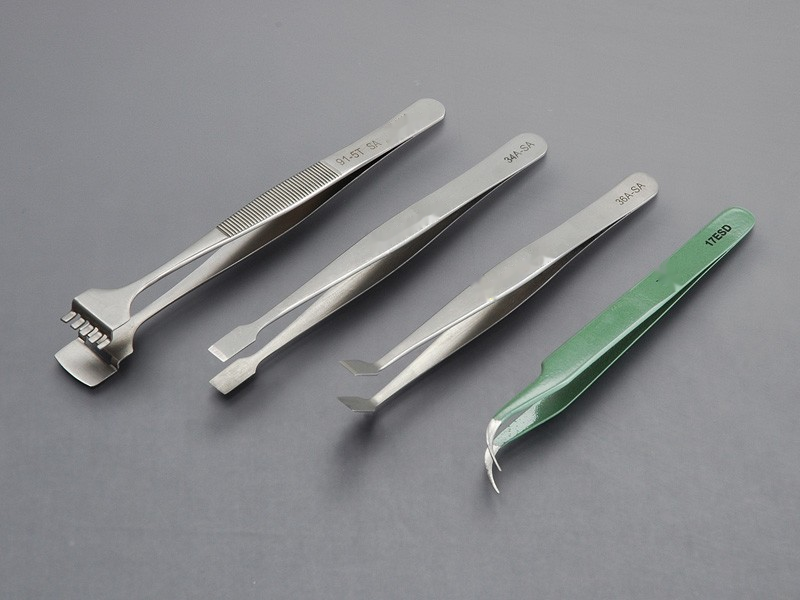
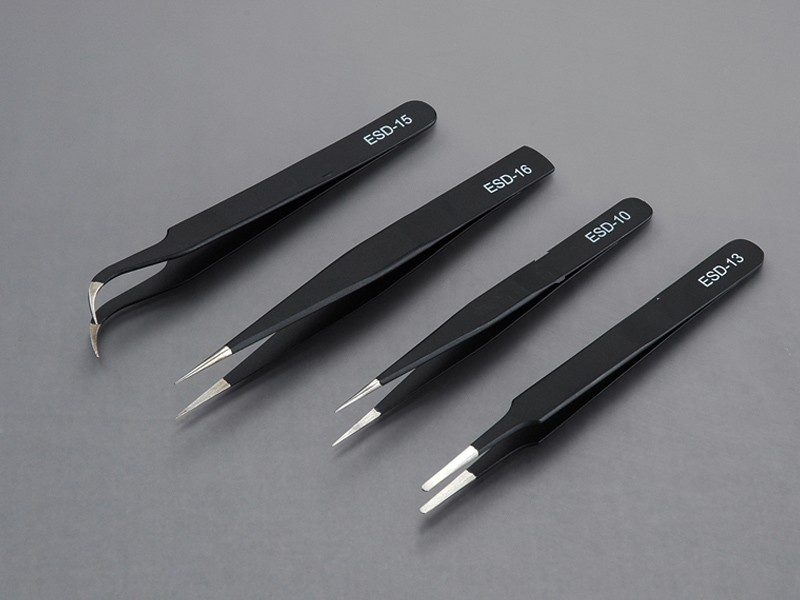
| Tip forms | Curved, straight, fine-point and flat styles |
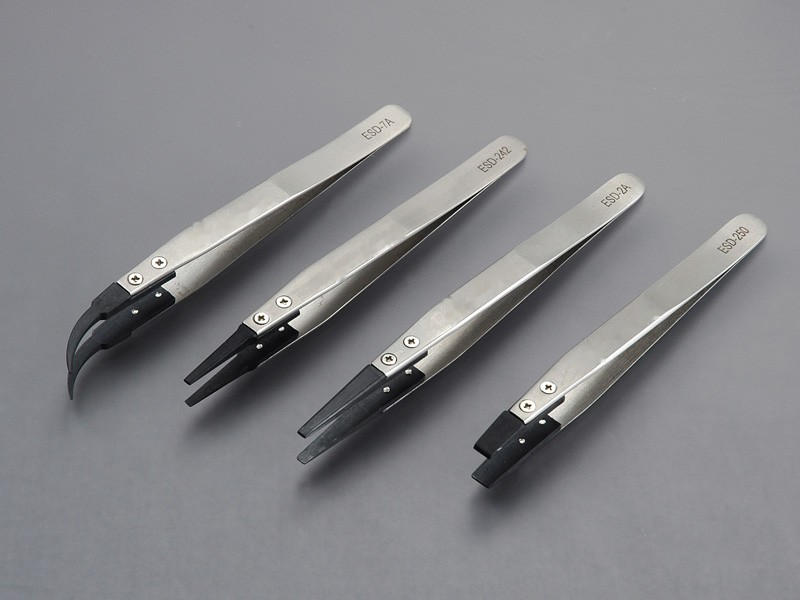
| Additional constructions | Coated handles and replaceable-tip variants |
| Operation | Manual spring-arm grip |
Tool lengths, alloy grade and magnetic or chemical resistance vary by selected style. ESD suitability must be established for the specific tool and handling process.
Tip style, grip construction and supply quantities can be selected for your components.
Stainless steel tweezers provide controlled access to small components that are difficult to grip with fingers. The range includes several tip geometries; selecting the contact shape is as important as selecting the overall tool length.
Choose the contact shape before the handle
A fine point reaches between closely spaced parts, but concentrates force into a very small area. A broader tip spreads the grip across a component edge and can be easier to use for a flat part. Curved tips change the approach angle so the operator can work beside a taller feature without holding the wrist directly above the contact point.
| Tip arrangement | Useful handling situation | What to check on the part |
|---|---|---|
| Straight fine point | Access into narrow spaces | Point alignment and risk of marking |
| Curved point | Angled access around obstructions | Clearance throughout the lifting motion |
| Flat or broad end | Supporting a wider edge | Contact width and grip without slipping |
| Replaceable nonmetal tip | Separating handle stiffness from contact material | Tip material, fasteners and replacement availability |
Keep material properties separate
Stainless steel describes a material family, not one universal magnetic or chemical behavior. A tool used next to a magnetically sensitive part may need a particular alloy; a tool used with a cleaning chemical needs compatibility with that chemical and its concentration. Handle coating does not establish the properties of an exposed metal tip.
Ideal-tek's material guidance distinguishes tweezer materials by application. Select the actual alloy or tip formulation for the job instead of treating every pictured style as interchangeable.
Check alignment during routine use
Look at both tips under the magnification used for the task. They should meet in the intended contact area without crossing or leaving a gap that lets a component rotate. Use the lowest grip force that holds the part reliably. Bent tips, burrs and adhesive deposits can change the contact behavior even when the handle still looks serviceable.
For sensitive electronic parts, include the selected tool in the workstation's ESD controls. A metal tool is not a substitute for personnel grounding, and a coated handle alone does not demonstrate a controlled discharge path.
Product views and details
Related products
Tip style, grip construction and supply quantities can be selected for your components.