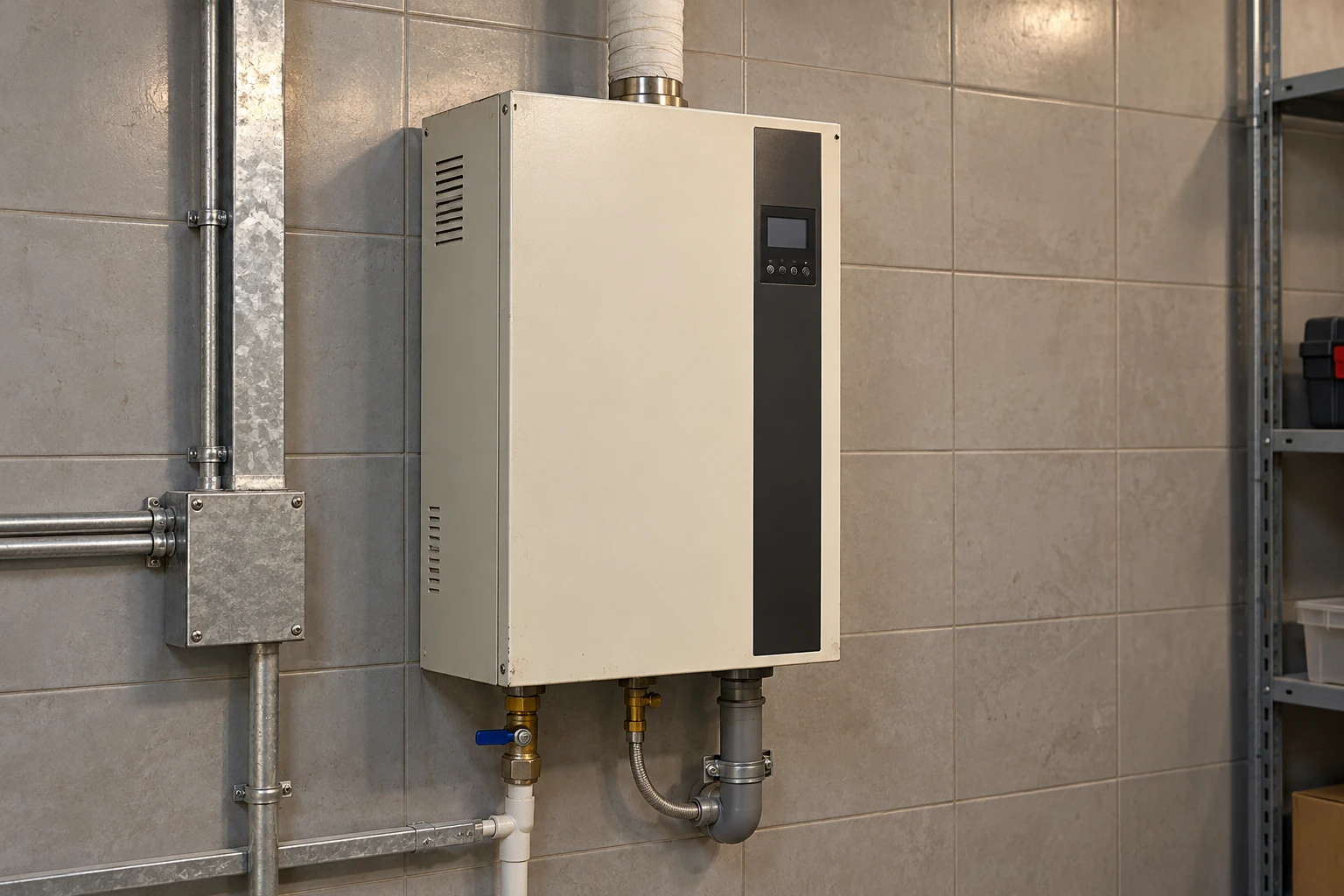
Steam Humidifiers
steam humidifiers commercial
| Electric generation | Electrode cylinder or resistive tank configuration |
|---|---|
| Compact electrode options | 5 or 9 kg/h; cabinet 371 × 221 × 523 mm (W × D × H) |
| Medium electrode options | 14 or 22 kg/h; cabinet 452 × 302 × 612 mm (W × D × H) |
| Larger electrode options | 34 or 45 kg/h; cabinet 505 × 340 × 650 mm (W × D × H) |
| Control connection | External demand or onboard humidity control; building-system interface by selection |
| Existing distribution | Retain only after checking capacity, steam compatibility and condition |
| Water supply | Compatible conductivity for electrode operation; treated water where supported |
| Package scope | Generator, selected distribution parts, controls and service accessories |
Cabinet size does not establish a drop-in replacement. Mounting points, steam connections, electrical supply and component-removal space are checked separately. Output and utility requirements are established in the selected equipment specification.
Commercial steam humidifier packages can be configured to suit a replacement project or a new building installation.
When comparing steam humidifiers for commercial buildings, the purchase includes more than a cabinet. A successful replacement fits the available services, works with the existing air system and gives the facilities team a manageable service routine. Similar dimensions or output figures do not establish interchangeability.
Begin with what the existing installation must do
An old unit's nameplate is useful information, but it does not explain whether the building still needs the same duty.
Review changes to tenancy, operating hours, outside-air volume and the use of the served rooms. A replacement selected only to reproduce the original rating can preserve an old oversizing problem or miss an increased requirement.
Also identify why replacement is being considered. A failed component, unavailable consumable, poor access and repeated duct wetting are different problems. The replacement scope should resolve the cause that matters to the operator.
Compare what each package actually includes
| Package element | Question for comparison |
|---|---|
| Generation | Is the heating method compatible with the water supply and the building's service routine? |
| Distribution | Are the steam connection, lance or manifold and required condensate components included? |
| Control | Who provides the humidity sensor, airflow interlock, high-limit device and any building-system connection? |
| Installation | Does the scope include new supports, electrical work, drain adaptation and access provisions? |
| Maintenance | Which parts are replaceable consumables, which require cleaning and which must remain accessible? |
This comparison prevents a low initial equipment price from obscuring missing work. It also helps distinguish items that can be retained from those that need replacement.
Retain useful hardware with a reason
An existing steam distributor may remain useful if its capacity, condition and connection arrangement suit the new generator. Check its position against current airflow and the available distance to downstream obstructions.
A sound-looking hose or pipe is not automatically suitable for a new duty. Steam rating, diameter, routing, support and condensate handling all belong in the compatibility review. For duct-specific considerations, see commercial duct mounted steam humidifiers.
Match the controls by function
Two terminals labelled for demand can use different signal arrangements. Establish the required signal type, controller responsibility and response when communication is lost.
Remote monitoring is useful when it gives the operator meaningful status and service information. It does not replace the physical airflow and humidity-limit protections required by the installed system.
Include the maintenance model in the buying decision
An electrode cylinder replacement and a resistive tank cleaning involve different materials, skills and shutdown arrangements. Compare them against the staff available at the building and the hours during which access is practical.
Water treatment can change this comparison, but it brings its own maintenance responsibility. The proposal should state the intended feed-water condition and identify who maintains the treatment equipment. A treated-water connection is only useful when the selected humidifier supports it.
Plan the changeover and handover together
Confirm the removal route for the old cabinet and the fixing and service space for the new one. Identify the interruption window, any areas that need continued humidity control and the operating information needed before the work starts.
After installation, the handover should show how humidity demand, fan operation and protective limits interact. It should also identify the normal drain sequence, service indications and the components the facilities team will need later.
The commercial operating guide explains how occupancy and ventilation influence selection. For procurement, provide the current installation details alongside the target condition and any recurring problem. This supports a package that fits both the building and the people who operate it.
Commercial steam humidifier packages can be configured to suit a replacement project or a new building installation.