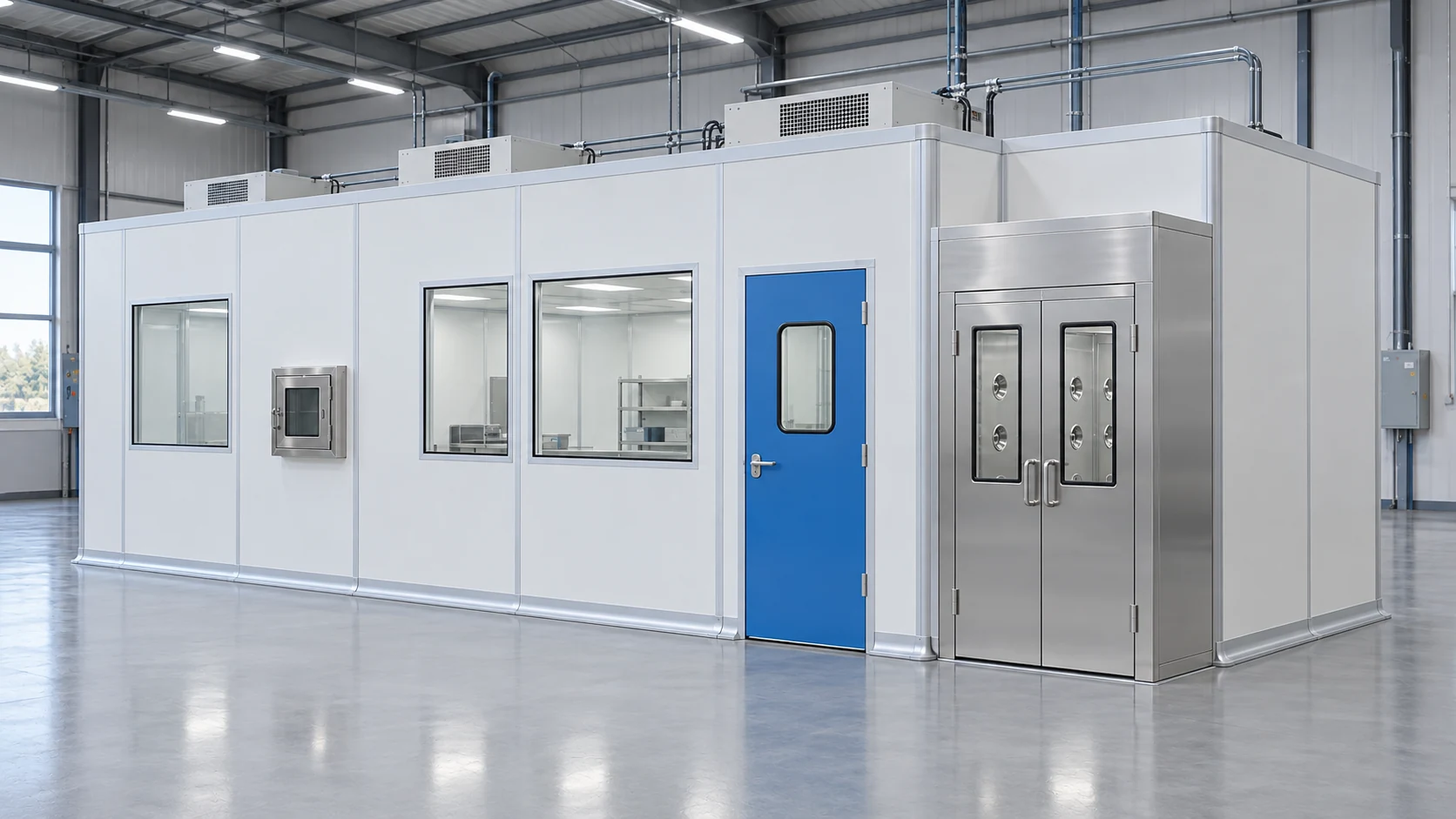
Design for defined changes, not unlimited flexibility
List the changes that are reasonably expected: equipment replacement, additional stations, a different material route or altered operating hours. Each change has a different effect on the room. Moving a bench is not equivalent to adding a process that needs exhaust.
Group compatible service connections where they remain accessible. Reserve practical equipment-removal routes and decide which partitions can be altered without disturbing the entire enclosure. Keep control settings and operating requirements documented.
Treat a production change as a review point. The cleanroom may need updated airflow assessment, cleaning procedures or performance checks even when the walls remain untouched. A flexible design makes those changes manageable; it does not remove them.
Configuration decisions
| Decision | What to define |
|---|---|
| Product mix | Identify which process changes are genuinely anticipated. |
| Equipment changes | Keep installation and removal paths available. |
| Utility changes | Plan accessible connection zones and review capacity. |
| Operating changes | Update procedures and acceptance requirements when the process changes. |
Can movable partitions alone make production flexible?
They help only one part of the problem. Equipment access, service capacity, material flow and the new environmental requirements also determine whether a change is practical.