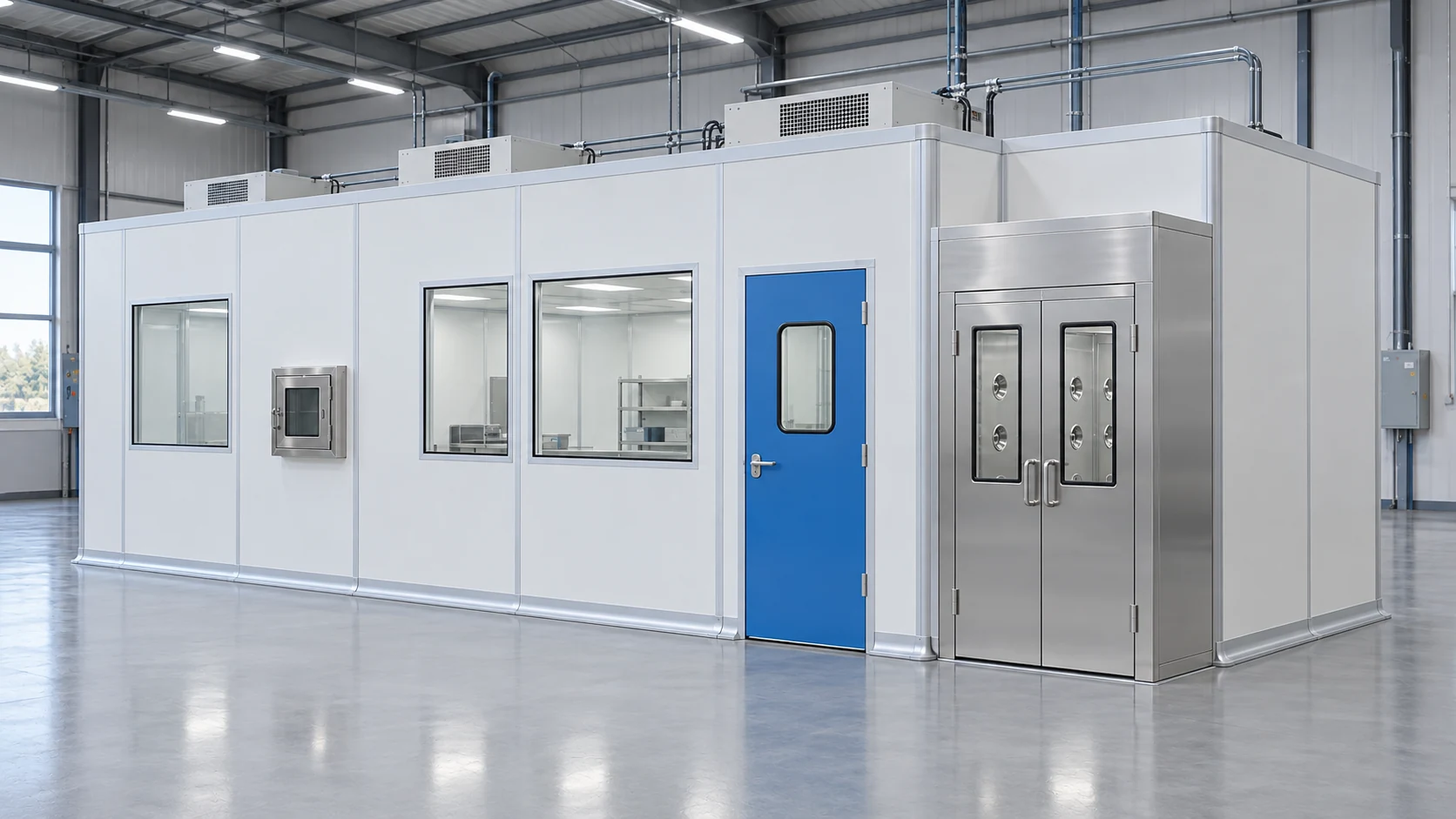
Reserve the next stage before using the first
Identify which wall could become the connection to a future area and avoid placing permanent obstacles along it. Review whether future work would interrupt the current personnel entry, return-air path or material flow.
Services need the same phased approach. Record the initial demand and the assumptions for the next stage, then ask the mechanical and electrical teams what capacity or routes must be reserved. Empty floor area alone does not make a room expandable.
Prepare a changeover sequence that protects ongoing work. The fastest option is the one whose dependencies are resolved early, not necessarily the one with the fewest enclosure components. Compare options by the interruption they require and the acceptance work needed after connection.
Configuration decisions
| Decision | What to define |
|---|---|
| Expansion boundary | Keep a defined connection face accessible. |
| Service strategy | Reserve practical routes and review future demand. |
| Operational continuity | Plan temporary segregation and production interruption. |
| Acceptance | Include the checks required after the room arrangement changes. |
What distinguishes scale-up planning from buying a larger room?
Scale-up planning defines how later capacity is added while the current process remains manageable. A larger initial room may avoid one extension but does not automatically provide suitable future services or flow.