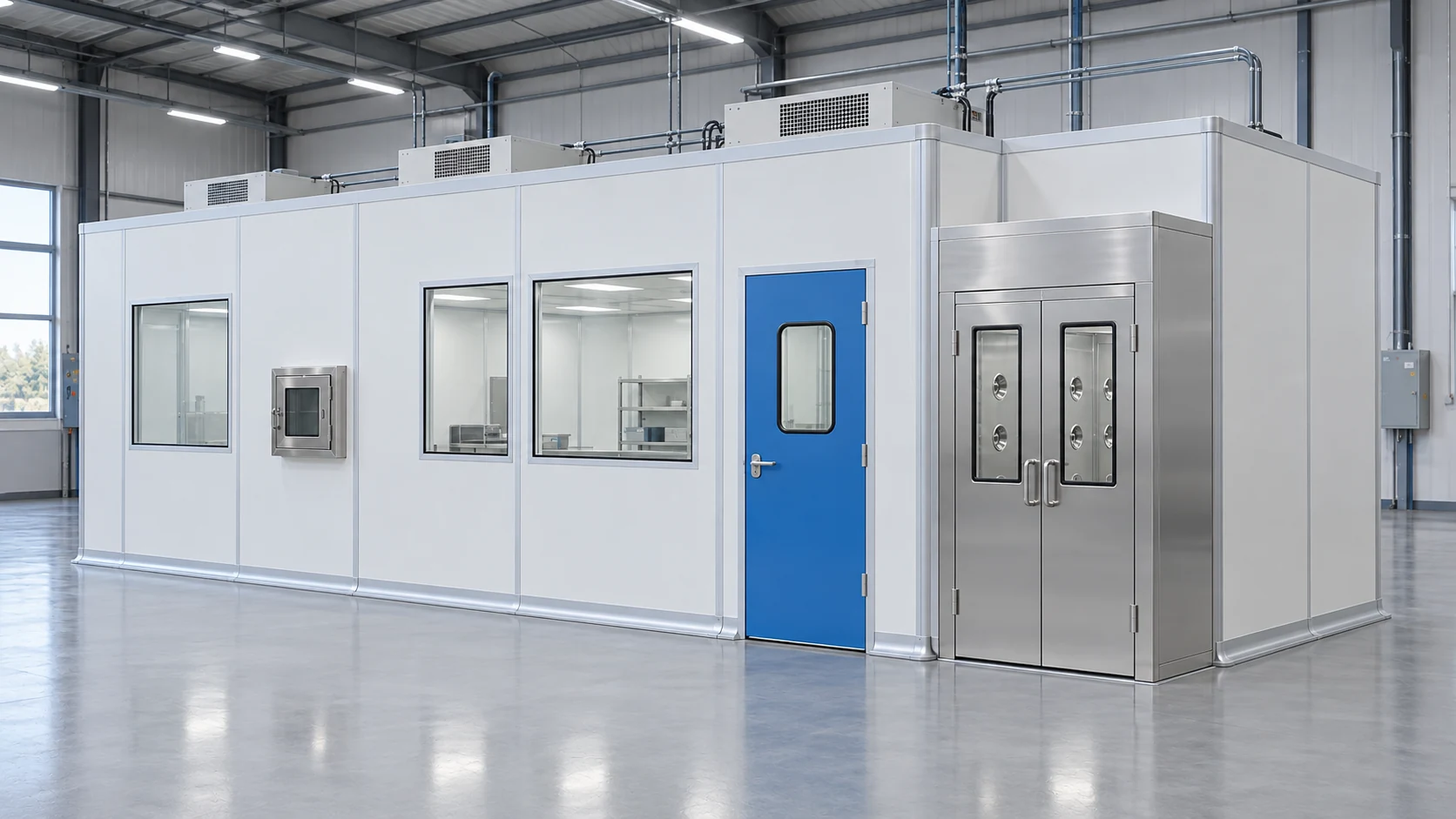
Ask questions that reveal the design assumptions
Ask where the contamination risk occurs and what evidence supports the proposed room boundary. Then ask how the system will operate when doors open, production stops or equipment needs maintenance. These questions reveal assumptions that a normal-operation drawing may hide.
Request a clear statement of the classification condition, thermal requirements and process-exhaust interfaces. Different specialists may use the word complete to describe different scopes. Resolve that ambiguity with a responsibility schedule.
Finally, agree what information is still needed from the user. Equipment heat data, cleaning agents, product exposure and site dimensions cannot reliably be replaced by generic assumptions. A short decision log keeps later changes traceable without burying the project in unnecessary paperwork.
Configuration decisions
| Decision | What to define |
|---|---|
| Process question | Which exposed step determines the environmental requirement? |
| System question | What operating assumptions underpin the selected air and enclosure arrangement? |
| Scope question | Which party owns each utility, test and handover document? |
| Change question | What happens if equipment, occupancy or the product changes? |
What makes a technical proposal reviewable?
A defined scope, stated assumptions, coordinated drawings and measurable acceptance criteria. Claims of expertise alone do not explain how a configuration meets the project requirements.