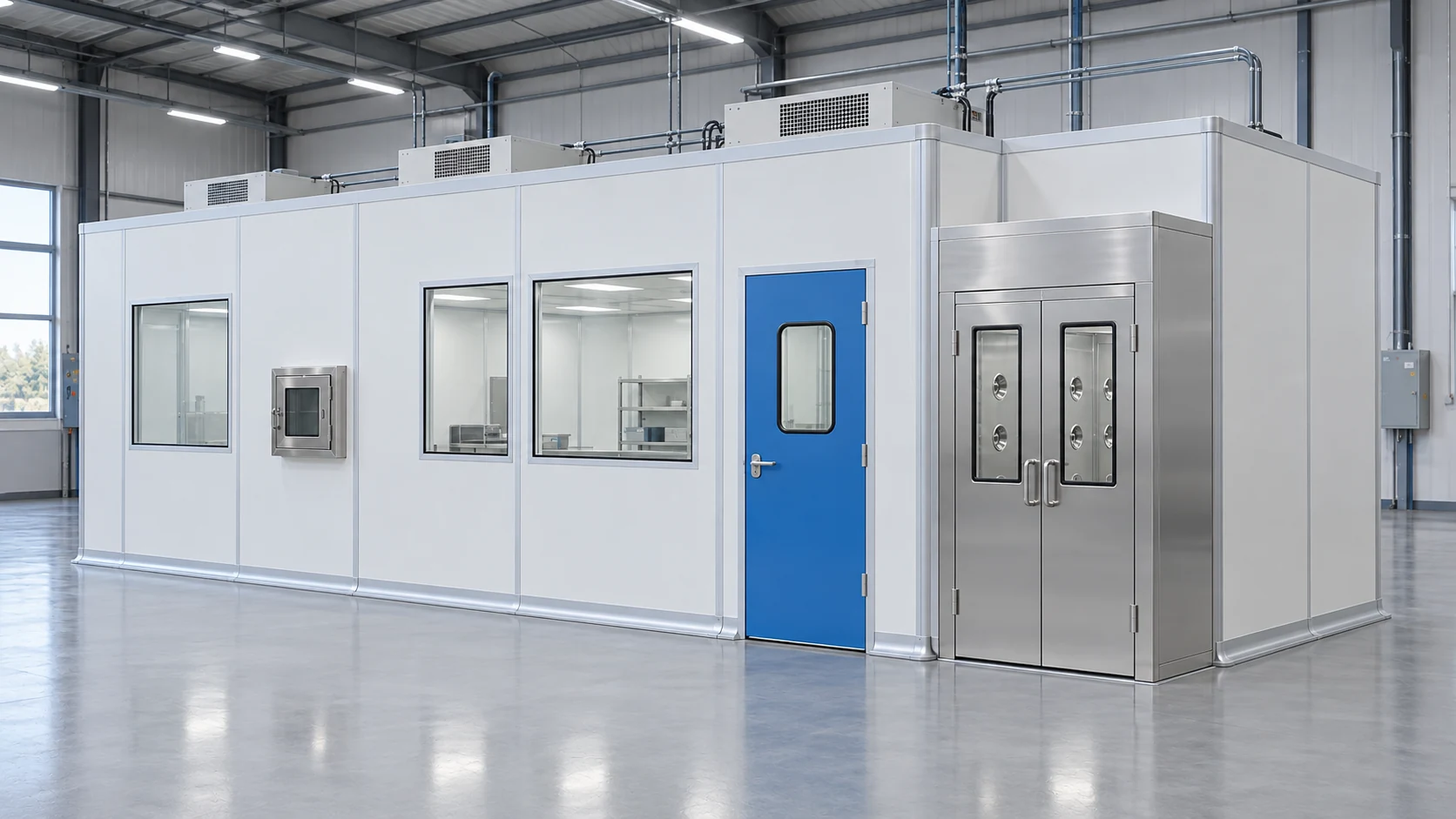
Evaluate adaptability with specific research needs
Collect the intended instruments, sample movement and service requirements from the research team. Separate confirmed equipment from future possibilities. A flexible room should address plausible changes rather than promise compatibility with any experiment.
Review delivery access, shared utilities and the available overhead space with campus facilities. Academic scheduling can also affect when disruptive work is practical. Compare options using the same assumptions for site integration and acceptance.
Include documentation and maintenance access in the selection matrix. A configuration that is convenient for the first instrument may be awkward when it is replaced. Preserve the route needed to remove large equipment without unplanned enclosure changes.
Configuration decisions
| Decision | What to define |
|---|---|
| Research range | Identify confirmed and reasonably anticipated uses. |
| Building interface | Review shared services and installation access. |
| Equipment change | Compare replacement routes and adaptable service positions. |
| Selection evidence | Request drawings and a clearly defined acceptance scope. |
What does flexibility mean in a laboratory comparison?
It should describe specific equipment and layout changes that can be accommodated, along with the work and checks they require. An unqualified flexibility claim is difficult to evaluate.