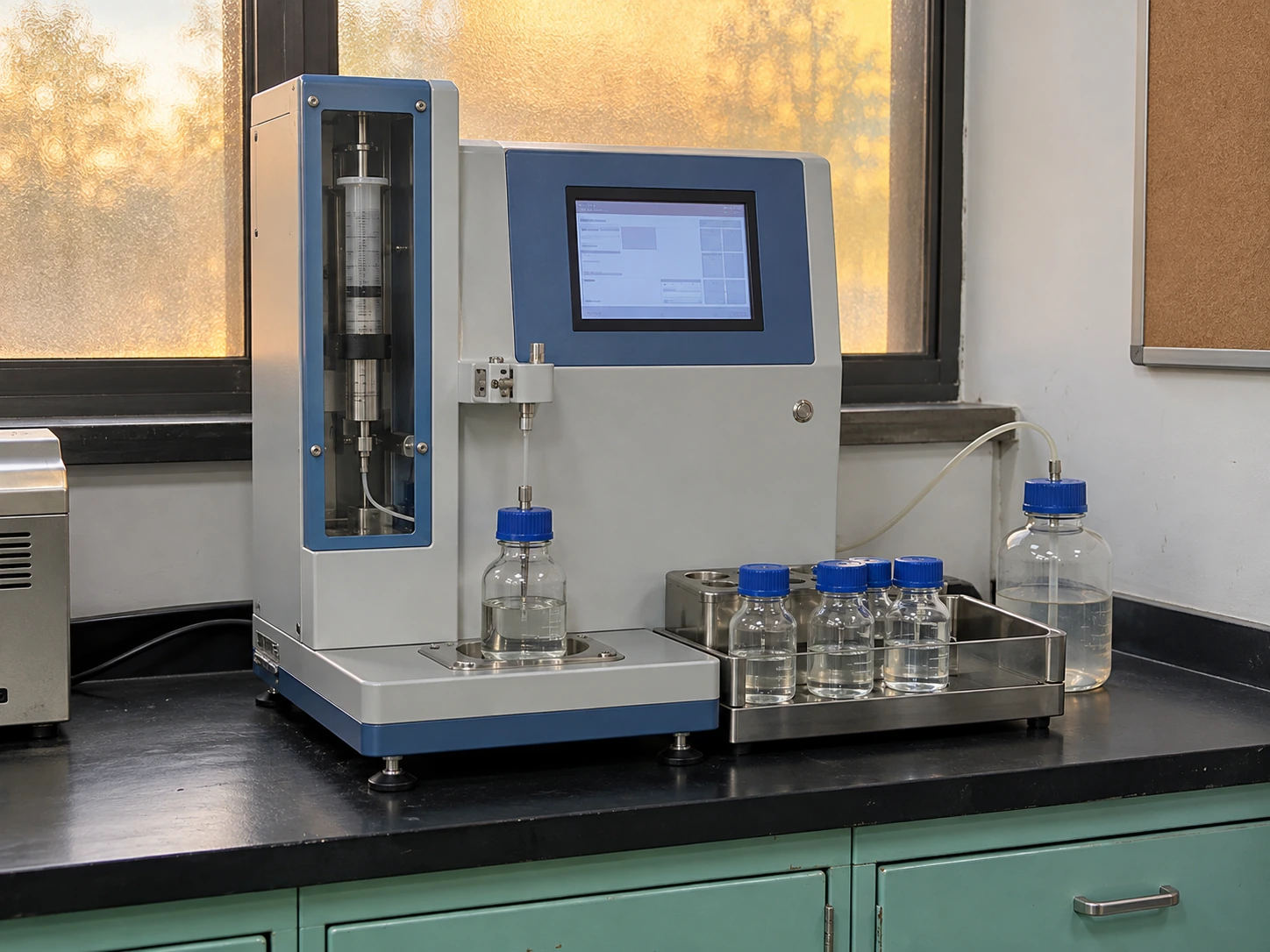
Liquid Particle Counters
liquid particle counters for laboratory
| Brand | shengtongjh |
|---|---|
| Bench dimensions, W × D × H (mm) | Open syringe-sampling format: 400 × 280 × 450; pressure-assisted format: 400 × 280 × 600 |
| Syringe options | 1, 10 or 25 mL, selected with the intended sampled volume, rinsing requirement and flow arrangement |
| Counting channels | 16 or 32 size channels, depending on the selected instrument and sensor |
| Optical method | Light extinction or light scattering; size thresholds and calibration evidence matched to the laboratory method |
| Data workflow | Sample and method identification, individual run records and export; controlled access and audit functions specified where required |
Dimensions are outer instrument envelopes and exclude external pressure equipment, bottles and service clearances. Syringe capacity is not a guaranteed minimum sample volume. Software functions and calibration scope must match the selected configuration.
Bottle handling, sampling connections and data-management options can be customized to the laboratory's liquids and working procedure.
Liquid particle counters for laboratory work need to fit a controlled sample-handling routine. The counter supplies optical measurements; the laboratory must preserve sample identity, manage preparation and carryover, and connect each result to the method and calibration used.
Give the sample a controlled route through the bench
Arrange incoming samples, prepared bottles and completed measurements as separate stages. A clear bench sequence reduces cap exchanges, sample mix-ups and uncertainty about which container has already been opened. Assign an identifier before preparation and keep it attached to the record when data are exported.
The bottle, closure and pickup arrangement belong to the method. A container that is convenient for general storage may contribute enough particles to dominate a low-level measurement. Select containers and handling practices appropriate to the intended background level, and protect openings from the surrounding work area.
Prepare a representative sample without changing the question
Particles can settle during storage, so a small withdrawn portion may not represent the bottle as a whole. Appropriate homogenization helps distribute the material before sampling. The preparation must also suit the particles of interest: vigorous treatment that breaks an agglomerate may change the result the laboratory intended to measure.
Mixing and transfer can introduce bubbles, which can interfere with optical counting. Use a defined preparation sequence rather than an improvised combination of shaking, ultrasonic treatment and waiting. Record meaningful changes in preparation or holding time. A convenient procedure is useful only if it preserves the relevant sample characteristics.
For water samples, distinguish the condition of the supply from contamination introduced at the outlet or bottle. A laboratory ultrapure water system and its sampling accessories form part of the wider investigation, while the counter measures the liquid actually delivered to its sensing cell.
Use blanks and run sequences to explain unexpected results
A blank establishes the background
A suitable blank helps reveal contributions from the liquid, container and sampling path. It needs a defined purpose and preparation of its own. A blank that bypasses the sample bottle cannot answer every question about bottle contamination.
Carryover links one sample to the next
A concentrated sample can leave material in tubing, valves or the sensing cell. Plan compatible rinsing and a check that shows when the path is ready for the next sample. A fixed rinse volume should not be assumed adequate for every combination of liquids.
Replicates reveal a pattern
A steadily falling sequence may suggest carryover or settling; erratic values may point toward unstable handling or bubbles. These are reasons to investigate, not automatic diagnoses. Keep the individual runs instead of retaining only an average that hides the pattern.
Budget the available sample
The volume counted by the sensor is only part of the liquid needed for a test. Preparation, tubing fill, initial flushing, repeat runs and unusable liquid remaining in the container can all consume sample. Decide how many meaningful measurements are required before choosing a small-volume arrangement.
A smaller syringe does not eliminate the volume needed by the rest of the path. Check that the sampling probe can reach the intended liquid level and that the measured portion remains representative. Where dilution is part of an established method, retain its factor and account for the diluent's particle background.
Retain settings with the result
A useful record connects sample identity to channel thresholds, reporting units, sampled volume, instrument identification and the method used. Preserve the raw run data and any documented reason for repeating or excluding a measurement.
Software access controls, audit trails and review functions should be specified according to the laboratory's requirements. Their presence in a menu does not by itself establish a validated workflow or regulatory compliance. Confirm the delivered functions and how records will be stored and reviewed.
Match calibration evidence to the optical method
Calibration and verification records should identify the sensor, applicable method, size range and relevant measurement checks. ISO 21501-2 addresses light-scattering liquid-borne counters; ISO 21501-3 addresses light-extinction counters. Selecting a method reference does not establish that a particular instrument complies, and neither reference supplies a universal acceptance limit for every liquid.
Define sample acceptance separately through the applicable laboratory or process method. Particle counts do not identify viable organisms or dissolved contaminants. For procurement, provide the liquid types, expected sample volume, required size channels and record controls so shengtongjh can coordinate the counter and sampling equipment as a usable bench package. Discuss the laboratory workflow.
Bottle handling, sampling connections and data-management options can be customized to the laboratory's liquids and working procedure.