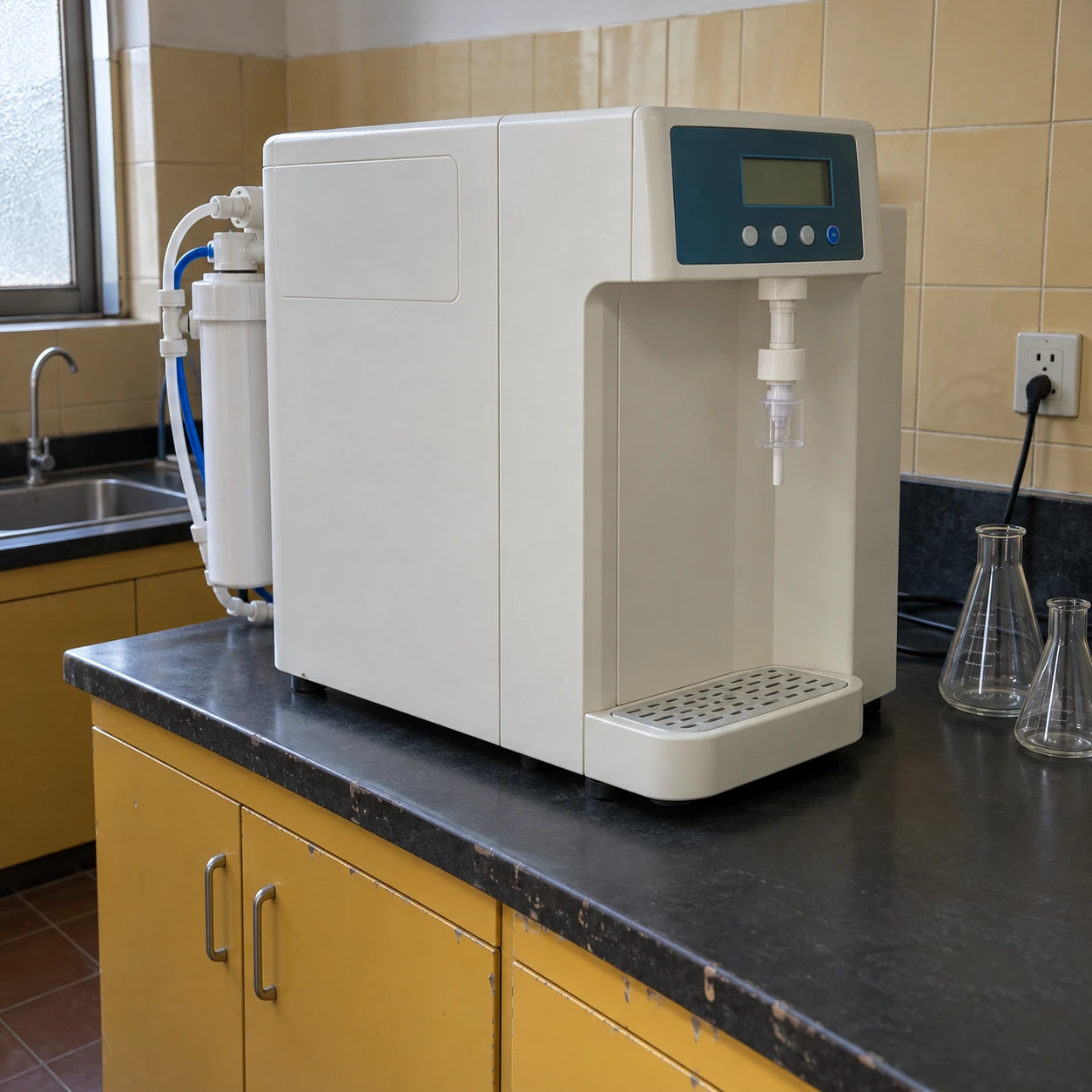
Ultrapure Water Systems
laboratory ultrapure water system
| Feed arrangement | Tap-water pretreatment with RO and final polishing; prepurified-feed versions also selectable |
|---|---|
| RO production options | 3 / 6 / 12 L/h at 15°C feed temperature; feed pressure and quality affect output |
| Cabinet W × D × H (mm) | 260 × 470 × 470; 280 × 530 × 510; 305 × 400 × 545 — footprint depends on configuration |
| Storage and dispensing | 5 / 6 / 12 L storage options; up to 1 L/min intermittent ultrapure dispense with a matched unit |
| Ionic-purity acceptance | 18.2 MΩ·cm at 25°C at point of dispense, subject to the selected system and agreed feed conditions |
| Treatment options | Ion-exchange polishing; 185/254 nm UV; selected 0.2 or 0.22 μm final filter; application-specific UF |
| Fluid path | Low-leaching polymer tubing and compatible cartridge housings; seals selected for the treatment and cleaning method |
| Power and controls | 100–240 V AC, 50/60 Hz supply options; resistivity/temperature display, tank-level control and feed alarms |
| Installation | Benchtop or approved wall mount; separate allowance for dispenser, reservoir, tubing and service access |
Select production, storage and dispense capacity together. Published configuration choices are finalized against the feed-water assessment and the laboratory's acceptance criteria.
A laboratory ultrapure water system should support the way the laboratory actually works: small analytical withdrawals, occasional bottle filling, morning preparation peaks and intervals with no use.
Separate the jobs that share the laboratory
A single laboratory may rinse equipment, prepare routine solutions and make low-concentration analytical standards. These tasks do not necessarily need the same water. Sending all demand through the final ultrapure cartridge can consume its capacity on work that the laboratory method permits a less highly treated outlet to serve.
Separate outlets can make the workflow clearer, provided the grade and permitted use are unambiguous. Staff should not have to infer water quality from the shape of a tap. A shared dispenser needs a documented purpose and a convenient position near the work it supports.
Measure the busy period
Daily consumption alone can hide a shortage. Several operators may fill reagent bottles at the start of the shift, followed by hours of small withdrawals. The system must cover that initial draw and replenish storage before the next peak, while preserving the required water condition.
RO production is a replenishment rate. Dispensing is a separate short-term draw from the available water and polishing circuit. A fast outlet cannot sustain its maximum flow indefinitely if the upstream production and usable storage are smaller.
Choose where water is produced and where it is collected
A local unit at the reagent bench shortens the handling route and makes quality information visible to the person dispensing. It also uses bench space and introduces feed, reject and electrical connections into that area. A remote cabinet can recover working space, but the tubing, dispenser and stagnant branches then deserve the same attention as the cabinet.
One shared unit or several local points? A shared unit can simplify consumable management when users are close together and their methods are compatible. Separate points can reduce queues and isolate different quality requirements. Neither approach is automatically more economical: the decision depends on walking distance, simultaneous demand, service access and the consequences of losing one unit.
Make routine use consistent
- Identify the outlet and current status. The user should see whether the unit is ready, recirculating, requiring service or reporting unsuitable water.
- Protect the collection point. Allow space for the intended flask or bottle without touching the outlet, stretching tubing across the work area or placing vessels in a splash zone.
- Assign responsibility. Record who responds to alarms, replaces consumables and reviews quality trends. Shared equipment is easily neglected when responsibility is assumed to belong to another team.
Storage condition and idle time matter during weekends and shutdowns. The return-to-use procedure should follow the supplied system and the laboratory's acceptance criteria, rather than assuming that a powered display proves the water is ready.
Prepare the installation around the users
Provide a demand profile, the water supply information and the sizes of vessels normally filled. Include future methods only where they are reasonably planned; excessive storage can add maintenance and leave water sitting for longer. For a room that already has utilities and furniture, the laboratory installation guide explains the interfaces that commonly cause rework.
Laboratory feed connections, storage capacity, water-grade outlets and dispensing positions can be customized for your working pattern.