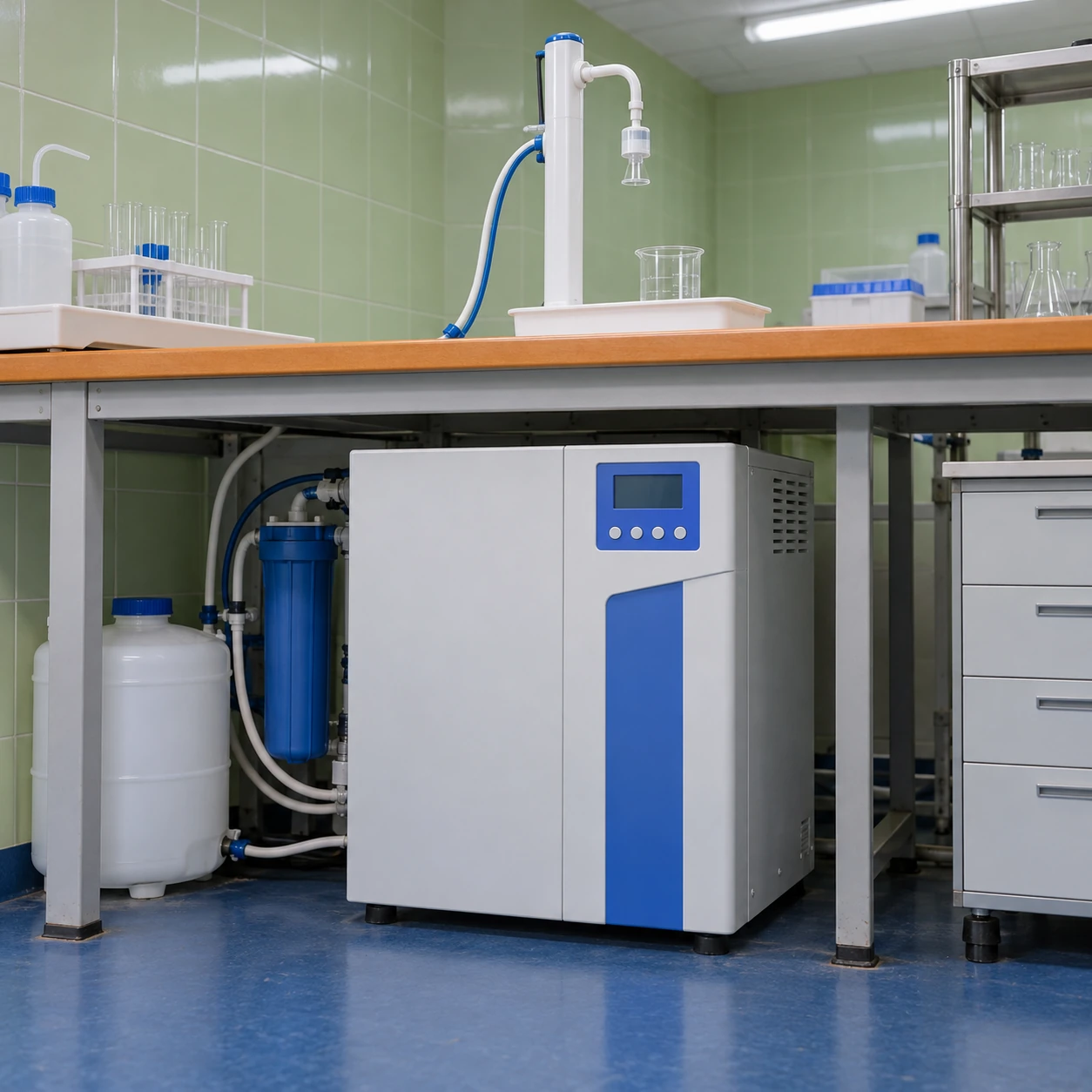
Ultrapure Water Systems
ultrapure water system for laboratory
| Installation forms | Benchtop cabinet, approved wall-mounted unit or accessible underbench cabinet with remote dispenser |
|---|---|
| Cabinet W × D × H (mm) | 260 × 470 × 470; 280 × 530 × 510; 305 × 400 × 545, depending on selected arrangement |
| Attached dispenser option | 370 × 610 × 640 mm W × D × H combined envelope; vessel and cartridge-removal space additional |
| Feed and production | Prepurified-feed polisher or integrated RO; small RO options 3 / 6 / 12 L/h at 15°C |
| Storage / draw | 5 / 6 / 12 L storage options; up to 1 L/min intermittent dispense with matched equipment |
| Water-quality objective | 18.2 MΩ·cm at 25°C at dispense; organic and microbial acceptance criteria selected for the method |
| Treatment and materials | Compatible low-leaching fluid path, ion-exchange cartridge, optional 185/254 nm UV and terminal filtration |
| Supply and access | 100–240 V AC, 50/60 Hz options; accessible shutoff, drain and cartridge service area |
Body dimensions are distinct from the installed envelope. The final arrangement includes storage, connections, service clearances and the space needed to handle vessels.
Installing an ultrapure water system in an existing laboratory is an interface problem as much as an equipment choice. The cabinet, water supply, drain, power connection and working space must fit together before the first bottle is filled.
Survey the room from the utility connection to the bottle
The shortest cabinet dimension is not enough to decide whether an installation will work. Trace the feed supply, reject route, electrical connection and access for the operator. Then include the reservoir, dispense head and the largest vessel normally filled. A layout that fits only when neighbouring equipment is moved is unlikely to remain practical.
Keep the dispense point away from sink splash and uncontrolled reagent vapours. Put quality information where the user can read it while collecting water. For an underbench cabinet, make the shutoff and maintenance compartment reachable without crawling behind a permanently installed instrument.
Four interfaces to settle before delivery
Feed supply
Confirm the source and its quality at the proposed connection, not only at the building inlet. Pressure can fall when nearby outlets operate. Existing RO or deionized water requires a compatible polishing configuration; the equipment's inlet specification still applies.
Drainage
An integrated RO unit produces a reject stream and may discharge additional water during cleaning. The drain route must remain secure, suitable for the flow and protected against contamination returning toward the equipment. Avoid a loose hose placed into a shared container.
Electrical supply
The selected unit needs its specified supply, protective arrangements and a suitable accessible connection. Keep plugs and electrical sections clear of likely splash or leaks. The equipment rating, site plug and installed load should be part of the final supply information.
Support and access
A filled reservoir adds load beyond the empty cabinet. Check the bench or mounting structure and allow cartridge-removal space. Tubing should not be pinched behind a cabinet or used as a handle when moving equipment.
Remote dispensing needs a defined water path
A separate dispenser can clear the bench and place the outlet near the work. It also adds connections and potentially retained water. Use the supported tubing length and arrangement, and identify whether the dispenser is included in circulation or needs a separate preparation step.
Long improvised tubing can undermine a compact layout by making cleanliness, flow and maintenance harder to control. Compare the complete installation, including the reservoir position, before selecting a remote option.
Make the handover useful to operators
At handover, identify the outlets, normal status, alarms and isolation points. Establish the required output checks, maintenance responsibilities and the route for obtaining compatible consumables. The user needs to know what happens after a power interruption, a long idle period or a cartridge change.
A working pump and an illuminated screen are only part of commissioning. Relevant water-quality acceptance should be completed under the installed conditions before the system is used for critical preparation.
Information that prevents installation rework
Provide a simple room layout, available bench dimensions, connection positions, vessel sizes and feed-water information with your enquiry. For restricted spaces, compare the mounting choices on the compact system page. These details help define the equipment and site responsibilities before delivery rather than discovering missing interfaces afterwards.
The cabinet position, feed and drain interfaces, remote dispensing and commissioning scope can be customized for your laboratory premises.