ESD Gloves
esd gloves uses
| Dry-handling choices | Uncoated, fingertip-coated or palm-coated conductive knit |
|---|---|
| Knit size range | S / M / L / XL |
| Palm-coated total length (mm) | 210 / 220 / 230 / 250 by size |
| Film alternatives | ESD-qualified disposable nitrile; 229, 240 or 300 mm overall |
| Task variables | Pinch grip, supporting palm, sleeve coverage and contact sensitivity |
| Process assessment | Electrical, contamination and worker-protection needs considered separately |
| Packing choices | Reusable pairs or single-use gloves, size separated |
Dimensions refer to glove length, not hand size. Choose one construction around the contact and use cycle.
Glove material, grip coverage, sizes and packing can be customized to the intended assembly, inspection or handling application.
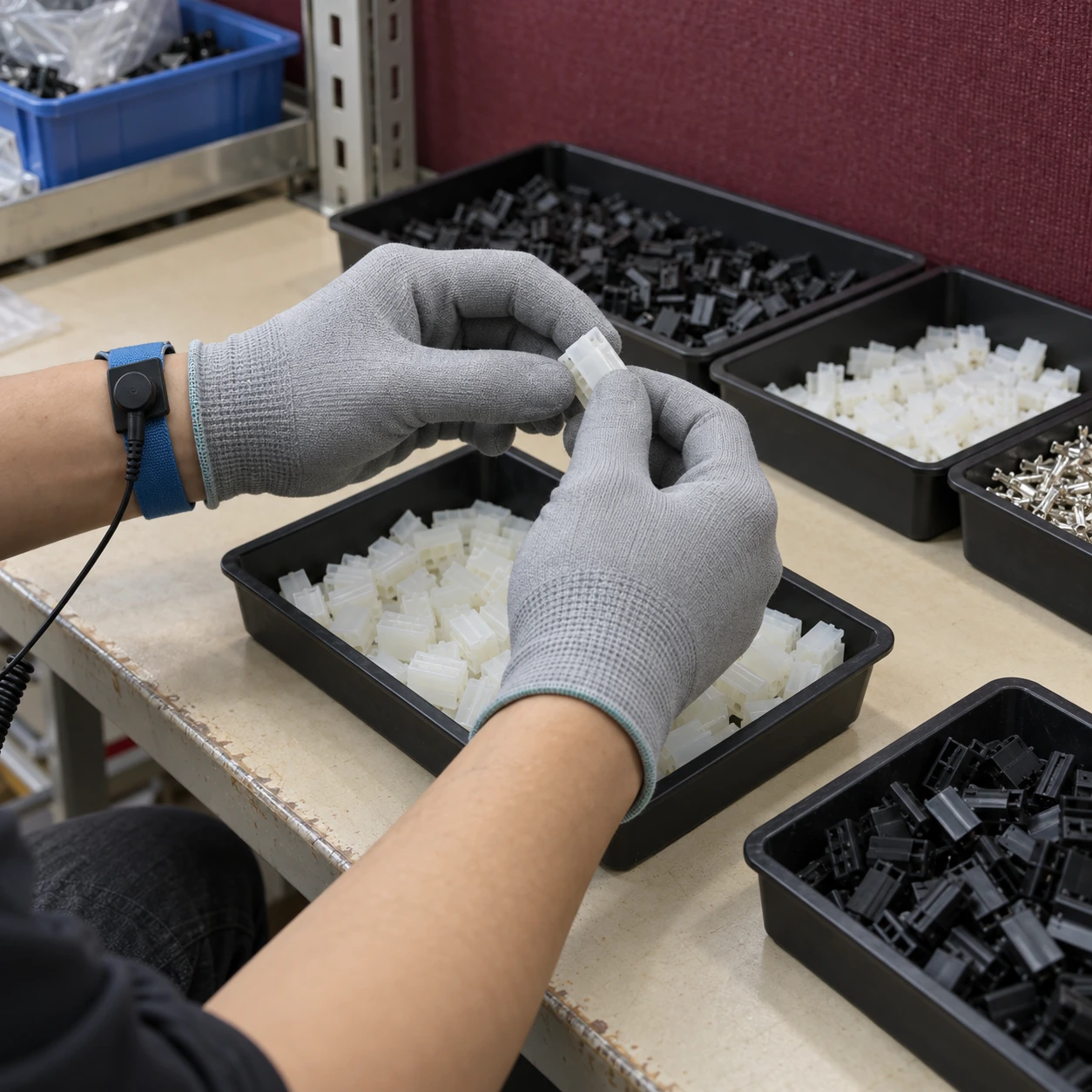
ESD gloves are used where a controlled hand-contact surface is needed around static-sensitive items. Their role changes with the task: a fine connector operation, an enclosure inspection and a packing station may need different glove constructions.
Match the glove to the contact
| Use | What the glove needs to support | What remains a separate requirement |
|---|---|---|
| Small-component assembly | Controlled fingertip movement and release | Personnel grounding and a suitable work surface |
| Connector and housing sorting | Grip without excessive squeeze or snagging | Appropriate trays and identification of sensitive parts |
| Surface inspection | A contact finish that does not introduce unwanted marks | Product-specific residue and particle limits |
| Packing exposed electronics | A consistent clean contact during placement | Packaging that protects the item during the next transfer |
| Controlled-area handling | Fit and contact behaviour compatible with the task | Glove cleanliness qualification and the area's entry procedure |
Why the same pair may not suit every station
A pinch operation can benefit from close-fitting coated fingertips, while a larger enclosure may rest across the palm. A disposable film can avoid exposed textile at the contact, but its feel and change cycle differ from a reusable knit. The correct choice follows the movement and product sensitivity rather than a single preferred material.
Try the glove with the parts and fixtures actually used. Look for loose fingers catching on a latch, a surface that requires too much gripping force, or a cuff that interferes with the workstation arrangement. These issues can cause unnecessary re-handling even when the glove is comfortable in a short fitting session.
Consider the handoff between tasks
A worker may unpack a delivery, sort a housing and then touch an exposed assembly. The glove can carry material between those stages. If cleanliness matters, identify where the working surface must be replaced or the operation separated. Do not use the absence of a visible mark as the only decision.
After the assembly leaves the hand, protection depends on its tray, packaging and destination. Gloves cannot compensate for unsuitable bags or uncontrolled transport. Match the handoff to the work area's established handling process.
Uses that need another selection decision
A lightweight ESD glove is not automatically a chemical glove, a cut-resistant glove or a heat-resistant glove. If a task introduces these hazards, choose documented protection for the actual exposure and assess how it fits the ESD process. Electrostatic control is also different from the electrical insulation required for live work.
ESD marking does not establish sterile status or cleanliness for a specific controlled environment. Where the process combines static-sensitive electronics and contamination limits, compare ESD cleanroom glove options instead of assuming that one property guarantees the other.
Describe the task before choosing the pack
For an enquiry, explain what is held, which surfaces must remain untouched, whether the hand supports the item or only positions it, and how often the operation changes. Add the size mix, reuse policy and required supporting evidence. These details turn a broad use description into a glove specification that purchasing and production can both follow.
The electronics handling page follows a board through assembly and transfer. The general ESD glove selection compares the main constructions.
Glove material, grip coverage, sizes and packing can be customized to the intended assembly, inspection or handling application.