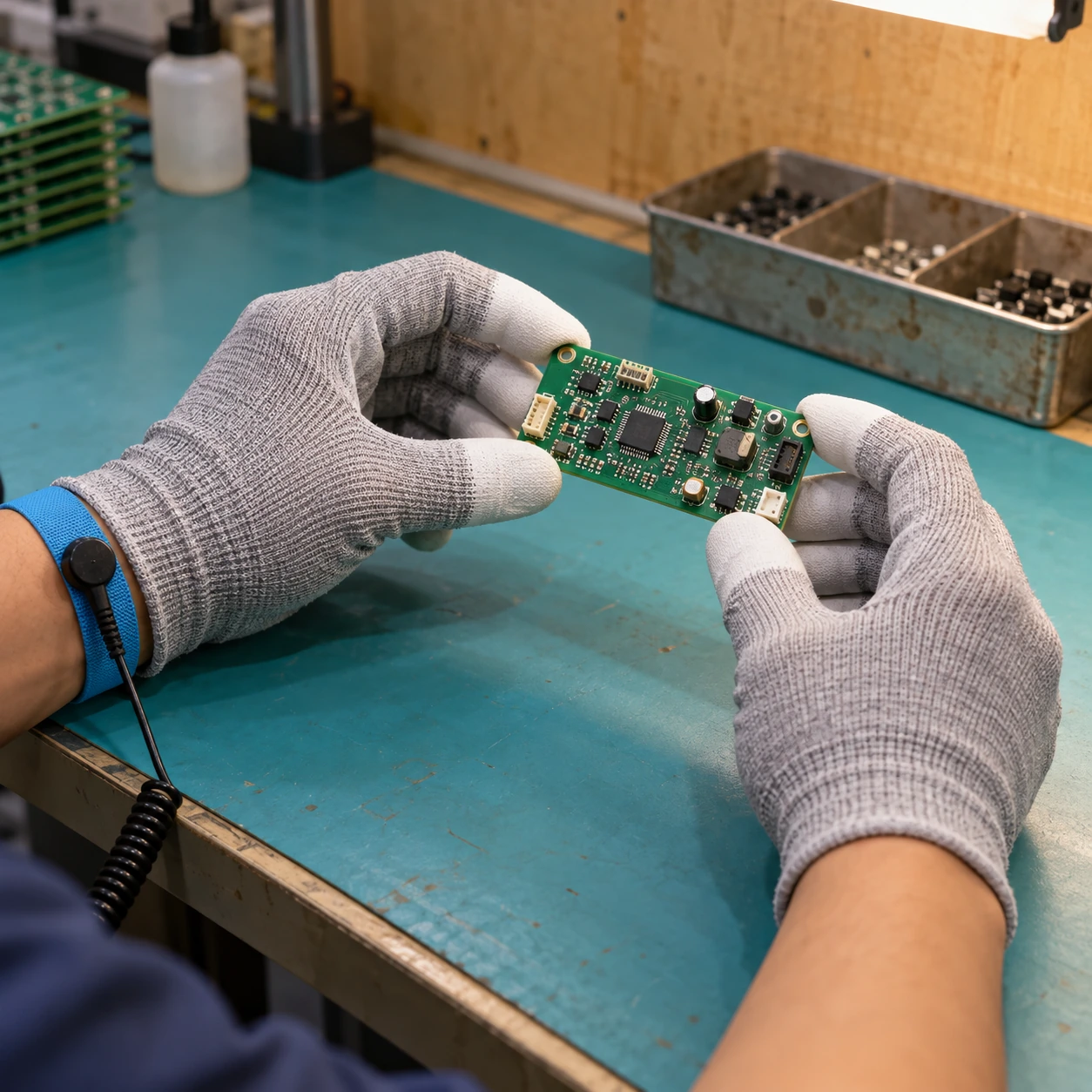
ESD Gloves
esd gloves for electronics
| Handling constructions | Conductive knit with fingertip or palm coating; qualified film alternatives |
|---|---|
| Fingertip-coated sizes | S / M / L / XL |
| Fingertip-style length (mm) | 185 / 190 / 200 / 220 overall, according to size |
| Palm-coated length (mm) | 210 / 220 / 230 / 250 overall; separate style |
| Contact finish | PU grip, uncoated knit or task-selected disposable film |
| Cuff arrangement | Fit coordinated with sleeves and personnel grounding |
| Process requirements | ESD verification; cleanliness and mechanical protection evaluated separately |
Select the style around the normal handling movement. The two length series refer to different glove constructions.
Coating area, fit, cuff arrangement and packing can be customized for electronics assembly, inspection and transfer tasks.
Electronics handling puts the glove close to connector contacts, component leads and finished surfaces. A useful selection supports precise movements while fitting the workstation's ESD controls and the product's contamination requirements.
Follow the assembly from tray to packing
Receiving and unpacking
Open sensitive assemblies at the designated handling station. Keep the glove used on exposed product separate from contamination picked up on shipping cartons. The clean working surface and appropriate packaging remain part of the transfer method.
Board and connector assembly
Where the design permits, handle a board by its edges and a connector by its housing. Fingertip control should let the operator release a latch or place a fastener without repeatedly dragging the glove over contact surfaces. A glove is not a reason to handle leads unnecessarily.
Inspection
Check whether the glove leaves a print, film or fibre on the product being inspected. Use the actual lighting and inspection movement during the trial. Cosmetic panels and exposed electronic assemblies can require different contact finishes even within one production cell.
Transfer to the next operation
Choose trays and packaging appropriate to the item and destination. Hand protection does not continue to protect an assembly after it has been placed in unsuitable packaging. Review ESD static shielding bags for the relevant packing stage.
Small contacts favour controlled fingertips
A thin, close-fitting finger area helps operators feel the difference between a latch engaging and a part merely pressing against its stop. Fingertip-coated knit can concentrate grip at these contacts. Avoid choosing a size with loose ends simply to make donning easier.
When the palm supports an enclosure or tray, a larger coated area may be more useful. Evaluate grip without increasing the squeeze on a delicate housing. No single coating layout is the best choice for every electronic product.
The glove must fit the grounding arrangement
A wristband requires its intended contact with skin. Do not move it onto an insulating glove or sleeve merely to make the clothing arrangement tidier. Use the site's approved personnel-grounding procedure and evaluate the gloved contact through the relevant verification method.
The existing wrist-strap grounding options address this personnel connection. Glove selection addresses the material at the hand-to-product interface.
Keep different protection requirements visible
Electronics work can also involve sharp chassis edges, hot components or cleaning agents. A lightweight ESD assembly glove does not automatically provide the protection needed for those tasks. Separate the operations or select a glove with documented protection for the combined requirements; do not infer it from an ESD label.
For optical surfaces or controlled production, add the necessary contamination evaluation. Conductive yarn and useful grip do not establish suitability for a specified cleanroom process. Conversely, a cleanroom glove's packaging does not prove its electrical performance when worn.
Trial the complete hand movement
Before standardising a glove, include tray loading, connector insertion, tool use and final placement in the trial. Record which construction works for each operation and which sizes the team needs. This makes the selection repeatable when another operator joins the line or a product changes.
Use the product enquiry to describe the assembly, contact-sensitive surfaces and existing ESD procedure. The resulting glove specification should support that workflow rather than rely on a general “electronics glove” description.
Coating area, fit, cuff arrangement and packing can be customized for electronics assembly, inspection and transfer tasks.