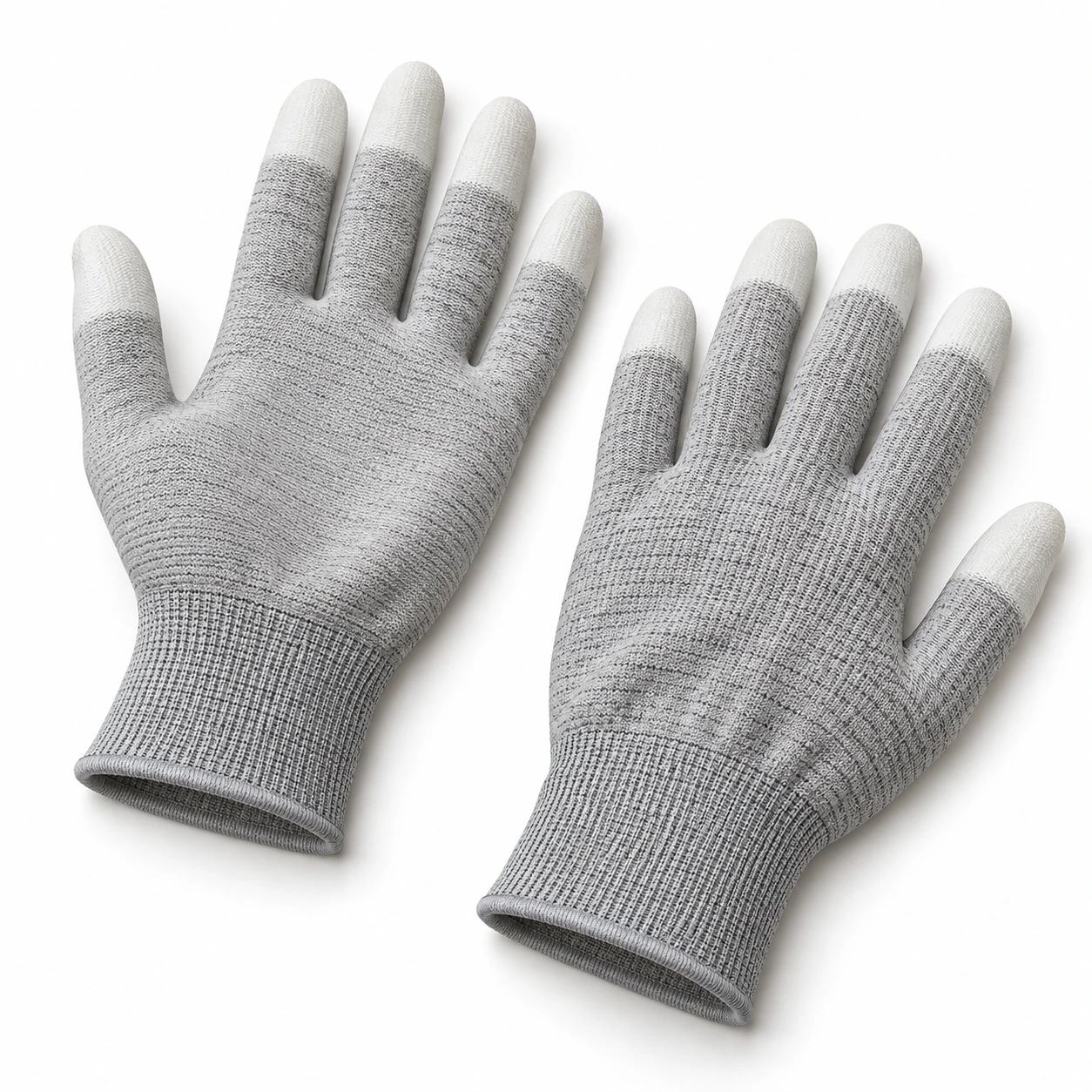
ESD Gloves
esd gloves
| Construction | Conductive knit; PU-coated knit; ESD-qualified disposable nitrile |
|---|---|
| Knit sizes | S, M, L, XL; fit varies with construction |
| Fingertip-coated length (mm) | S 185 / M 190 / L 200 / XL 220; overall glove length |
| Contact coverage | Uncoated, fingertip coated or palm coated |
| Cuff | Elastic knit; rolled cuff for disposable styles |
| Electrical selection | Glove-specific test data and in-use verification with the operator |
| Supply format | Pairs for knit styles; individual gloves for disposable styles |
Overall length is measured from the middle-finger tip to the cuff edge. Select one construction and size chart for the order.
Material, contact coating, fit and packing can be customized to the intended handling application, with electrical properties agreed for the selected glove.
ESD gloves put a controlled contact surface between the operator and a sensitive part. The useful choice depends on what the fingers touch, how the person is grounded and whether the process also needs a contamination barrier.
Choose the surface that actually touches the part
Uncoated conductive knit
A flexible textile surface suits light, dry handling where breathability and movement matter. It offers no continuous liquid barrier. Evaluate snagging, fibre release and contact marks against the actual component rather than treating all knitted gloves as suitable for every assembly.
Coated fingertips or palms
Fingertip coverage concentrates grip around small fasteners and connectors. Palm coverage helps when the hand supports a larger housing. The coating and liner must work together electrically; a conductive back does not establish the behaviour of the coated contact face.
Qualified disposable film
A disposable glove can help separate skin residues from handled surfaces without exposed knit. Choose a formulation with relevant ESD evidence. Ordinary nitrile composition or a powder-free description alone does not establish its electrical suitability.
The glove belongs in the handling system
Putting on a glove changes the interface between skin, tool and product. An unsuitable insulating layer can interrupt an otherwise useful path through a grounded operator. Gloves therefore complement the workstation's personnel-grounding arrangement; they do not create a ground connection by themselves.
The EOS/ESD Association's handling guidance explains why glove selection and personnel-system testing belong together. A material data sheet and a check made with the glove on a person answer different questions. Agree the applicable test and acceptance criteria within the site's ESD control programme.
Fit changes the way people handle work
A long empty fingertip can fold between the hand and a connector latch. A tight glove may pull across the palm when an operator reaches for a tray. Both can encourage repeated re-gripping or removal of the glove at the least convenient point in the process. Compare sizes while performing the normal reach, pinch and release movements, including use of tweezers or small hand tools.
Use the selected construction's size chart. A knit glove stretches differently from an unsupported film glove, and the same letter on two packets does not guarantee the same fit. Cuff coverage should suit the sleeve arrangement without obstructing a wristband's intended contact with skin.
Set a replacement rule around the job
Inspect working fingertips and palm contact areas, not only the cuff. A worn coating, snagged yarn or contamination carried from packing material can change the handling surface before a glove looks generally worn out. Reusable styles need a defined care method and requalification approach; disposable styles need a change procedure rather than a washing routine.
For electronics with a separate cleanliness specification, compare ESD cleanroom gloves. For the personnel connection, review ESD wrist straps. Those choices address different parts of the same workstation. ESD gloves should not be selected as electrical insulation for live work.
Material, contact coating, fit and packing can be customized to the intended handling application, with electrical properties agreed for the selected glove.