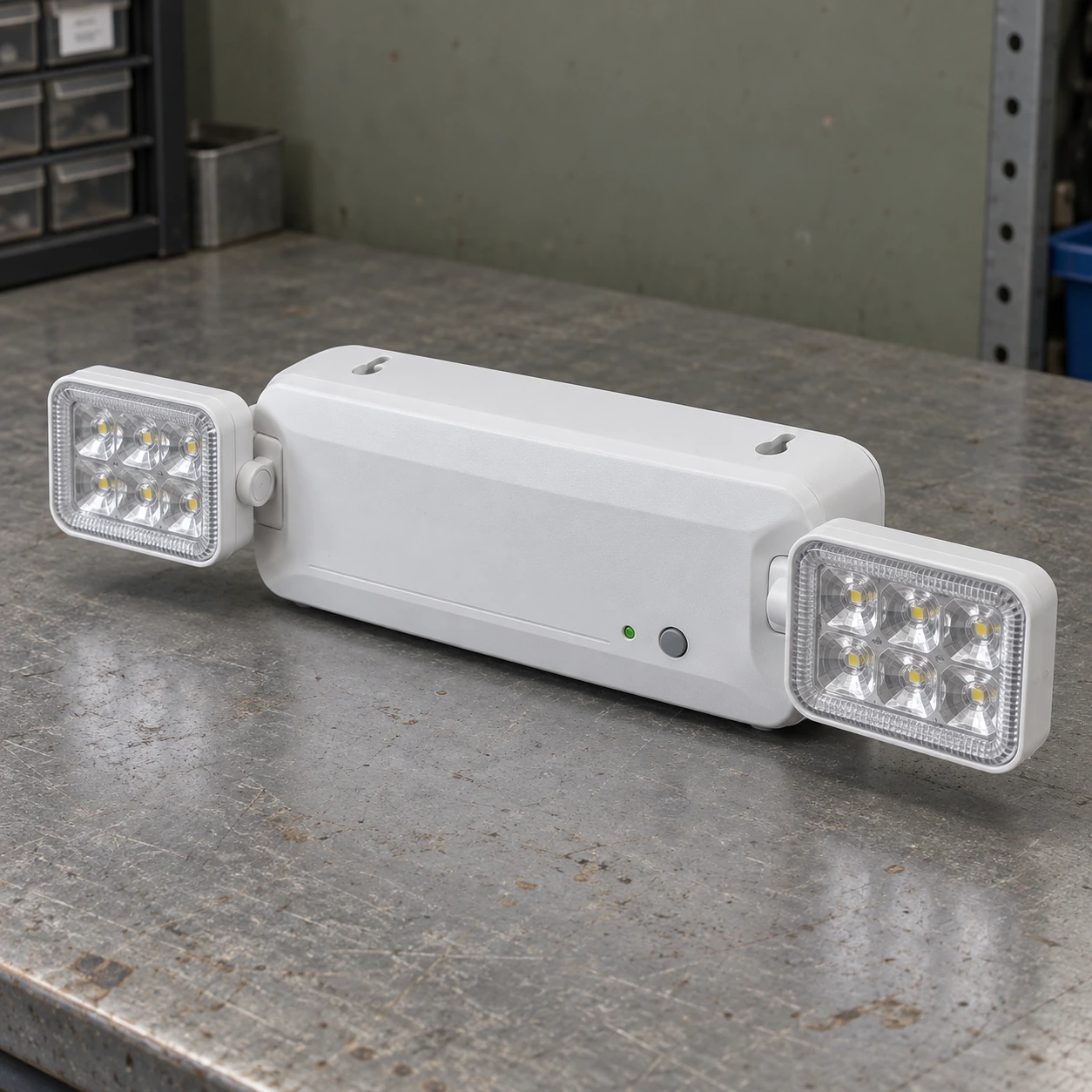
Emergency Lighting
led emergency lighting
| Complete unit sizes, approximately W × H × D (mm) | 181 × 121 × 67; 260 × 121 × 67 |
|---|---|
| Alternative emergency driver pack sizes (mm) | 358 × 30 × 25 for 6 W; 422 × 30 × 25 for 10 W |
| Driver output range | 15–54 V DC for the stated driver options; match the LED array and wiring |
| AC input option | 120–277 V AC, 50/60 Hz |
| Optical arrangement | Directional unit heads or an approved emergency conversion of a general luminaire |
| Monitoring | Local indicator/test switch; automatic diagnostics where selected |
Complete units and driver packs are different supply formats. Driver dimensions and wattages are not the dimensions or full normal-light output of a finished luminaire.
LED optics, emergency output, enclosure and compatible control interfaces can be customized for the installation.
LED emergency lighting combines efficient light sources with a backup power path. The LED can still be functional while its battery, emergency driver or control interface has failed, so selection has to follow the complete assembly and its emergency operating mode.
The LED rating is only one part of the emergency result
An LED luminaire may deliver its normal output through a mains driver and a lower output through an emergency driver. The optics remain in the same place, but the amount and sometimes the distribution of usable light can change. Selecting the emergency arrangement from the normal lumen figure risks overestimating what reaches the escape route.
Use emergency-mode photometry for the actual configuration. Where a conversion powers only a selected portion of an LED board, the result should reflect that arrangement. For a complete unit with adjustable heads, the beam direction and mounting height matter as much as the total emitted light.
Match the electrical interfaces
| Interface | Why it matters | Useful selection information |
|---|---|---|
| Emergency driver to LED array | The driver must operate within the array's voltage and current limits in emergency mode. | LED forward-voltage range, permitted current and the manufacturer's compatible connection arrangement. |
| Normal driver to emergency equipment | The two power paths must transfer or isolate in the intended manner. | Approved luminaire wiring and the specific factory or retrofit installation scope. |
| Controls to emergency operation | A dimming or occupancy command must not inadvertently defeat the required emergency output. | Failure detection and override sequence for the chosen driver and controls. |
| Battery to charger | Chemistry, voltage and charging behaviour must be compatible. | The correct replacement battery assembly and the required operating temperature range. |
Constant power does not make every fixture equivalent
An emergency driver can regulate electrical power to an LED array, helping maintain its intended output as the battery discharges. That does not mean a given driver wattage produces the same lumens in every luminaire. LED efficiency, temperature, optical losses and the driven portion of the board all affect the result.
A replacement LED board that works with the normal driver may behave differently on the emergency supply. Treat a driver, board or battery substitution as a compatibility decision. Replacing an entire approved assembly can be more dependable than combining individually plausible components without evidence for their joint operation.
When the indicator looks healthy but the route is dark
A charge indicator commonly reports a condition at the unit; it is not a measurement of light on the floor. The battery may have reduced capacity, a head may have moved, a diffuser may be dirty or the output stage may have failed. Separate a failure to start from early extinction and from insufficient illumination. These lead to different repairs.
During an authorised test, record which lights operate, their emergency aiming and whether faults are reported. A complete duration test provides different evidence from a brief button press. Testing should be planned so that the loss of reserve capacity during recharge is managed under the facility's procedures.
Choose the supply format around future service
A dedicated LED unit is easy to identify and can simplify replacement. A conversion pack can preserve the appearance of an existing luminaire, but access above a finished ceiling may make routine work harder. Automatic diagnostics can reduce manual checking, provided faults are actually reviewed and the selected system covers the relevant components.
For a larger building, consider how many batteries will need access and whether central supervision is practical. Commercial emergency lighting connects those choices to building operation. A central DC alternative requires compatible DC luminaires and a distribution design, as described in the DC emergency lighting system page.
LED optics, emergency output, enclosure and compatible control interfaces can be customized for the installation.