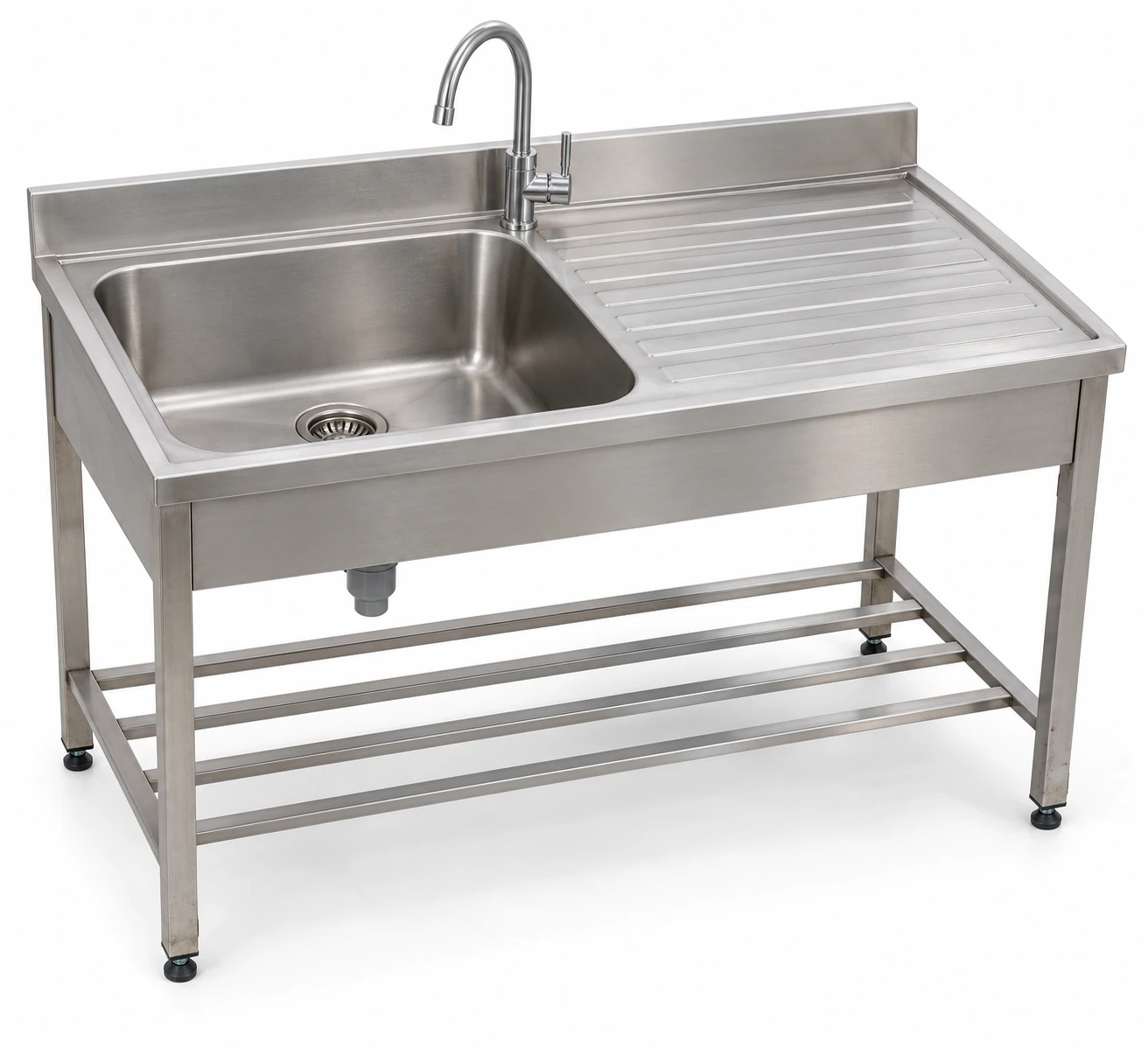
Cleanroom Sinks & Wash Stations
stainless steel sinks
| Single-bowl unit footprint W × D (mm) | 584 × 603; 737 × 756 |
|---|---|
| Corresponding bowl W × D × vertical depth (mm) | 457 × 457 × 305; 610 × 610 × 356 |
| Wetted surfaces | 304 stainless steel with a satin finish |
| Bowl arrangement | Single or separate multiple compartments, selected for the washing sequence |
| Installation | Freestanding frame; inset and wall-mounted arrangements selected separately |
| Drainboard | None, left, right or both sides |
| Water and waste | Tap position, strainer, waste fitting and overflow matched to the installation |
Footprints describe single-bowl units without drainboards, with the corresponding bowls in the same order; inch-based dimensions are rounded to millimetres. D is front to back, while bowl depth is vertical. Additional bowls and drainboards change the overall unit size.
Stainless steel sinks can be customized for the washing task, bowl arrangement, room layout, water connections and cleaning method.
Stainless steel sinks provide a durable washing point for utensils, containers and compatible equipment in production support rooms, commercial wash areas and laboratories. The useful configuration depends on what enters the bowl, how it is handled and where it goes next. A suitable sink combines usable bowl space, a cleanable surface, stable support and accessible water and waste connections.
Arrange the bowl around the washing sequence
One clear washing space
A single bowl leaves room to rotate a container or lay a tray inside the sink. It works well when items follow one washing task at a time. A side drainboard provides a landing area so wet items do not have to balance across the rim or return to the incoming stack.
Separate stages
Multiple compartments allow distinct wash or rinse stages within one station. Size every compartment for the items that actually pass through it; a long overall sink can still contain several bowls that are individually too small. A Double-Bowl Stainless Steel Sink gives a useful starting point for this arrangement.
A dedicated duty
Handwashing, utensil washing and janitorial work need different access and fittings. A general utility bowl should not become the convenient destination for every wet task. Give each duty a defined position so staff can use the appropriate station without moving unrelated materials through it.
Choose the mounting before the plumbing
A freestanding sink transfers its load through a frame and feet. It is straightforward to position in a utility room, provided the floor, leveling arrangement and wall restraints suit the installation. Leave access beneath the bowl for the trap and for cleaning around the supports.
An inset bowl relies on a suitable worktop opening and support around its rim. The internal bowl size is not the cutting template. A wall-mounted unit clears the floor but transfers load into brackets and the wall construction. For this arrangement, review the Wall-Mounted Stainless Steel Sink together with the proposed fixing surface.
Make the tap and waste work together
Tap reach determines where the water lands and whether a tall container fits beneath the spout. A tap that reaches the bowl is not necessarily positioned well for the work: the stream may strike a vertical wall, or its handle may collide with a shelf. Place the fitting around the item and the operator's movement.
Choose the waste fitting for the bowl opening and the plumbing below it. A removable strainer makes routine debris collection easier, while a standpipe arrangement controls filling through its specific design. Drain-hole diameter and outlet connection size are different dimensions; specify both when coordinating fittings.
Use the drainboard as working space
The drainboard is part of the handling route. Put incoming items where they can be unloaded conveniently and give washed items an identifiable outgoing position. Handing matters: a right-side drainer can be inconvenient when the next machine or trolley is on the left.
A slope toward the bowl helps return water instead of leaving it at the edge of the station. The assembled sink must sit at its intended level for that slope to work. A backsplash protects the wall junction, but the joint between the unit and the wall still needs an appropriate, cleanable installation detail. Keep nearby stored supplies outside the normal splash zone.
Keep the surface and fittings maintainable
Stainless steel is selected for its useful combination of corrosion resistance and cleanability. Its performance still depends on the substances used, their concentration, temperature and contact time. For laboratory or process washing, identify those conditions before choosing the material and waste arrangement; a general utility sink is not a universal chemical-treatment vessel.
Use cleaning products compatible with the selected steel and finish. Remove residues, rinse as directed and avoid leaving wet deposits around seams or the waste flange. Ordinary steel wool and contaminated tools can leave iron on the surface. Rounded transitions and accessible corners make wiping easier, while a consistent satin finish makes routine wear less conspicuous.
Inspect tap mounts, waste seals and frame fixings when the station is installed and during normal maintenance. The sink should remain stable when a filled container is set down. For a quotation, provide the largest wash item, the sequence of tasks, the proposed position and the existing water and waste points. shengtongjh can coordinate the bowl, frame and fitting selection as one practical installation. Request a sink configuration.
Stainless steel sinks can be customized for the washing task, bowl arrangement, room layout, water connections and cleaning method.