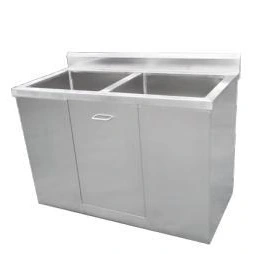
Double-bowl stainless cabinet sink
Cleanroom Sinks & Wash Stations
Double-Bowl Stainless Steel Sink
| Specification | Configuration options |
|---|---|
| Brand | shengtongJH |
| Material | 304 stainless steel; 316 optional |
| External size, W × D × H (mm) | 1000 × 600 × 875 / 1200 × 650 × 900 / 1500 × 650 × 900; splashback additional |
| Bowl arrangement | Two bowls with separate waste outlets |
| Bowl depth (mm) | 200 / 250 / 300 |
| Splash protection | Low rear upstand or extended rear panel |
| Base | Enclosed cabinet with service doors |
| Tap arrangement | Shared reach spout or separate outlets selected to task |
| Customization | Bowl split, dividers, drain positions and back panel |
Dimensions and configurations can be customized for your application.
Keep two wet-handling stages in defined basins instead of repeatedly clearing a single bowl.
Separate stages without crossing them
A double-bowl sink provides two defined wet-work locations. One basin can receive the initial wash while the other is used for a later rinse, provided that this matches the approved process. The advantage is reduced movement between separate stations and less need to empty one bowl before the next stage can begin.
Make the assignment visible to operators and place incoming and completed items on their correct sides. Two bowls alone do not prevent cross-contamination. A dirty tray carried over the final rinse bowl, or a shared brush returned to the wrong side, can undermine the separation.
Check the divider as carefully as the outer size
The useful bowl width determines whether the item can be immersed, turned and removed without striking the partition. Equal bowls suit similar tasks on both sides; an unequal split can be more useful when one stage handles larger items. The tap reach must cover its assigned basin without spilling over the divider or requiring awkward hand positions.
Drainage also needs to accommodate simultaneous use. Keep traps and waste connections accessible behind the cabinet doors, and coordinate outlet heights before the sink is fixed against the wall. A high rear panel may help contain splash, but its wall junction still needs a cleanable detail.
Maintain the distinction after the work is finished
Clean both basins, the divider, the undersides of tap fittings and any draining surfaces. Avoid storing clean items underneath wet plumbing unless the cabinet has been specifically organized for that purpose. Identify compatible cleaning chemicals for the chosen material and the residues being removed.
For small handwashing tasks, a dedicated handwash station is usually easier to manage than sharing the equipment-washing sink. Bowl proportions, splash protection and service connections can be customized to your washing sequence and support-room layout.