Cleanroom Sinks & Wash Stations
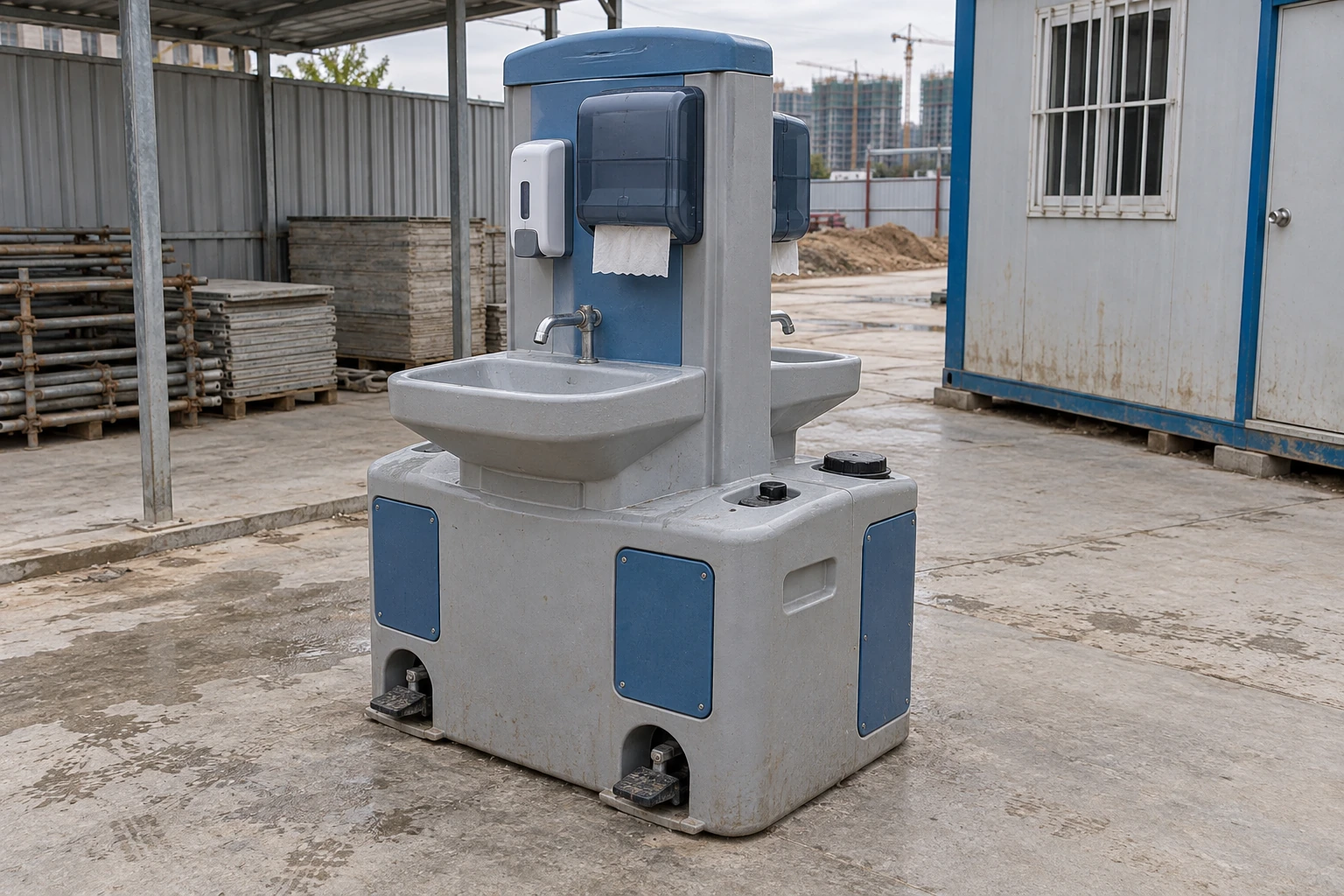
outdoor handwashing stations
| Station layout | Single-user or double-sided wash positions |
|---|---|
| Single-user overall W × D × H | 482 × 536 × 1615 mm; 68 L fresh-water and 77 L waste-water storage |
| Double-sided overall W × D × H | 445 × 711 × 1270 mm; 91 L fresh-water and 91 L waste-water storage |
| Water operation | Manual foot pump; separate fresh-water filling and waste-water emptying connections |
| Handwashing supplies | Soap and paper-towel dispensers; protected storage suited to the chosen placement |
| Site arrangement | Firm level base, clear approach and a designated refill and waste-removal route |
Dimensions include the complete station height, not only the basin rim. Tank capacities belong to the respective layout; weather exposure and any powered accessories require separate selection.
Outdoor handwashing stations provide a wash point where permanent plumbing is unavailable or inconvenient. A self-contained unit holds clean supply water and collects used water separately, making it useful around temporary site facilities, work compounds and organized outdoor activities. Reliable access depends on placement and servicing as well as the station itself.
Choose the position before choosing the tank
A wash point should be easy to reach from the activity it serves, without drawing people into a vehicle route or blocking an exit. Set it on a firm, level surface that supports the filled unit. Mud, loose gravel and an uneven approach can make foot-pump operation awkward and complicate access for users and service staff.
For a double-sided station, leave working space on both sides. Placing one basin against a fence removes much of the benefit of the layout. Also leave room to reach filling ports, pump service panels and waste outlets without moving a full station through a queue.
Shelter the supplies
Wind-driven rain can wet paper towels, while dust can collect around dispensers and open filling points. A suitable sheltered position helps keep the wash area usable. Check how the cover, drainage around the base and access path behave during the site's usual weather.
Sunlight, heat and freezing conditions require attention to the chosen body, hoses and pump. Do not leave trapped water in a unit exposed to freezing unless the equipment and operating procedure are designed for that condition. Follow the selected station's storage and winterization instructions.
Match the operating method to the site
A manual foot pump delivers water without an electrical supply for pumping. It still needs a stable operating position and a pedal the intended users can reach and press. Alternative controls may be needed where a foot-operated arrangement is unsuitable.
A powered or heated sink introduces different installation requirements. Indoor equipment does not become suitable for exposed use simply because its cabinet is stainless steel. Confirm the permitted location and protection of every powered component before choosing that arrangement.
Give refilling and waste removal an owner
- Provide the supply. Use water suitable for handwashing and clean filling equipment. Keep the fresh-water connection identifiable and protected when it is not in use.
- Check use during the shift. Inspect water availability, soap, towels and waste level at a frequency suited to actual demand. A large tank does not help if the dispenser is empty or the pump is not working.
- Remove collected waste. Empty into an appropriate designated drainage or collection system. Keep waste-handling equipment separate from the clean refill equipment; do not discharge used water onto the surrounding ground.
- Prepare for the next period. Clean and service the unit as required, close access covers and confirm that the approach remains clear.
Outdoor handwashing stations can be customized to site access, expected use, available shelter and the planned water-service routine.