Cleanroom Sinks & Wash Stations
mobile handwashing stations
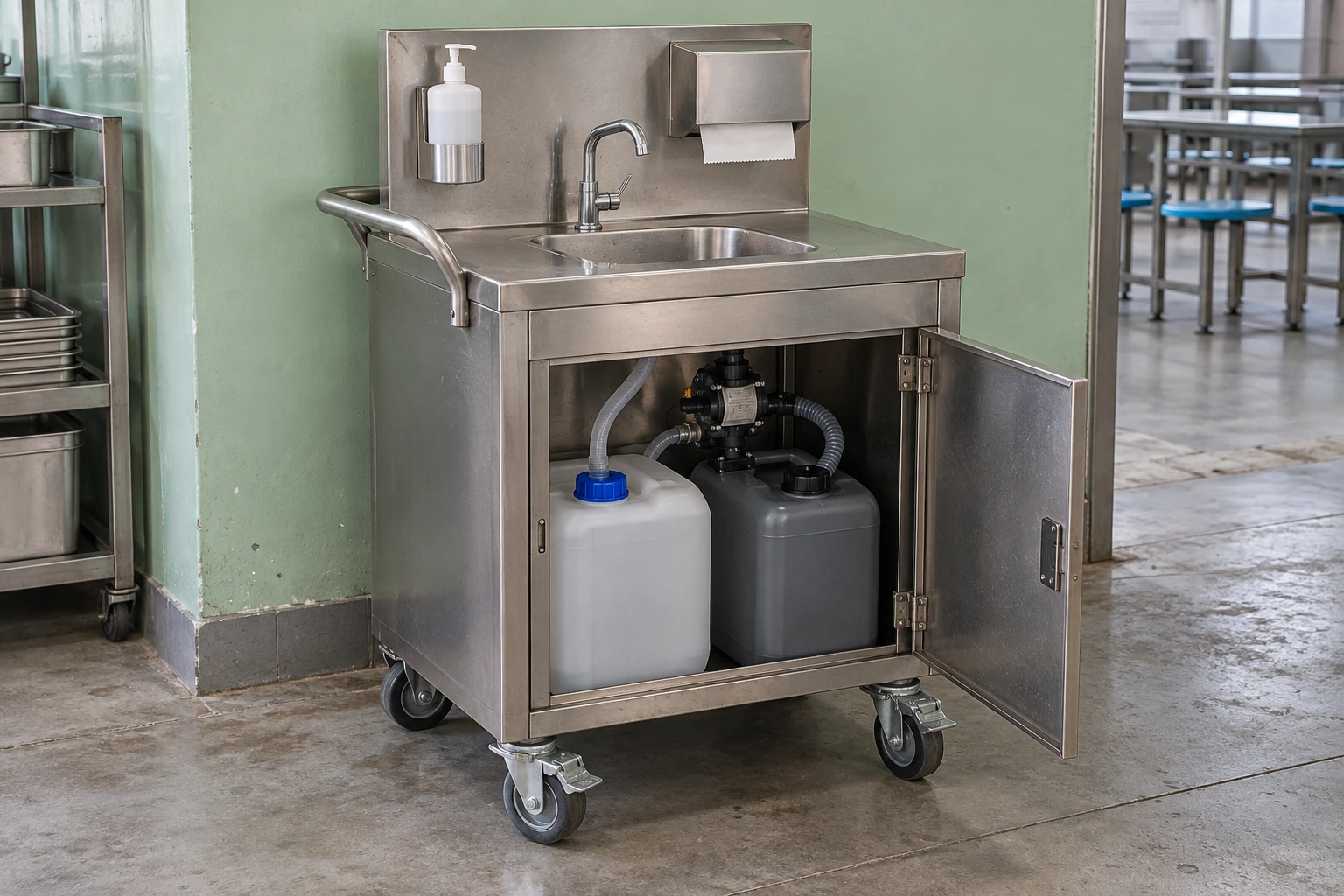
| Overall W × D × H | 838 × 889 × 1143 mm cold-water cabinet; 597 × 756 × 1099 mm heated-water cabinet |
|---|---|
| Water storage | Removable supply and waste tanks: approximately 18.9 L fresh water and 26.5 L waste water per configuration |
| Cabinet and basin | Stainless steel; service-door access to the internal tanks and equipment |
| Water delivery | On-demand pump; cold-water or heated-water arrangement |
| Mobility | Four castors, with two brakes; wheel and route suitability checked at the filled operating weight |
| User fittings | Lever-controlled or touchless tap, soap dispenser and paper-towel provision |
Dimensions describe the complete cabinet; D is the front-to-back footprint. Electrical supply, heater selection and outlet-temperature control must suit the destination and selected configuration.
Mobile handwashing stations bring a sink to temporary work positions, serving areas or rooms awaiting permanent plumbing. A wheeled cabinet contains the water supply, waste collection and pumping equipment. Its value comes from being easy to position, use and service without turning every relocation into a plumbing job.
A movable cabinet still needs a working position
Choose a location with a level floor, usable approach space and access to the service door. Apply the castor brakes before use. The station should remain steady when someone operates the tap or reaches for soap, and its door should open without blocking the neighboring work area.
Check the route as well as the destination. Door openings, tight corners, thresholds and floor transitions may determine which cabinet can be moved conveniently. Include projecting handles and dispensers when assessing clearance. A unit that fits an empty room may be difficult to relocate once other equipment is in place.
Clean water in
The supply tank, cap and delivery hose form the clean side of the system. Keep them separate from waste-handling equipment and use water suitable for handwashing. Make sure the tank can be removed and refitted without dragging its clean fittings across the floor.
During setup, check that the supply is available and that the pump delivers water correctly. Follow the equipment instructions for cleaning, changing stored water and protecting the pump when the supply is empty.
Used water out
The waste tank must remain connected and within its usable capacity whenever the sink operates. A larger waste tank provides useful allowance, but its level still needs checking. Do not assume that the fresh tank running low proves the waste tank is safe from overflow.
Use a designated disposal point and a handling method suited to the full container. Secure caps and connections before moving tanks, then restore the drainage connection before returning the station to service.
Cold water, heated water and the electrical connection
A cold-water cabinet avoids the additional heater load, but a pumped station may still require power. A heated configuration adds the heater, control equipment and electrical demand. Confirm the destination supply and protective arrangements instead of choosing solely from the outside dimensions.
Stored-water temperature and delivered-water temperature are different parts of the design. Where warm water is provided, select suitable outlet-temperature control for the users and application. Position cables so they do not cross the approach route, and protect connections in accordance with the equipment's installation instructions.
Decide who restores the station after use
Refilling, waste removal, dispenser replenishment and cleaning need a defined service interval. Consider where spare tanks can be kept clean and how staff will access them during a busy period. A lockable service door can control access without making routine servicing difficult.
For exposed locations, compare outdoor handwashing stations and their weather requirements. Where the same wash position will serve a permanent daily workload, compare the installation cost and servicing needs of a fixed station. Mobility is most useful when the work genuinely moves.
Mobile handwashing stations can be customized to your relocation route, service interval, power supply and preferred wash controls.