Cleanroom Chairs & Stools
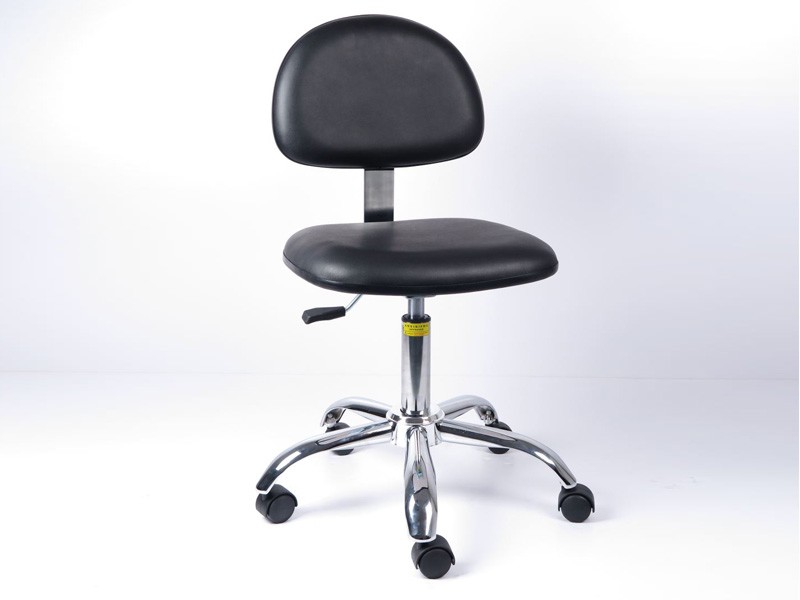
Synthetic Leather ESD Chair with Casters PT-020921
| Model designation | PT-020921 |
|---|---|
| Seat covering | Black synthetic leather |
| Backrest | Broad upholstered back |
| Back connection | Flat metal support |
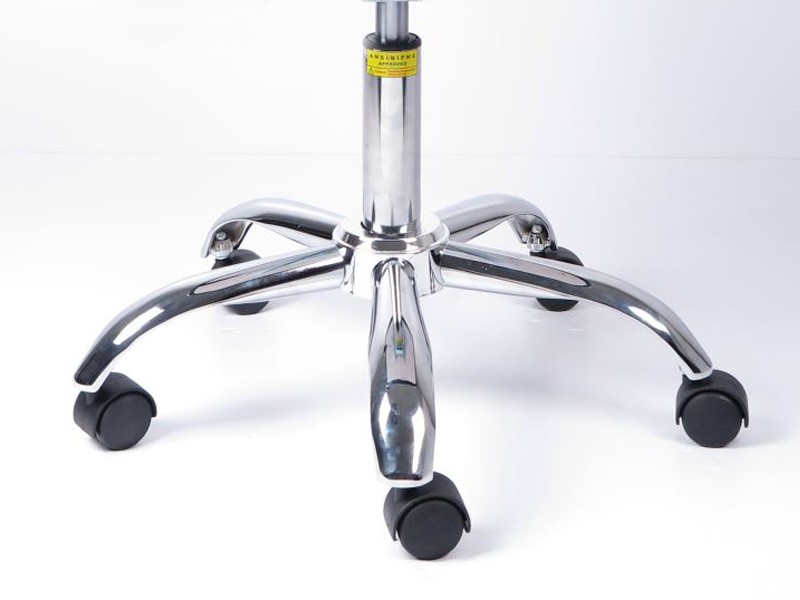
| Base | Five-leg metal base with casters |
| Adjustment | Pneumatic seat-height lever |
Seat dimensions, height travel and loading limits must be selected for the order. Electrical qualification applies to the complete supplied configuration.
The chair can be configured for your bench layout, operator fit and ESD requirements.
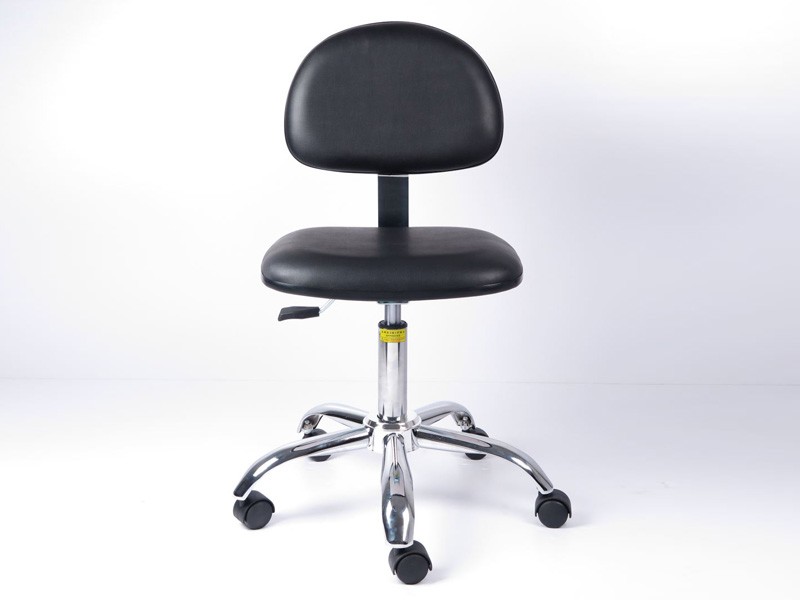
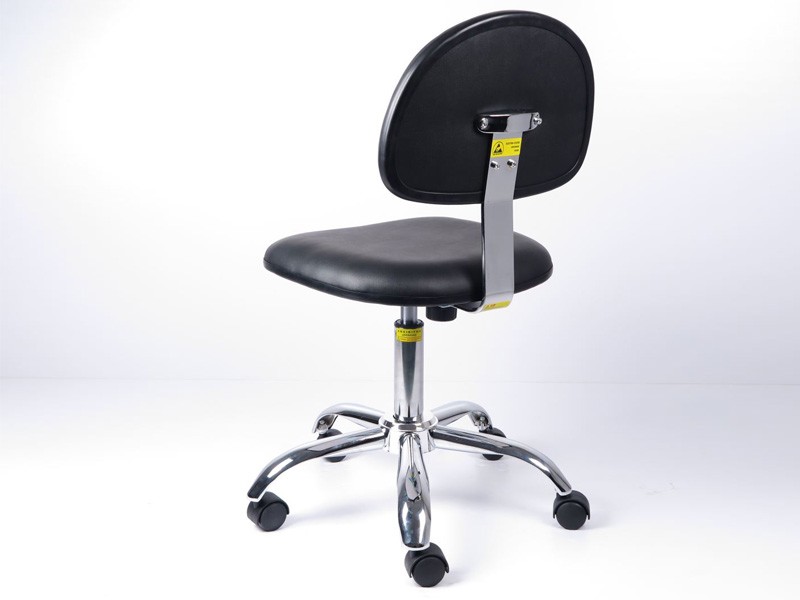
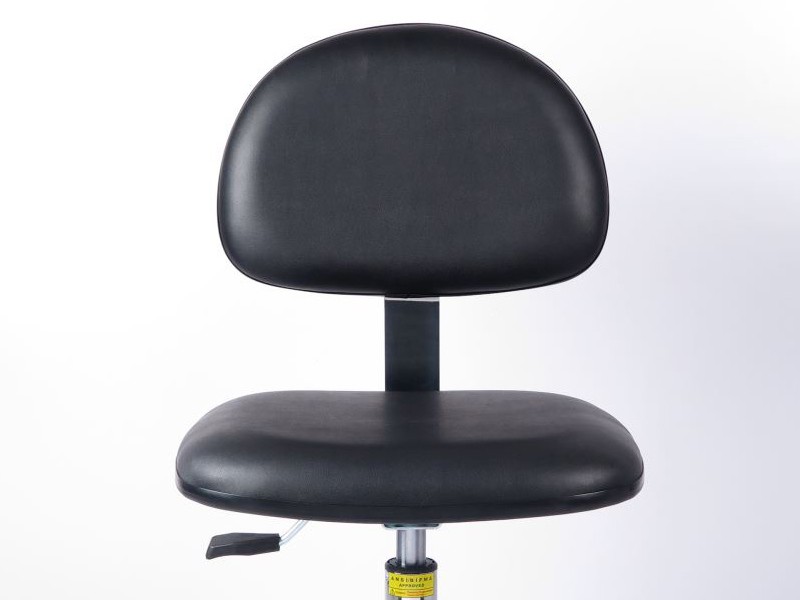
The PT-020921 pairs an upholstered seat with a broad padded back on a visible metal support. Its open-sided form lets the operator approach the bench closely, while the caster base allows repositioning within the workstation.
Plan the seated working envelope
The broad upholstered back makes this model a candidate for workstations that benefit from back support during inspection or assembly. Its visible flat support and arm-free sides keep the construction straightforward to inspect and allow the operator to approach a bench without armrests meeting the worktop.
Begin with the point where the hands work and the eyes inspect the part. Set the bench and chair so that the operator can reach this area comfortably, then check the clearance around thighs, knees and feet. Include microscopes, test leads and parts trays in the trial because they affect the usable space.
Compare by task rather than appearance
- Against PT-020621: consider the different back shape and support construction shown in the product photographs.
- Against molded PU seating: assess the preference for cushioning alongside the cleaning routine and wear conditions.
- Against fixed-glide seating: decide whether rolling is needed at the station and whether the floor supports the selected caster arrangement.
The trial should include sitting down, approaching the fixture, retrieving normal supplies and leaving the station. This reveals interference that is not apparent from a photograph of an empty chair.
Keep mechanical and electrical maintenance together
Loose back connections and worn casters affect normal use and may also compromise the intended conductive route. Inspect the assembled chair after component replacement, and retain a record of the parts used. Clean wheels and floor contacts as well as the upholstered surfaces.
For electronic assembly, agree the ESD acceptance method for the supplied chair and its intended floor. Confirm upholstery cleaning compatibility, seat travel and loading requirements in the same specification so that the delivered configuration addresses the whole workstation.
Product views and details
Related products
The chair can be configured for your bench layout, operator fit and ESD requirements.