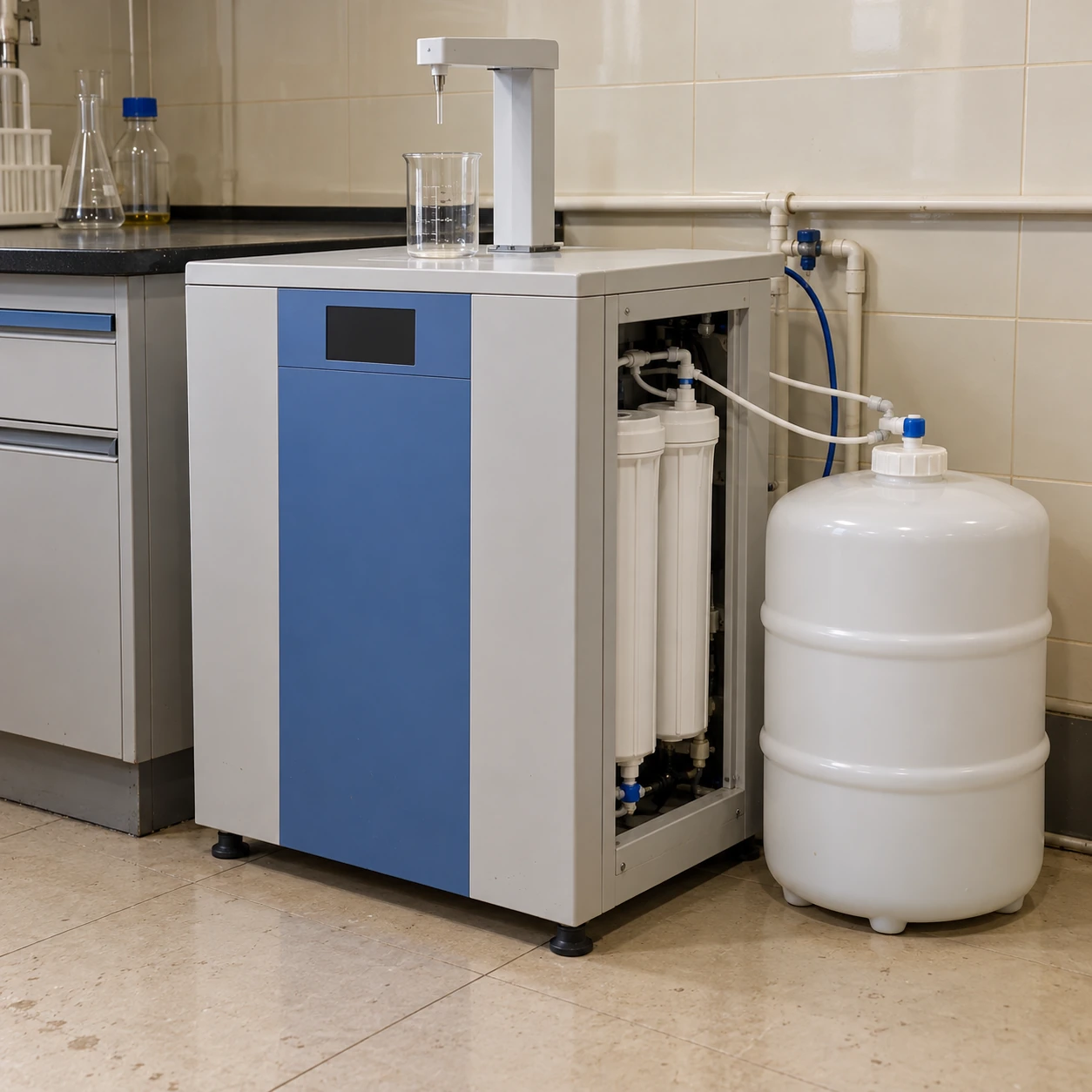
Ultrapure Water Systems
companies providing ultrapure water systems medical hospitals
| Intended scope | Department-specific laboratory or utility supply; specialist clinical duties separately defined |
|---|---|
| Compact laboratory unit, W × D × H | 440 × 560 × 750 mm |
| Central cabinet format, W × D × H | 1000 × 750 × 1800 mm |
| Treatment selection | RO, deionization, UV and final treatment according to the intended use |
| Connections | Instrument feed or defined distribution loop, with agreed isolation |
| Quality assurance | Application-specific monitoring, commissioning and release requirements |
The two envelopes describe different equipment formats, not interchangeable clinical uses. Suitability and the complete installed arrangement depend on the approved departmental specification.
The equipment package can be customized to the approved hospital application, utilities and maintenance arrangements.
Hospital water procurement starts with the intended department and connected equipment. Define each use separately so the proposed treatment and delivery arrangement can be assessed against the correct requirements.
Identify the hospital department before choosing a system
Hospitals use treated water for several unrelated tasks. Clinical laboratory instruments, instrument reprocessing equipment, dialysis services and pharmaceutical preparation do not share one interchangeable water specification. Companies providing ultrapure water systems to medical hospitals should begin with a department-by-department schedule of uses and the requirements of the connected equipment.
shengtongjh can coordinate an equipment enquiry around that schedule. The proposed package must identify its intended use, treatment stages and delivery boundary. A laboratory purifier is not thereby a medical treatment device, and water with high electrical resistivity is not automatically sterile, suitable for injection or acceptable for dialysis.
Keep four procurement scopes separate
Clinical and research laboratories
Follow the analytical method and instrument manufacturer's water requirements. Some tasks need local ultrapure polishing; others need a reliable bulk purified supply. Instrument feed pressure, demand cycles and approved connection arrangements are part of the selection.
Instrument cleaning and sterilizer utilities
Use the washer, disinfector or sterilizer manufacturer's instructions for the particular stage being supplied. Water used during a cleaning stage, final rinse or steam generation can have different requirements. A purification unit does not establish that the downstream reprocessing cycle is effective.
Dialysis services
Dialysis requires purpose-specific equipment, water-quality assurance and clinical oversight. Chemical and microbiological quality, including endotoxin control where applicable, must be addressed through the complete treatment, storage and distribution system. A generic industrial UPW specification is insufficient.
Pharmaceutical and sterile preparation
The applicable water grade and preparation process govern the system. Laboratory Type I water should not be substituted for Water for Injection or sterile packaged water. Identify the intended pharmaceutical use and its regulatory and quality requirements before evaluating equipment.
The FDA recognition record for ISO 23500-3:2024 describes the chemical and microbiological scope of water for haemodialysis and related therapies. CDC dialysis-water guidance also addresses treatment, storage and distribution. These references define a specialist application; they do not certify a product offered on this page.
Specify service continuity with the users who depend on it
A hospital's water demand may include brief instrument refill cycles, sustained laboratory operation and planned shutdown windows. Record the demand at each connection rather than adding cabinet capacities without considering how they are used. Separate incompatible uses and establish a clear connection schedule so that a convenient outlet is not used for an unintended purpose.
Maintenance arrangements should identify which services become unavailable, who authorizes isolation and what evidence is required before release back to use. An alternative feed or bypass must be suitable and approved for the connected application; the presence of a bypass pipe is not proof that operation can safely continue during treatment failure.
Include the whole wetted path in the quotation
The purifier, reservoir, vent, circulation pipework and final connection all influence the water delivered. Ask for the proposed materials, service access and compatible sanitation approach as one coordinated scope. Define responsibility for site piping and for instruments located beyond the package outlet.
Where a central supply serves laboratory terminals, match each terminal to its feed-water limits. A small terminal can provide application-specific polishing, but it should not be expected to repair a poorly maintained or unsuitable central supply.
Records that support hospital operation
The handover package should identify installed components, consumables, operating instructions, alarm responses and the agreed commissioning results. The hospital's responsible technical and clinical teams should set the ongoing monitoring and release arrangements for each use. A single conductivity or resistivity result cannot replace that programme.
Prepare a department-specific enquiry
List the connected instruments, their water requirements, peak and daily consumption, available utilities and permitted maintenance periods. For laboratory-only enquiries, the laboratory systems page explains how dispensing and analytical methods affect configuration. For clinical or pharmaceutical uses, include the responsible specialist's approved specification so the proposed equipment can be assessed within the correct scope.
The equipment package can be customized to the approved hospital application, utilities and maintenance arrangements.