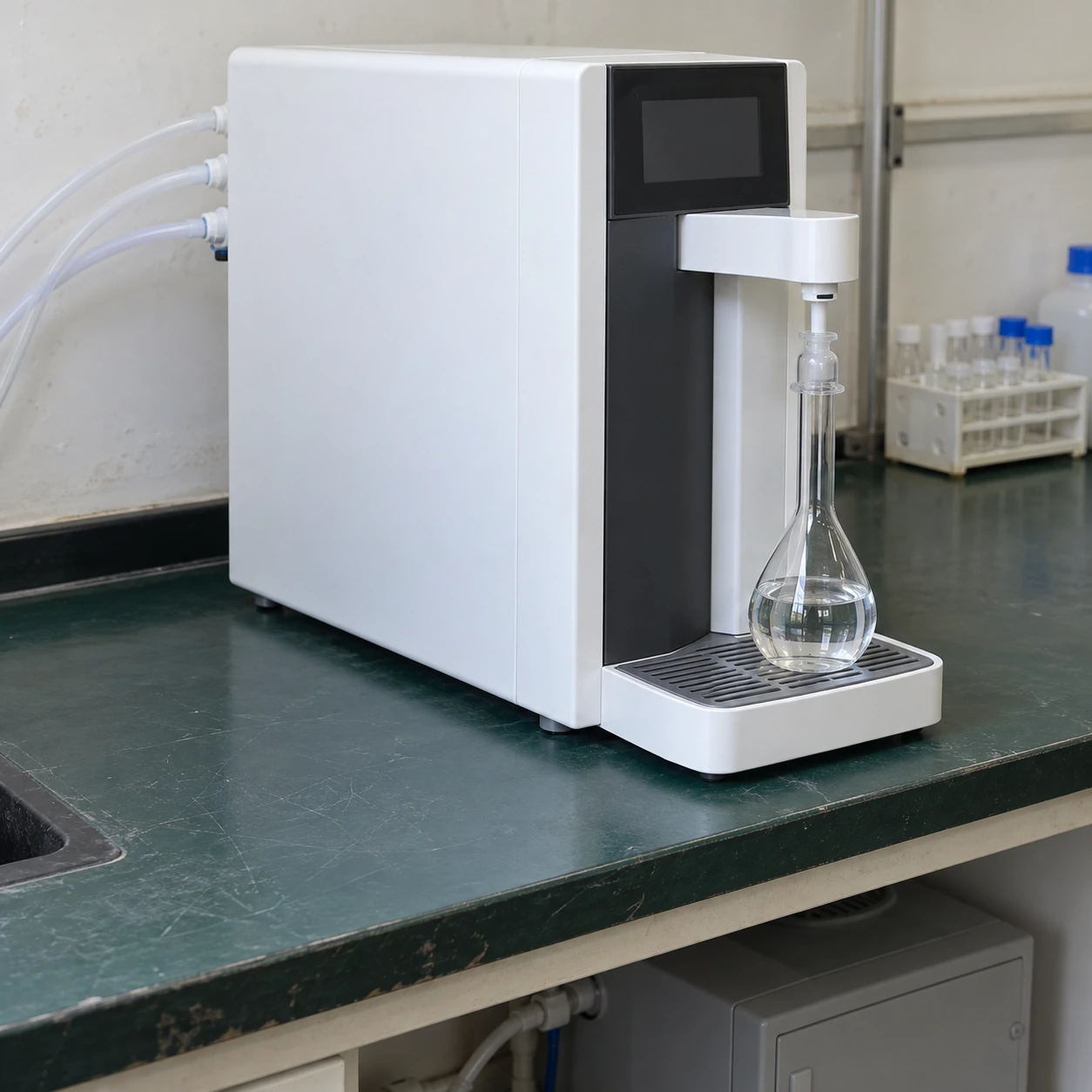
Ultrapure Water Systems
ultrapure water systems for labs
| Purified-feed polisher, W × D × H | 375 × 340 × 435 mm; dispenser and reservoir separate as configured |
|---|---|
| Integrated purifier, W × D × H | 376 × 353 × 679 mm; storage and dispenser space considered separately |
| Integrated production options | 10 or 20 L/h nominal at 15°C for the corresponding configuration |
| Final ionic-quality target | 18.2 MΩ·cm at 25°C where required; application suitability assessed separately |
| Outlet options | Bench or remote dispensing; application-specific final filter or ultrafilter |
| Records and monitoring | Water-quality display, service status and optional TOC monitoring |
Production rate is not dispense rate. Output and achieved quality depend on feedwater, selected media and operating conditions; the agreed configuration defines the acceptance criteria.
The purification, dispensing and installation arrangement can be customized to the laboratory's methods and working pattern.
Laboratory water systems should support the method as well as the bench. Match incoming water, final polishing and dispensing to the analysis, daily consumption and way samples are prepared.
Start with the result that water could disturb
In a laboratory, water can affect a blank, dilute a standard or introduce contamination during sample preparation. Choosing ultrapure water systems for labs therefore begins with the analytical method. The objective is dependable water at the moment of use, with the relevant background controlled and enough capacity for the working day.
Do not select a unit only because it displays a high resistivity. Trace ionic contamination matters, but chromatographic background, particles or biologically active contaminants may also be relevant. Match the polishing media, monitoring and final outlet treatment to the tests actually performed.
Two different starting points
A polishing unit accepts an already purified feed. A combined system first treats suitable incoming mains water and then produces the final quality. Buying the first type for a bench with only a tap-water connection leaves an important stage missing. Buying the second where a sound central supply exists may duplicate equipment unnecessarily.
Match the outlet to the method
| Laboratory work | Water-related concern | Useful configuration discussion |
|---|---|---|
| Chromatography and sensitive organic analysis | Background compounds can interfere with low-level measurements. | Organic polishing, TOC indication and the complete handling path to the instrument |
| Trace element analysis | Water, containers and fittings can add unwanted elements. | Appropriate wetted materials, fresh dispensing and method blanks |
| Molecular and cell-based work | Relevant biological contaminants are not described by resistivity alone. | Application-specific ultrafiltration or final treatment with documented suitability |
| Routine preparation and washing | Large non-critical draws can consume the capacity reserved for sensitive work. | Separate bulk purified outlets from the final ultrapure dispensing path where appropriate |
Fit the system to how the bench is used
A laboratory that fills several large vessels in the morning has a different demand profile from one taking small samples throughout the day. Record both the daily total and the largest short draw. Storage, replenishment and dispensing must work together; a fast dispenser does not mean the system can make that volume continuously.
Place the outlet where users can fill their vessels without stretching tubing across the bench or touching the nozzle with container rims. Check the actual vessel height beneath the dispensing arm, access to the drip tray and the ability to remove cartridges. An underbench installation can free working space, but its service panels and leak-detection arrangements must remain accessible.
Remote dispensing also needs a suitable water path. Extra hose length, unsuitable materials and seldom-used outlets can undermine the advantages of a good purifier. Choose the installation arrangement together with the instrument, not after it has arrived.
Do not lose purity between the dispenser and the test
Dispense sensitive analytical water close to the time of use and select the receiving container for the method. Storage vessels and laboratory air can contribute contamination even when the purifier is operating correctly. Merck's high-purity water handling guidance explains why container choice and exposure after dispensing affect the result.
Keep checks capable of separating water-system problems from handling problems. A fresh outlet sample and the laboratory's normal method blank can answer different questions. A good display reading should be considered alongside the tests relevant to the analytical work, not used to dismiss an unexplained blank.
Make routine care practical
Before ordering, establish the consumables, cleaning method, required downtime and information the system records. Trend changes rather than waiting for a final alarm: rising feed conductivity, a gradual change in organic background or shortened cartridge life may call for investigation upstream. Replacement intervals should follow the selected equipment and actual use rather than an unsupported universal promise.
Send the method list, feed-water details, vessel sizes and demand pattern with the enquiry. For a multi-department building, also review the system-level treatment and distribution choices so that bench units and central utilities are sized as a coherent arrangement.
The purification, dispensing and installation arrangement can be customized to the laboratory's methods and working pattern.