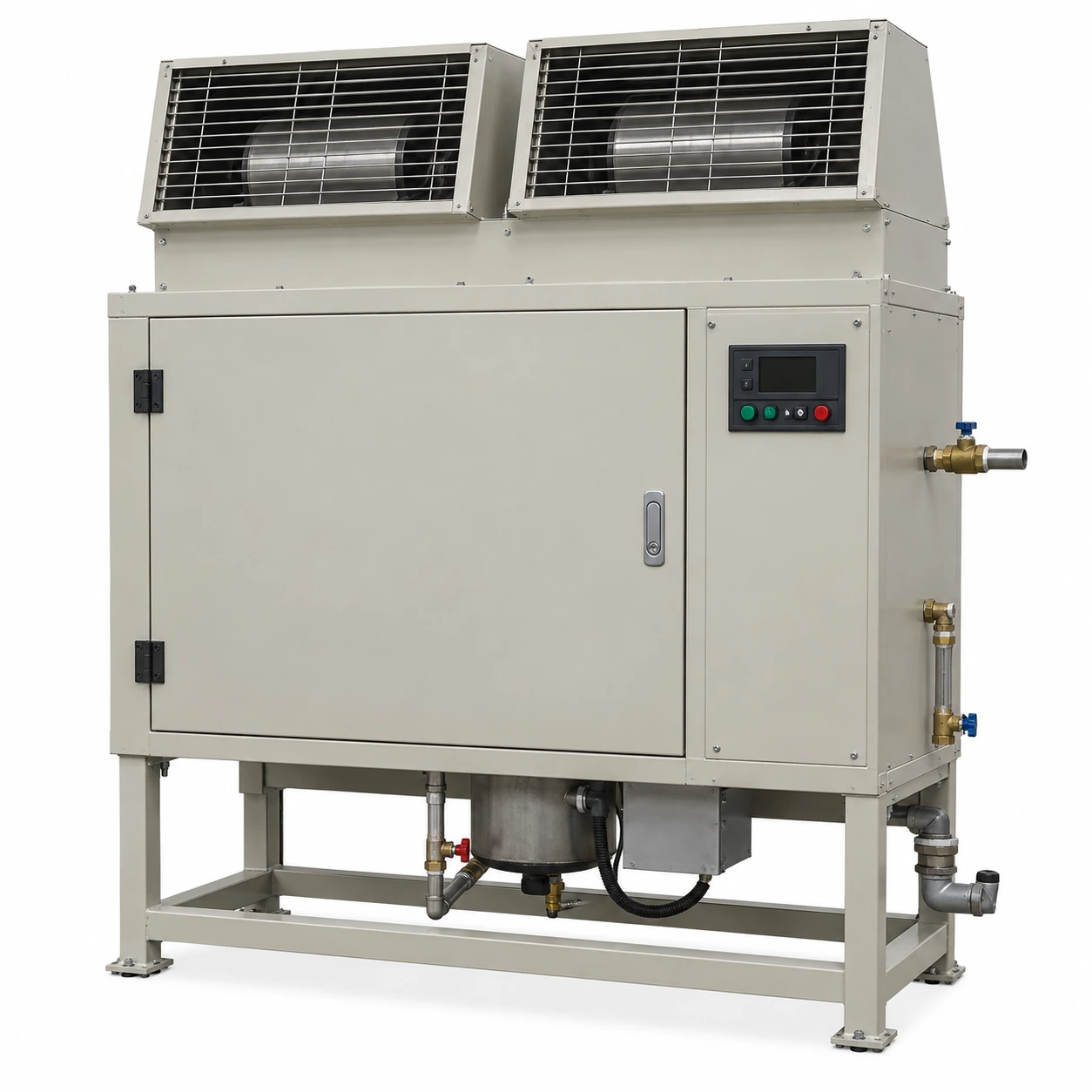
Steam Humidifiers
warm steam humidifier
| Brand | shengtongJH |
|---|---|
| Equipment arrangement | Industrial electrode generator with compatible direct-room fan distributor |
| Steam output selections | 8 / 15 kg/h |
| Generator heating input | Approximately 6 / 11.5 kW; fan electrical load additional |
| Generator size, W × D × H (mm) | Approximately 360 × 240 × 560 / 430 × 300 × 650, respectively |
| Distribution head | Top-mounted or remote fan unit sized to the steam output |
| Electrical supply | 380–400 V, three-phase, 50 Hz; matched alternatives by specification |
| Water service | Permanent feed compatible with electrode conductivity requirements |
| Humidity control | Remote room sensor or humidistat, positioned outside the discharge plume |
| Protection and operation | Low-water supervision, controlled fill/drain and distributor interlock where required |
| Installation form | Wall bracket or support rack; clear discharge and permanent drainage |
Cabinet dimensions apply to the generator only. The selected fan head, support and steam route add to the installed envelope and are confirmed with the equipment arrangement.
Steam output, fan distribution, mounting position and control arrangement can be configured to suit the industrial work area and process requirements.
A warm steam humidifier for industrial use combines a steam generator with controlled distribution into the work area. The steam is hot at generation; a matched fan distributor helps mix it with room air. It is not a domestic tabletop appliance or a source of safe-to-touch vapour.
Moisture where work happens
Direct room humidification without rebuilding the central ductwork
A direct-room arrangement can be useful where one production area needs humidity control but the existing ventilation system offers no practical steam injection point. The generator supplies a purpose-designed fan head that introduces steam into moving room air. A compatible top-mounted head keeps the equipment together; a remote head can place distribution closer to the working zone.
This arrangement still needs permanent electrical, water and drainage services. It should be positioned as industrial plant, with access for maintenance and a discharge area that remains clear during ordinary production.
Avoid solving a dry-room problem by creating a wet corner
Give the outlet room
Shelving immediately in front of the distributor can intercept moisture before it mixes. Keep the specified discharge clearances around materials, walls and overhead obstructions.
Measure away from the plume
A sensor beside the outlet can see a high reading while the rest of the room remains dry. Put the control sensor in representative circulating air and use additional readings to understand distant work areas.
Consider extraction
Steam introduced next to an exhaust may leave before it helps the process. Review the supply and extract pattern, not only the most convenient wall for mounting the cabinet.
Warm describes the discharge experience, not a separate low-temperature steam process
The water is boiled inside the generator. What people perceive at a distance depends on mixing with room air and condensation, so outlet temperature is not a useful substitute for a humidification duty. Hot parts and the immediate discharge require the clearances and guarding specified for the installation.
Do not direct the outlet towards operators or onto products. A room that cannot provide a suitable discharge zone may be better served by duct-based steam distribution.
Match the process, not an industry label
Printing preparation, paper storage and selected textile operations may need moisture control to keep material behaviour consistent. Their targets are process-dependent. Humidity control should support the material specification without encouraging condensation on cold machinery or stored goods.
For electronics work, humidity may be one environmental factor, but it does not replace an engineered ESD programme. For sensitive production, use the required environmental specification rather than a generic comfort setting.
Choose a manageable operating pattern
Intermittent demand can favour scheduling that starts conditioning before production begins. Continuous operation needs dependable drainage and a maintenance position that remains accessible when the room is busy.
A direct-room fan adds its own airflow and sound. Its compatibility with the generator, required clearances and placement should be established together; attaching an arbitrary fan does not create a suitable steam distributor.
Keep useful output available
Mineral accumulation changes the service needs of the cylinder. Monitor the equipment's operating and service indications, maintain the distributor as instructed and keep the drain unobstructed. If output falls, examine the equipment condition and actual room load before simply raising the humidity setting.
For a different boiling technology or treated-water requirement, see industrial hot steam generation.
Steam output, fan distribution, mounting position and control arrangement can be configured to suit the industrial work area and process requirements.