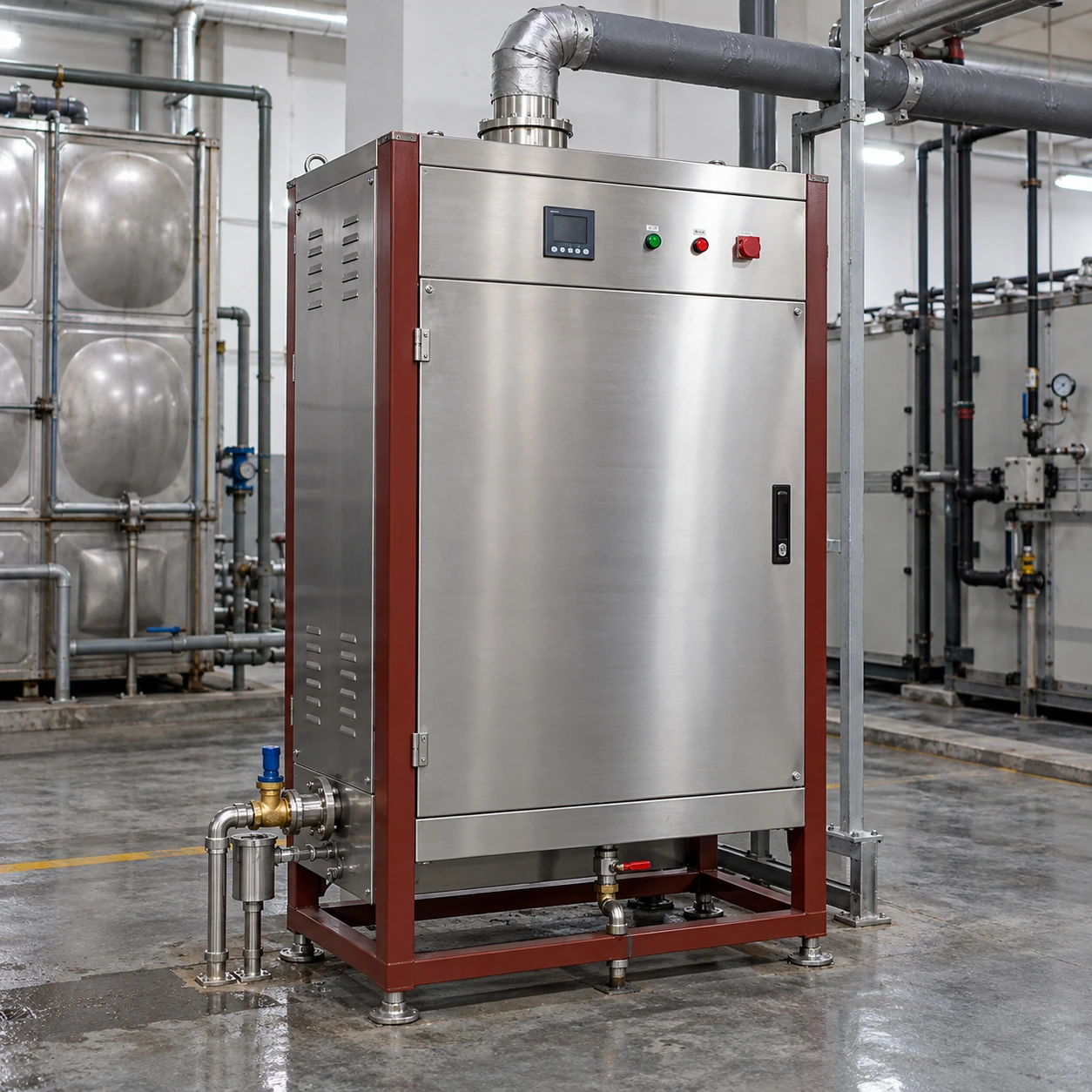
Steam Humidifiers
hot steam humidifier
| Brand | shengtongJH |
|---|---|
| Heating method | Electric resistance elements in a serviceable boiling vessel |
| Capacity classes | 6 / 12 / 18 / 30 kg/h |
| Heating power classes | Approximately 4.5 / 9 / 13.5 / 22.5 kW, respectively |
| Electrical supply | 400 V, three-phase, 50/60 Hz; 380 V or other supplies require matched elements and controls |
| Cabinet envelope, W × D × H (mm) | 6–18 kg/h class: approximately 645 × 325 × 830; 30 kg/h class: approximately 688 × 395 × 855 |
| Water options | Mains or suitably treated water, subject to the selected vessel and water-level system |
| Steam connections | Steam-rated connection and distributor sized to output; condensate provision as required |
| Control options | On/off or proportional demand; water-level and overtemperature protection |
| Drain arrangement | Automatic drain/flush with temperature management as required |
| Maintenance | Access to heating surfaces and boiling vessel for approved cleaning |
These capacity, power and cabinet classes guide equipment selection. The supplied unit's drawing defines connection positions, installed height and service clearances; heater and voltage choices must remain compatible.
Heating capacity, cabinet material, water treatment, steam distribution and control options can be specified for the process and installation environment.
An industrial hot steam humidifier boils feed water and delivers vapour to a matched duct or room distributor. A resistive heating configuration is particularly relevant when the water-treatment strategy and cleaning access are important parts of the project.
What the heat is doing
The heater transfers energy into water until it changes to vapour. The humidifier then introduces that vapour into an air stream or room through a suitable distributor. This provides controllable moisture addition without relying on a cold-water spray at the point of use.
The equipment is an atmospheric humidification generator. It should not be selected as a process pressure boiler, sterilizer or source of validated pharmaceutical clean steam. Those applications have different construction and quality requirements.
Water treatment and heater access
Minerals left behind by evaporation accumulate in the vessel. A resistive design can use compatible low-mineral water without depending on conductivity to carry the heating current. That makes it useful where an appropriate treated-water supply is already available.
Treatment must still suit the equipment materials, level detection and manufacturer's water limits. A softener and a reverse-osmosis system do different jobs; do not choose between them solely because both are called water treatment.
Steam production and delivered moisture
Not all generated steam reaches the controlled area. Heat loss along the delivery route produces condensate, and an unsuitable distributor can leave water on duct surfaces. The installation should keep the steam path practical and return or discharge condensate by the specified arrangement.
Increasing generator output will not correct an obstructed hose, badly positioned lance or control sensor sitting in a poorly mixed zone.
Design the drain for hot discharge
Drain and flushing water can be hot. Pipe material, discharge temperature, drain cooling and the receiving connection have to suit the selected unit and local installation requirements. An ordinary hose led into a convenient bucket is not a permanent industrial drainage solution.
Provide accessible isolation and a drainage route that can be inspected. Cooling, isolation and draining are part of the service procedure before opening the vessel; an external controller showing no demand does not by itself establish that the equipment is safe to service.
Where this configuration can be useful
Controlled production air
Provide a matched moisture input to the ventilation system serving a specified process. The required humidity tolerance comes from the whole control arrangement, not the word steam.
Material conditioning
Support a defined environment for moisture-sensitive materials while keeping discharge clear of the material itself. Stable room conditions and time for equilibration are separate considerations.
Facilities with treated water
Use a compatible heating system when a low-mineral water service is part of the plant. Include treatment servicing and water availability in the operating plan.
Compare the lifetime workload
Electrical consumption follows output and operating time; scale removal, water treatment and consumables also affect ownership cost. A quotation should identify the boiling vessel, access method and required service parts. A cleanable vessel is useful only if the site can actually isolate, cool and reach it.
If readily available mains water and replaceable cylinders better suit the facility, compare the electrode steam option. For plant control and distribution, see HVAC steam humidification.
Heating capacity, cabinet material, water treatment, steam distribution and control options can be specified for the process and installation environment.