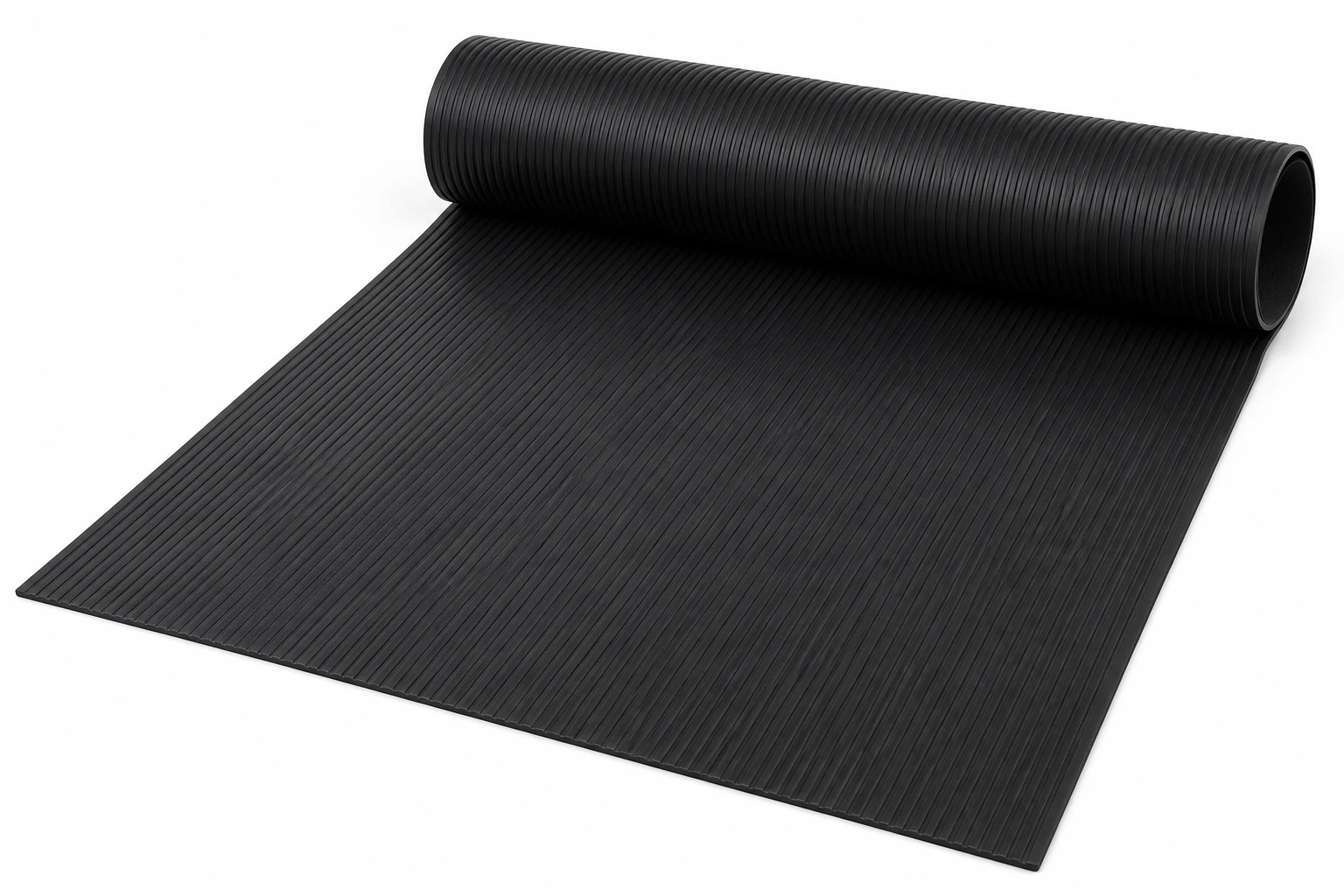
PVC Floor Mats
pvc flooring mat
| Solid runner construction | Flexible PVC with a fine-ribbed face and continuous backing |
|---|---|
| Solid roll, L × W | 25 × 1 m; 2.0 mm nominal overall thickness |
| Open-profile alternative, L × W | 10 × 0.6, 10 × 0.91 or 10 × 1.22 m; 14 mm nominal height |
| Finished form | Full roll or cut length for the workstation footprint |
| Edges | Compatible transition edging where the profile and traffic require it |
| Maintenance access | Lift or roll back the removable mat to clean the supporting floor |
Solid and open-profile mats perform different tasks. Choose the profile for footwear, wheels, contaminants and cleaning access; ordinary PVC matting is not automatically an ESD or electrical-insulating product.
A PVC flooring mat gives a defined workstation or route a removable protective surface. A thin solid runner is useful where the main need is a cleanable contact layer; an open profile serves a different duty when liquid or debris must pass below the standing surface.
Fit the task, including the space beside it
A mat placed under the operator's feet should cover the normal working position and the small movements made while reaching for parts. A narrow strip may leave one foot repeatedly crossing an edge. An oversized piece can extend into a trolley route or prevent a cabinet door from opening freely.
Observe the workstation with its equipment in the operating position. Include a chair's movement if work alternates between sitting and standing. Cut-outs around legs should avoid creating slender pieces that are difficult to keep flat and clean. The useful footprint is the area that supports the task without introducing new obstructions.
Choose a solid face for surface protection
A solid ribbed runner separates direct shoe or light equipment contact from the underlying finish. Its grooves can help organize the contact surface, but they also collect debris and need cleaning. Because liquid cannot drain through a continuous backing, spills must be removed from the top and checked at the perimeter.
A thin runner should not be presented as a thick cushioning mat. Comfort and fatigue claims require evidence for the selected construction and the intended standing conditions.
Choose openings only when they serve the process
An open-grid profile allows suitable liquid and debris to move below the top surface. That can help keep the standing face clearer, provided the supporting floor drains or is cleaned appropriately. The material does not make the underlying contamination disappear.
Assess the opening size against footwear and wheel contact. A mesh that works under shoes may be unsuitable for a small hard castor. Do not assume an open mat is suitable for every trolley simply because it is used in an industrial setting.
Edges are part of the product selection
Check every approach to the mat: the normal walking direction, side steps, chair movement and any occasional crossing. Compatible ramped edging can make a raised profile easier to cross, but it must fit and remain secured as the system requires. An improvised strip or overlapping loose mats can create another uneven boundary.
If a mat moves, curls or no longer lies as intended, investigate the support surface, temperature exposure and use pattern. Adding an unsuitable adhesive can prevent future cleaning or damage the floor beneath it.
Plan cleaning below the visible surface
Choose a piece that staff can lift or roll safely within the available space. Remove accumulated grit, clean both surfaces with compatible products and let the area reach the required dry condition before replacement. For several workstations with different exposure, a zone-based mat selection is more useful than extending one runner profile across the whole facility.
Mat length, profile and edge treatment can be customized to the workstation footprint and daily traffic.