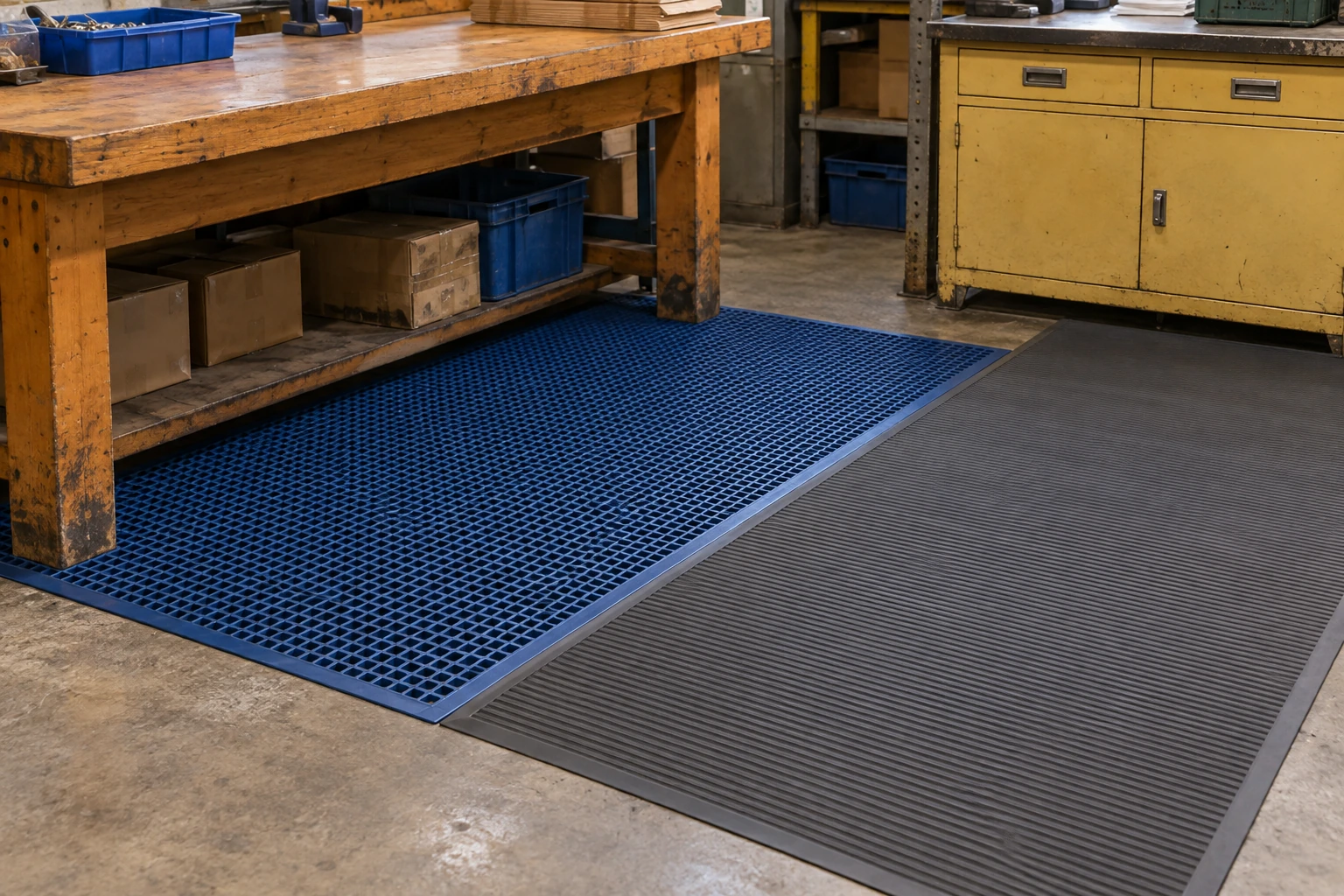
PVC Floor Mats
pvc flooring mats
| Solid fine-rib runner, L × W | 25 × 1 m; 2.0 mm nominal thickness |
|---|---|
| Close-mesh roll, L × W | 10 × 0.6, 10 × 0.91 or 10 × 1.22 m; 14 mm nominal height |
| Open-grid roll, L × W | 5 or 10 m long × 0.6 or 0.91 m wide; 20 mm nominal height |
| Open-grid module, L × W | 1.8 × 0.6 or 1.8 × 0.91 m; 20 mm nominal height |
| Boundary options | Profile-matched ramps, compatible connectors and cut ends |
| Workplace assessment | Footwear, wheel contact, debris, liquid exposure and lifting access |
Dimensions describe separate profile choices. Load capacity, slip performance, chemical compatibility and any fatigue-reduction claim require evidence for the selected mat.
A facility may need several PVC mat profiles because packing benches, wet service areas and debris-producing workstations have different duties. Selecting by zone keeps the surface, openings and maintenance method connected to what actually happens at each location.
Give each work zone the surface it needs
Dry packing and light assembly
A solid runner can protect the supporting finish and provide a defined work surface without a deep open structure. Keep it clear of small hard debris that could be pressed into the mat or floor. Where chairs or carts cross the edge, assess that movement as part of the selection.
Wet service positions
A suitable open profile lets water pass below the top contact surface. It still needs a floor that drains or can be cleaned effectively. If the mat simply hides standing water, the maintenance task has been postponed rather than solved. Evaluate the footwear and expected contaminants alongside the profile.
Areas producing loose debris
A deeper grid can separate some debris from the standing surface. Its openings must suit the material being produced and the footwear in use. Sharp swarf, hot particles or incompatible chemicals can demand a different product; the label industrial does not establish suitability for every process.
Manage transitions between zones
Different profiles create different edge heights and contact patterns. A cart route crossing several mats may encounter more resistance than a pedestrian route. Keep transitions deliberate, avoid overlapping loose pieces and use compatible edging where needed.
Where a trolley has to remain electrically connected to ground, adding an ordinary mat over an ESD floor can alter that path. Review the whole arrangement before placing a protective mat in an electrical-control area.
Choose manageable cleaning units
One long runner reduces the number of cut ends but may be difficult to lift around equipment. Several modules are easier to handle individually, although their connections and boundaries add maintenance points. Choose lengths that can be removed and returned without blocking the working area.
Provide a place to clean and dry removable pieces. Moving a dirty mat into another production zone can spread the contamination that the cleaning task was intended to remove.
A simple location record improves replacement
Identify each mat by area, profile, dimensions and edge arrangement. Note the cleaning method and the conditions that would trigger replacement, such as damaged connections, loss of flatness or a worn working face. This helps staff order the correct item instead of selecting a similar-looking roll from a general catalogue.
Review the mat choice when the process changes. A bench converted from dry packing to liquid handling may need a different profile and cleaning access, even if the footprint stays the same. Coordinating those changes through a single supply specification can reduce inconsistent replacements across the facility.
The mix of mat profiles, cut sizes, connectors and edges can be customized to the facility's work zones and cleaning routine.