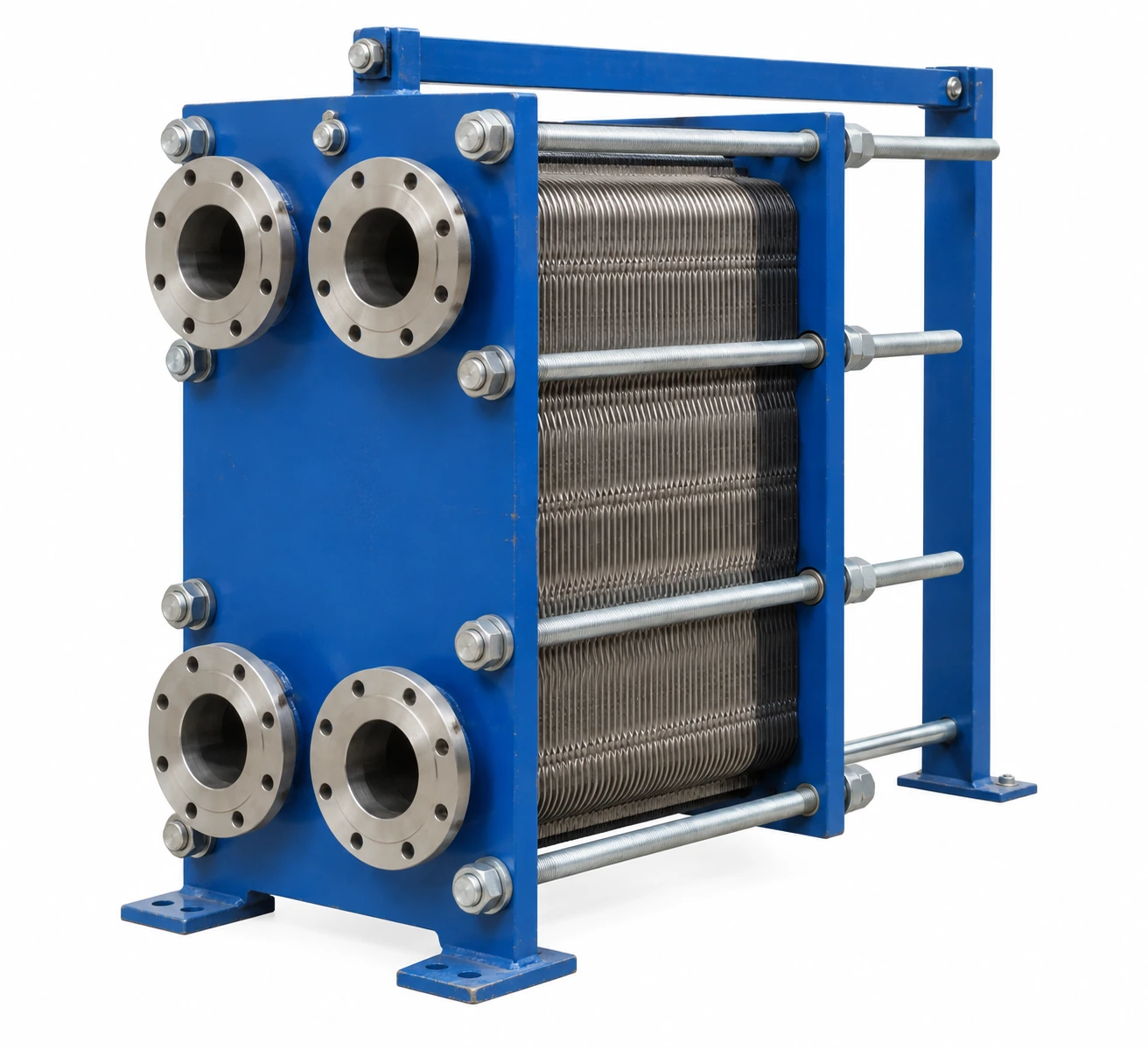
Plate Heat Exchangers
plate heat exchanger
| Brand | shengtongJH |
|---|---|
| Construction choices | Gasketed plate-and-frame or brazed plate pack |
| Duty enquiries | 25 / 50 / 100 / 200 kW; selected at the specified temperature programme |
| Plate materials | 304 or 316L stainless steel; alternatives by fluid compatibility |
| Connection choices | DN25 / DN50 / DN65; threaded or flanged as selected |
| Gasketed pressure classes | 10 / 16 bar design options, subject to temperature and assembly selection |
| Plate thickness options | 0.5 / 0.6 mm for suitable gasketed designs |
| Frame size classes | Approx. 250 × 750 or 330 × 950 mm, width × height; depth depends on plate count and frame |
| Seals | EPDM or NBR compound matched to fluid and operating temperature |
| Power requirement | Passive exchanger; circulation pumps and controls are separate |
| Installation options | Insulation, strainer, isolation valves and cleaning connections |
Heat duty is not a fixed rating independent of temperatures and flow. Pressure, temperature, plate count and dimensions must be confirmed as one selected assembly.
Materials, duty, connections and frame arrangement can be customized to the application and installation space.
A plate heat exchanger transfers heat between separate fluid circuits through thin metal plates. For ordinary industrial heating and cooling, a useful selection balances heat transfer, pumping requirements, fluid compatibility and the ability to maintain the equipment.
Specify both sides of the job
The hot circuit supplies heat and the cold circuit receives it. To select the exchanger, identify both fluids, their flow rates and the required inlet and outlet temperatures. A capacity figure without those conditions leaves too much room for two quotations to describe very different equipment.
At a given duty, a smaller temperature difference between the streams generally requires more effective heat-transfer area. Adding plates also changes channel velocities and pressure loss, so selection is not simply a matter of choosing the largest plate count that fits the budget.
Open for service or keep it compact?
A gasketed frame can be opened to inspect and clean the plates. It suits applications where accessible service is valuable and the gasket material is compatible. A brazed unit is compact but cannot normally be dismantled plate by plate. Choose it with water cleanliness and a practical flushing arrangement in mind.
Keep the pump in the calculation
A very compact selection can demand more pumping head. State the permitted pressure drop on each side rather than assuming the existing pump has spare capacity. Where the flow is already weak, installing a restrictive replacement can make the original problem worse.
Buy a maintainable installation
Support pipework independently so the connections do not carry avoidable loads. Allow access for valves, strainers and drains as well as the exchanger itself. On an openable unit, space for moving the pressure plate and removing individual plates is part of the installation footprint.
For procurement through shengtongJH, supply the operating conditions and any existing connection drawing. Define whether the purchase is the bare exchanger or includes insulation and water-side accessories. Compare gasketed and brazed construction before fixing the equipment layout.
Materials, duty, connections and frame arrangement can be customized to the application and installation space.