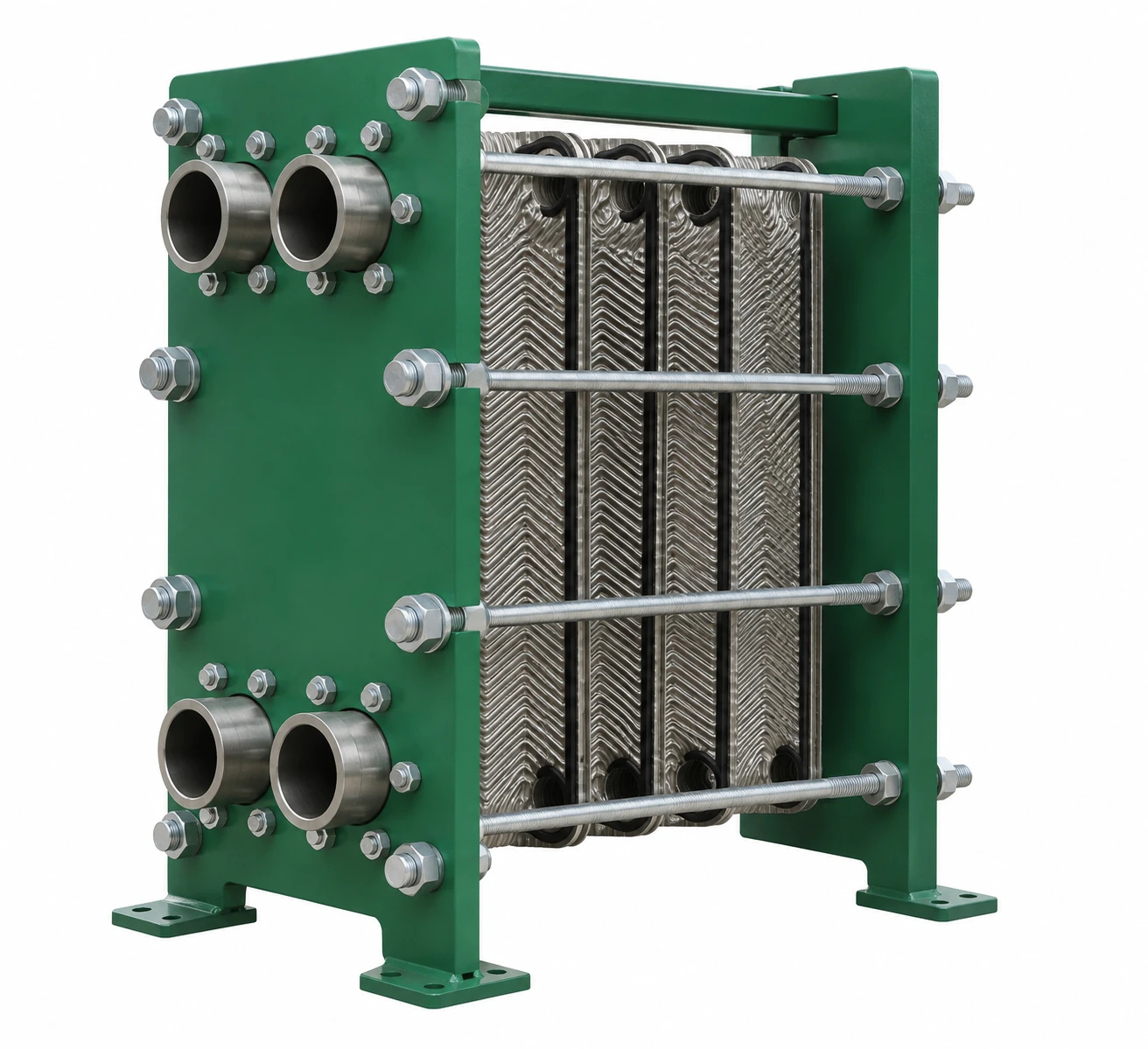
Plate Heat Exchangers
gasketed plate heat exchanger
| Brand | shengtongJH |
|---|---|
| Frame | Painted carbon steel; stainless frame by selection |
| Plates | 304 / 316L stainless steel |
| Plate thickness | 0.5 / 0.6 / 0.8 mm where available for the selected plate pattern |
| Gasket materials | EPDM / NBR; compound selected for fluid and temperature |
| Pressure options | 10 / 16 bar design classes; assembly-specific limits |
| Connections | DN25 / DN50 / DN65 / DN100 |
| Frame face size classes | Approx. 250 × 750 / 330 × 950 / 500 × 1,100 mm, width × height |
| Pack and frame depth | Selected for plate count and opening travel |
| Flow arrangement | Single-pass or selected multi-pass configuration |
| Service options | Spare gasket set, isolation valves, cleaning ports and removable insulation |
Gasket compatibility depends on the actual compound, concentration and temperature. Plate additions or changes require a fresh thermal and mechanical check.
Plate materials, seals, pass arrangement and service clearance can be customized to the operating fluid and maintenance needs.
A gasketed plate heat exchanger clamps individually sealed plates inside a frame. The ability to open the pack is its main practical advantage where inspection, cleaning or replacement of worn seals is part of normal plant maintenance.
Make opening the pack practical
An openable design only helps if the installation leaves enough room to use it. The pressure plate needs travel on the carrying bar, and individual plates need a removal route. Pipes, insulation and nearby pumps should not block those movements.
Allowing this space at purchase can avoid removing the whole exchanger for ordinary gasket work. Keep the assembly drawing and plate sequence with the equipment so reassembly is based on the selected design rather than memory.
Choose seals for the fluid, not just the temperature
A gasket can tolerate a temperature yet still be unsuitable for the chemical or oil in contact with it. EPDM and NBR are useful material families, but their compounds are not universally interchangeable. Include additives, cleaning chemicals and concentrations in the compatibility review.
Unexpected external leakage may involve seal ageing, incorrect compression, damaged plates or operating conditions. Tightening beyond the specified pack dimension is not a reliable cure and can damage the assembly. Service should follow the selected equipment instructions.
Clean without damaging the surfaces
Deposits can reduce heat transfer and restrict passages. Use a cleaning method compatible with the plate alloy and gasket. When opening is necessary, inspect plates and seals while keeping their sequence and orientation identifiable.
Expand only within the frame limits
A longer carrying bar does not automatically mean spare capacity. Additional plates affect channel flow and compression length. Confirm the thermal selection, port capacity and frame limit before increasing the pack.
Plan the spare parts with the purchase
Identify the plate pattern, gasket attachment and required service parts before selecting the supplier. A lower initial quotation may become inconvenient if the seal profile is difficult to obtain later. shengtongJH can coordinate the exchanger and identified spares as a defined supply package. For individual plate replacement, see plate heat exchanger plate.
Plate materials, seals, pass arrangement and service clearance can be customized to the operating fluid and maintenance needs.