Plate Heat Exchangers
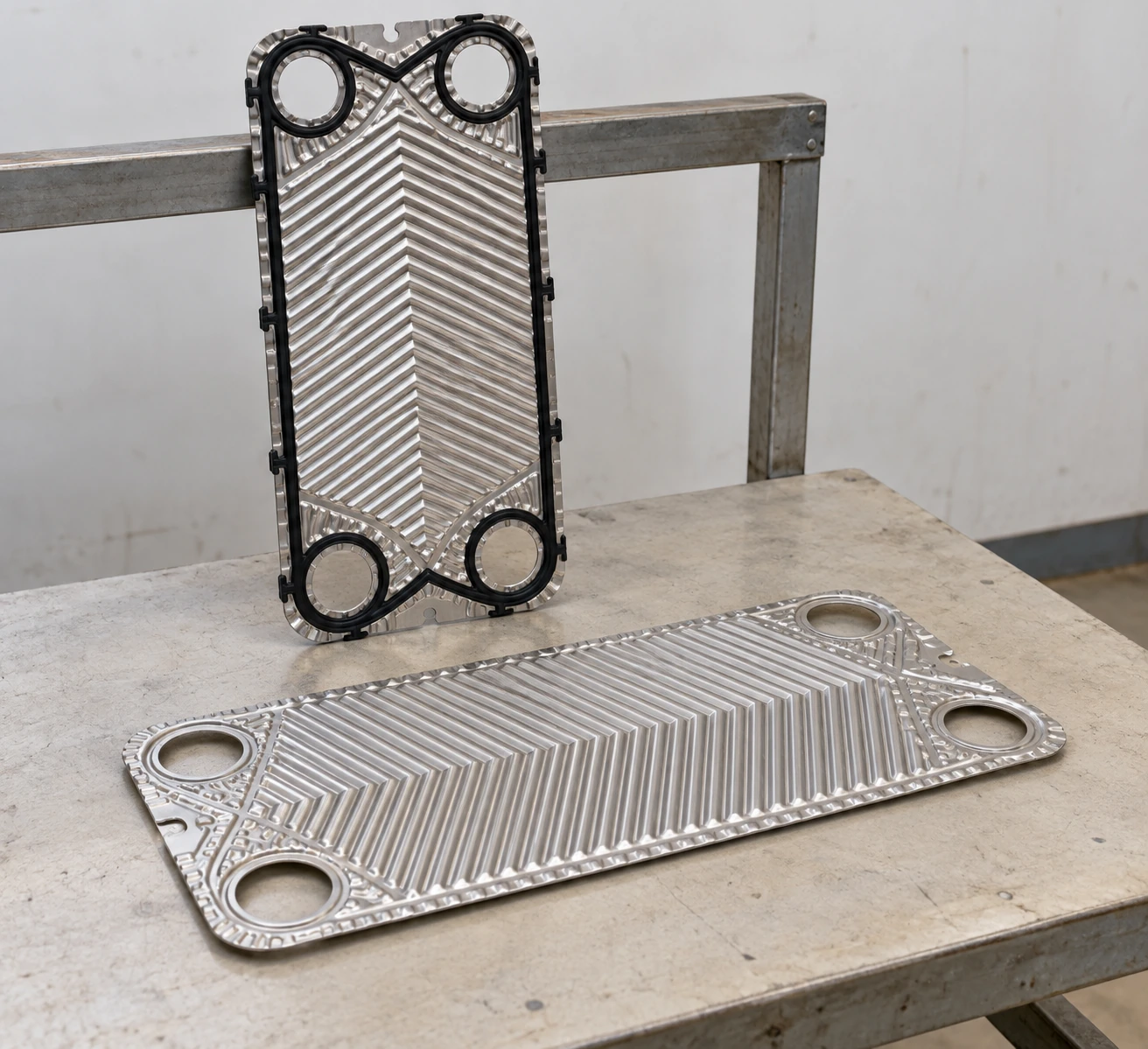
plate heat exchanger plate
| Brand / sourcing contact | shengtongJH |
|---|---|
| Component | Individual channel plate, end plate or identified plate set |
| Material choices | 304 / 316L stainless steel; other alloys by compatibility review |
| Thickness choices | 0.5 / 0.6 / 0.8 mm, matched to the original plate design |
| Plate construction | Stamped corrugated plate with specified port openings |
| Dimensions | Overall W × H, port centres and pressed depth in mm matched to drawing or sample |
| Corrugation | Chevron angle and pressing pattern matched to pack specification |
| Gasket option | Bare plate or correctly gasketed plate |
| Seal materials | Compatible EPDM / NBR compound for the selected groove |
| Ordering identification | Equipment identity, plate code, hole pattern, quantity and position in pack |
| Packing | Protected flat stack with separation against edge and surface damage |
Equal outer dimensions do not establish compatibility. Pressure capability belongs to the complete approved assembly, not to a loose plate specification.
Plate material, port arrangement, gasket supply and quantities can be matched to the identified exchanger and operating conditions.
A plate heat exchanger plate is a replacement or assembly component, not a complete exchanger. Correct fit depends on its pressed profile, port arrangement, gasket groove and location in the plate pack, as well as overall size.
A similar shape can still be the wrong plate
Small differences in pressing depth or contact pattern affect how neighboring plates support one another and form flow channels. A plate may slide onto the carrying bar yet fail to seal or distribute flow correctly. Matching only a photograph of the outer outline is therefore insufficient.
Port positions and open or closed holes also determine where each fluid travels. Channel plates, turning plates and end plates may serve different functions in the same assembly. Identify the required position rather than ordering every plate as one generic item.
For replacement of damaged plates
Record the equipment identification, plate markings, material and thickness where known. Provide clear views of both faces and the gasket groove. A dimensioned drawing or physical sample can resolve details that a front photograph does not reveal.
Check why the original plate failed. Replacing a corroded plate with the same unsuitable alloy or reinstalling into an over-compressed pack leaves the underlying problem in place.
For a complete pack
A plate pack has a sequence, not simply a quantity. Specify the channel arrangement, plate types and gasket orientation. Thermal and pressure requirements should be reviewed by the equipment supplier if changing the original design.
Adding surface area without checking channel distribution may change velocities and pressure drop. More plates do not guarantee better performance in every existing frame.
Protect the parts before installation
Thin plates are vulnerable to handling damage at edges, ports and gasket seats. Keep them supported and separated during transport and storage. Inspect the delivered profile and packing condition before starting a planned shutdown, while there is still time to resolve a mismatch.
shengtongJH can source identified plate requirements and associated seals. Compatibility must be established against the actual exchanger; no universal fit or original-manufacturer status is implied. A serviceable complete unit can instead be specified through the gasketed plate heat exchanger page.
Plate material, port arrangement, gasket supply and quantities can be matched to the identified exchanger and operating conditions.