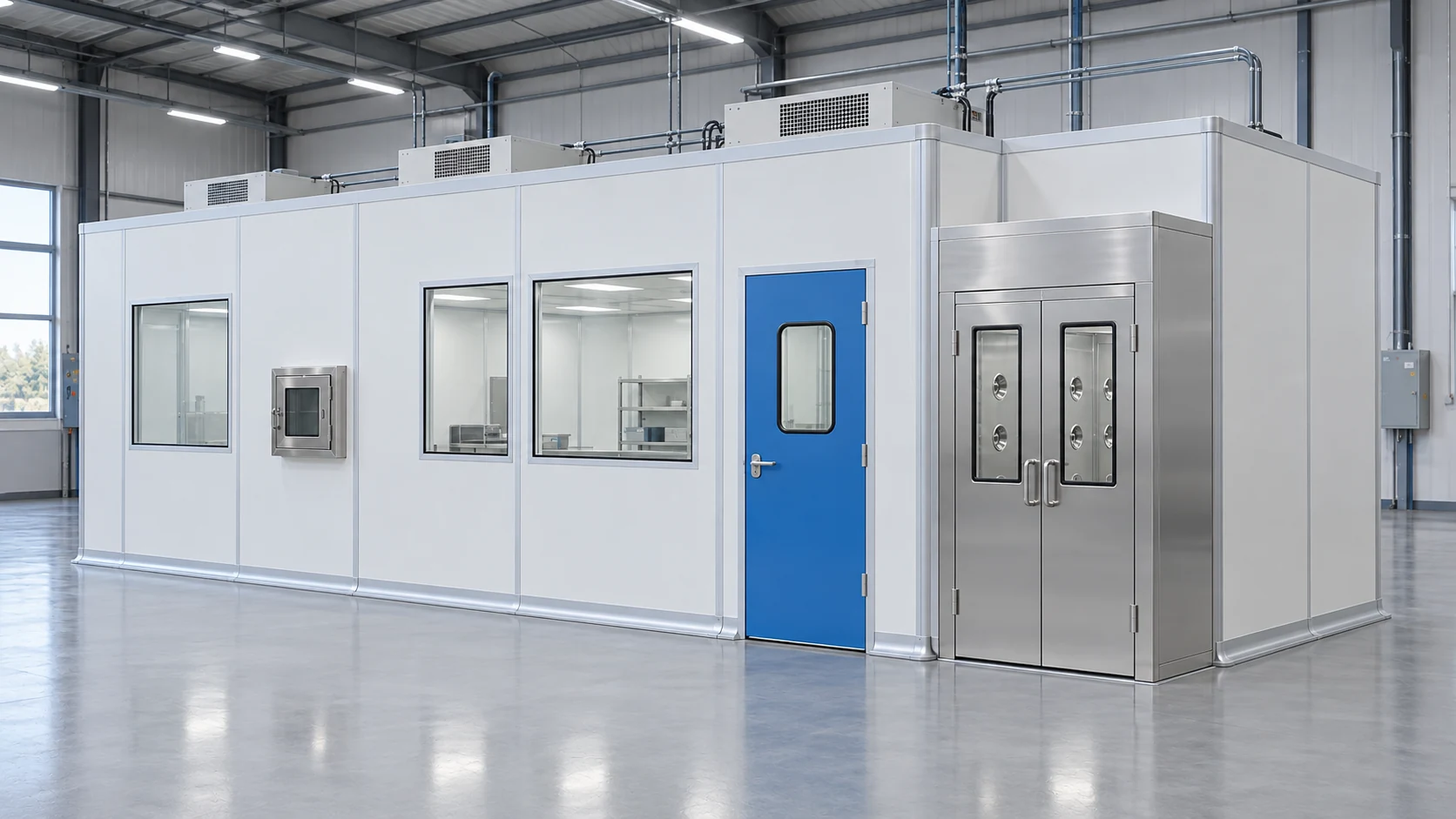
Include the machine states outside normal production
Map normal running, loading, cleaning, fault recovery and maintenance. Equipment doors, robot envelopes and removable assemblies can occupy different spaces in each state. Confirm which activities require personnel inside the enclosure.
Collect heat, utility and exhaust information from the equipment suppliers. Automation can reduce some routine human movement while increasing service complexity. The environmental system still needs realistic operating inputs.
Coordinate the room's physical boundaries with guarding and access arrangements developed by the machinery specialists. Keep the responsibilities separate but aligned. A cleanroom enclosure does not replace the safety design or control integration of the production line.
Configuration decisions
| Decision | What to define |
|---|---|
| Operating states | Show running, loading, cleaning and maintenance positions. |
| Equipment services | Provide power, heat, exhaust and utility data. |
| Access interfaces | Coordinate personnel entry with the machinery design. |
| Replacement route | Allow major assemblies to be removed without unplanned demolition. |
Can operator-free production eliminate personnel access planning?
No. Maintenance, cleaning, inspection and recovery still require planned access. Those tasks may determine clearances that are not visible during normal running.