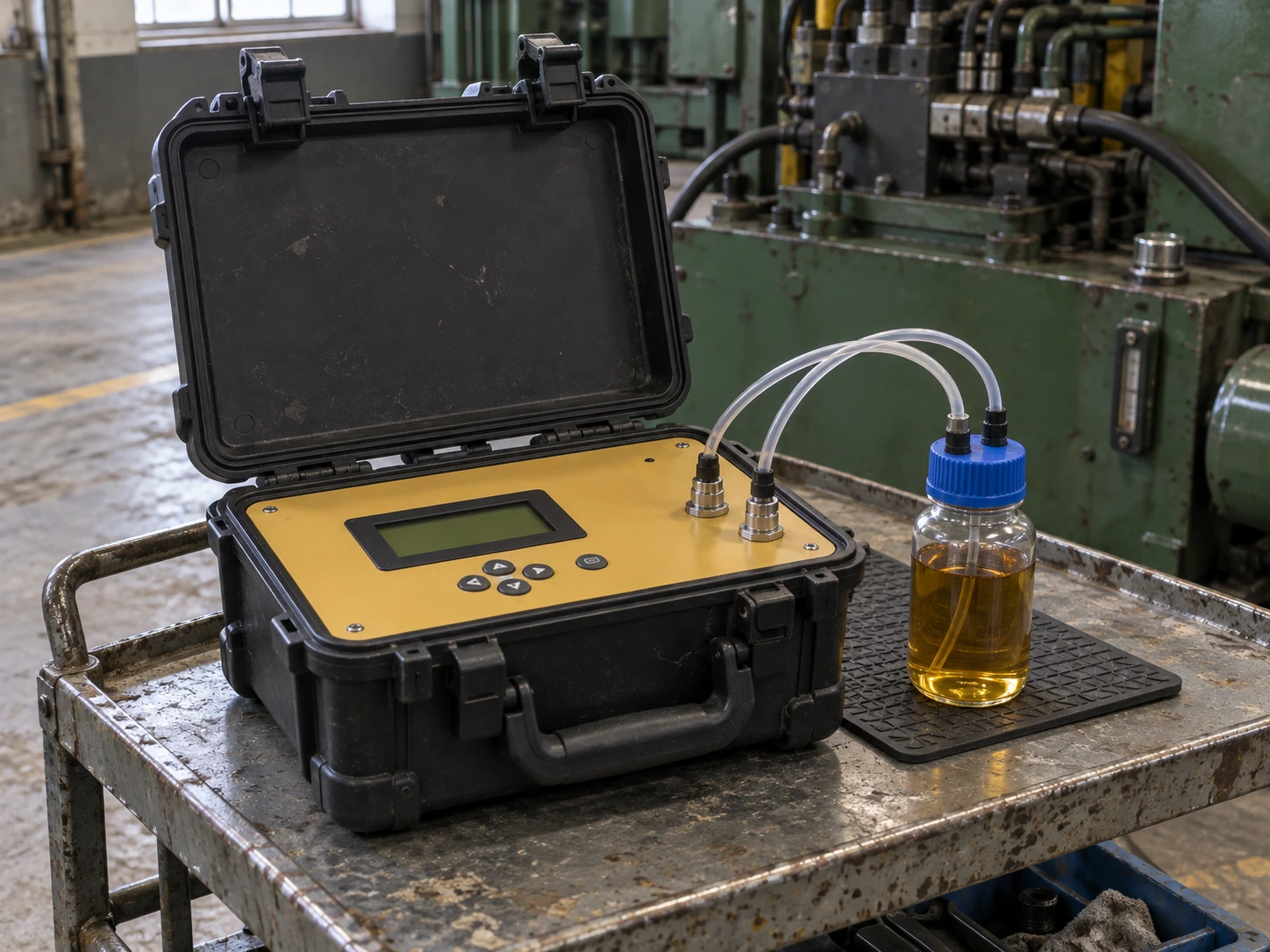
Liquid Particle Counters
portable liquid particle counters
| Brand | shengtongjh |
|---|---|
| Portable dimensions, W × D × H (mm) | Compact instrument body: 310 × 360 × 145; rugged case format: 420 × 220 × 330 |
| Fluid variants | Hydraulic/lubricating oil configurations or compatible aqueous-fluid versions; material and viscosity limits selected separately |
| Sampling arrangement | Bottle measurement; direct-line sampling with the appropriate connection and pressure/flow-conditioning package |
| Field power | Rechargeable battery or compatible external supply, according to the selected instrument |
| Measurement records | Size-channel counts, sampled volume, sample identity and time; storage/export and cleanliness reporting matched to the required method |
Dimensions describe the instrument body or case. Reserve additional space for an open lid, bottles, tubing and the operator. Portability does not establish a pressure rating, weather rating or approval for a hazardous area.
The carrying arrangement, sample connections and reporting configuration can be customized for the fluid and field measurement routine.
Portable liquid particle counters bring contamination measurements to industrial equipment and sampling points. Their practical advantage is quicker access to a result, especially during maintenance or investigation; comparable results still depend on the sampling location, machine condition and fluid-compatible setup.
Make each visit comparable with the previous one
A field counter is most valuable when successive measurements describe the same part of the process. A sample collected from a quiet reservoir after shutdown may not represent the liquid circulating through working equipment. Record the sampling point and operating condition with the result so an apparent increase can be judged against the circumstances in which it was measured.
For a maintenance route, use a clear equipment identifier and a defined sampling position. Keep the measurement settings and reporting basis consistent. If a method or instrument changes, document that change before combining the new values with an established trend. A portable instrument makes collection convenient; the procedure makes the history useful.
Carry a bottle to the instrument
Bottle measurement works when a direct process connection is unavailable or when samples must be retained. It separates collection from the instrument setup and can make awkward machine locations easier to manage. Clean bottles, closures and handling remain essential because contamination introduced during collection is counted along with contamination from the process.
A stored sample can settle, and aggressive mixing can introduce bubbles or alter material of interest. Use preparation appropriate to the liquid and measurement method. Record any delay or preparation that could affect comparison with a sample measured immediately.
Bring the instrument to a sampling connection
Direct-line measurement avoids an intermediate sample bottle and can show changing conditions during equipment operation. Its suitability depends on the sampling point and the complete fluid connection, including pressure conditioning and the route for discharged liquid.
The counter, hoses, valves and adapters must be specified together. A high-pressure machine connection does not mean the sensing cell can accept that pressure directly. Connection and servicing should follow the approved equipment procedure and the site's operating controls.
Investigate the pattern before acting on one high reading
A large first reading
Material left in a hose or sampler can influence the beginning of a measurement sequence. Use the established preparation and flushing method, and retain the sequence of results. Discarding an inconvenient value without recording the reason hides useful diagnostic information.
Readings that keep jumping
Review the liquid supply, bubbles and machine operating changes. Interrupted flow and aeration can affect the optical signal. Repeating the measurement without addressing an unstable sampling condition may only generate more inconsistent data.
A consistently elevated trend
A repeatable increase deserves investigation of the equipment and fluid-management process. Particle counting can locate a change in contamination level, but it does not by itself identify the material or its source. Additional analysis may be needed before choosing a corrective action.
Choose the carrying kit around the route
A compact body is convenient when a stable work surface is available. A protective case helps organize the counter and accessories when moving between departments, but the operator still needs room to open it, reach the controls and support bottles securely. A trolley can be more practical than carrying an instrument through a long maintenance round.
Plan power around the actual duration and locations of the route. Battery operation and charging arrangements vary by configuration, and the instrument may still need external accessories. Keep fluid fittings protected during transport and keep used tubing separate from clean sample containers. Exterior workshop wear is different from contamination inside the sample path.
Oil and aqueous applications should be treated as separate compatibility decisions. Moving a previously oil-wetted counter to a clean-water task can introduce a difficult background problem even if the sensor can detect particles in both liquids. A dedicated path or instrument may be the more practical choice.
Keep the report attached to the sample
Retain counts and size thresholds together with sample identity, time, location, measured volume and relevant operating notes. If a cleanliness code is required, use the agreed calibration and reporting basis rather than comparing labels alone. For measurements that need controlled preparation and detailed review, consider a dedicated laboratory counter alongside the field instrument. Ask shengtongjh about a portable configuration.
The carrying arrangement, sample connections and reporting configuration can be customized for the fluid and field measurement routine.