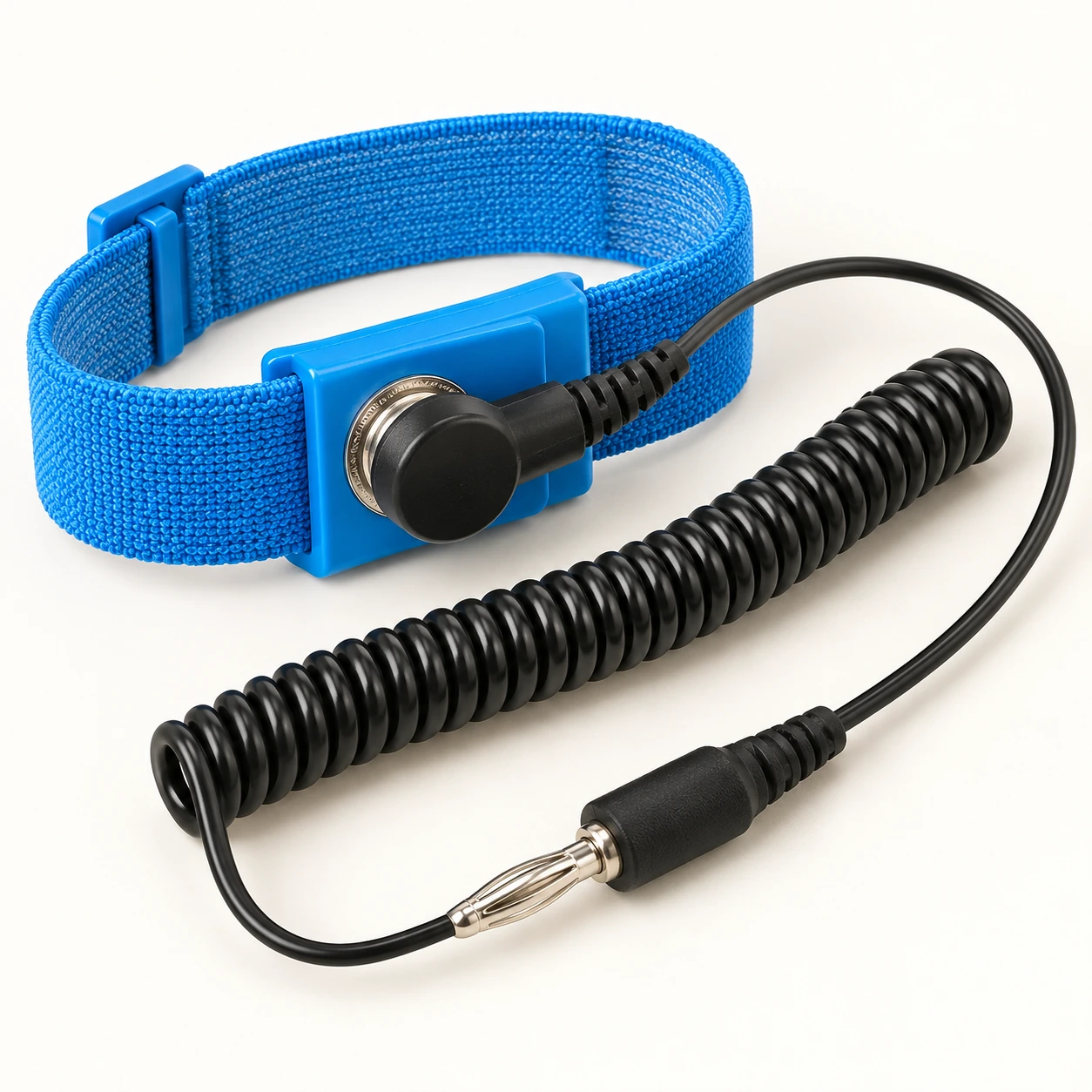
ESD Wrist Straps & Cords
esd wrist straps
| Brand | shengtongjh |
|---|---|
| Band construction | Conductive fabric interior or metal expansion band; insulating exterior selected for the application |
| Metal-band circumference options (mm) | Small 139.7–254; medium 165.1–304.8; large 184.2–330.2. Separate expansion-band sizes. |
| Metal-band width and snap (mm) | 16.0 nominal band width; 4 mm stud in the listed metal-band arrangement |
| Cord and connection | Single-wire cord with a specified current-limiting resistor, or matched dual-wire band/cord/monitor assembly |
| Selection checks | Wrist fit, work reach, connector mating, grounding point and verification procedure |
Circumference ranges describe the band, not its flat length. The listed metal sizes are separate configurations; fabric fit and dual-wire connections are specified separately. A wrist strap is not electrical-shock protective equipment.
Band size, cord routing and workstation connection options can be customized to the handling task and approved ESD control plan.
ESD wrist straps connect the wearer to a defined grounding or equipotential bonding point during electronics handling. A usable set includes a comfortable contact band, the correct cord and a compatible workstation connection. Wearing a band without completing that path does not provide the same function.
Choose the complete path, not only the cuff
A wristband can look sound while the electrical path is interrupted elsewhere. Loose skin contact, a worn snap, a broken cord or an unsuitable connection point can each defeat the intended arrangement. Specify the band and cord together, then identify the point to which the set will connect at the workstation.
The band should sit against bare skin with a comfortable, secure fit. Clothing under the contact surface interrupts the intended interface. Excessive tightness is not a substitute for selecting the right size or correcting a damaged component.
Fabric for flexible fitting
An adjustable woven band can suit shared workstations and changing users. The conductive inner surface needs to remain in contact during normal hand movement. Check that the adjustment holds and that frayed material or contamination has not changed how the band sits.
Where straps are issued individually, provide an identification method and a cleaning routine appropriate to the material. Do not assume an ordinary replacement elastic strip has the same electrical construction.
Metal for a defined contact surface
Expansion links provide a different feel and cleaning interface. Select a circumference range that allows normal wrist movement without pinching or excessive looseness. A similar outer appearance does not establish that two metal cuffs use the same snap or internal connection.
Users who experience discomfort need a reviewed alternative. Material declarations and wearer trials are useful alongside the electrical acceptance checks.
Match the monitor architecture
A single-wire assembly and a dual-wire monitored assembly are different systems. Dual-wire arrangements require the corresponding cuff contacts, cord conductors and monitor input. A connector that physically fits does not establish electrical compatibility.
Before replacing a cord, identify the monitor type and the existing connections. Keep the specified current-limiting components in the assembly; do not bypass them to change a test result. The guidance for ESD wrist strap cords covers this replacement interface.
Make verification part of the workstation routine
Use the site’s approved worn-system test or compatible continuous-monitor procedure. Testing a loose cuff on the bench does not check its contact with the wearer. Record and investigate failures rather than treating a visible wristband as evidence of grounding.
Arrange the cord so normal reach does not pull on the cuff or snag equipment. Where movement makes a wrist cord unsuitable, review the personnel-grounding method for that task. ESD equipment does not make work on energized electrical circuits safe.
Specify what each operator actually needs
A purchasing list should distinguish complete sets, spare cuffs and replacement cords. Include the wrist-size range, monitor interface, workstation socket and working movement. This reduces the chance of buying individually acceptable parts that cannot work together. Discuss a wrist-strap package with shengtongjh.
Band size, cord routing and workstation connection options can be customized to the handling task and approved ESD control plan.