Emergency Lighting
emergency lighting ups california
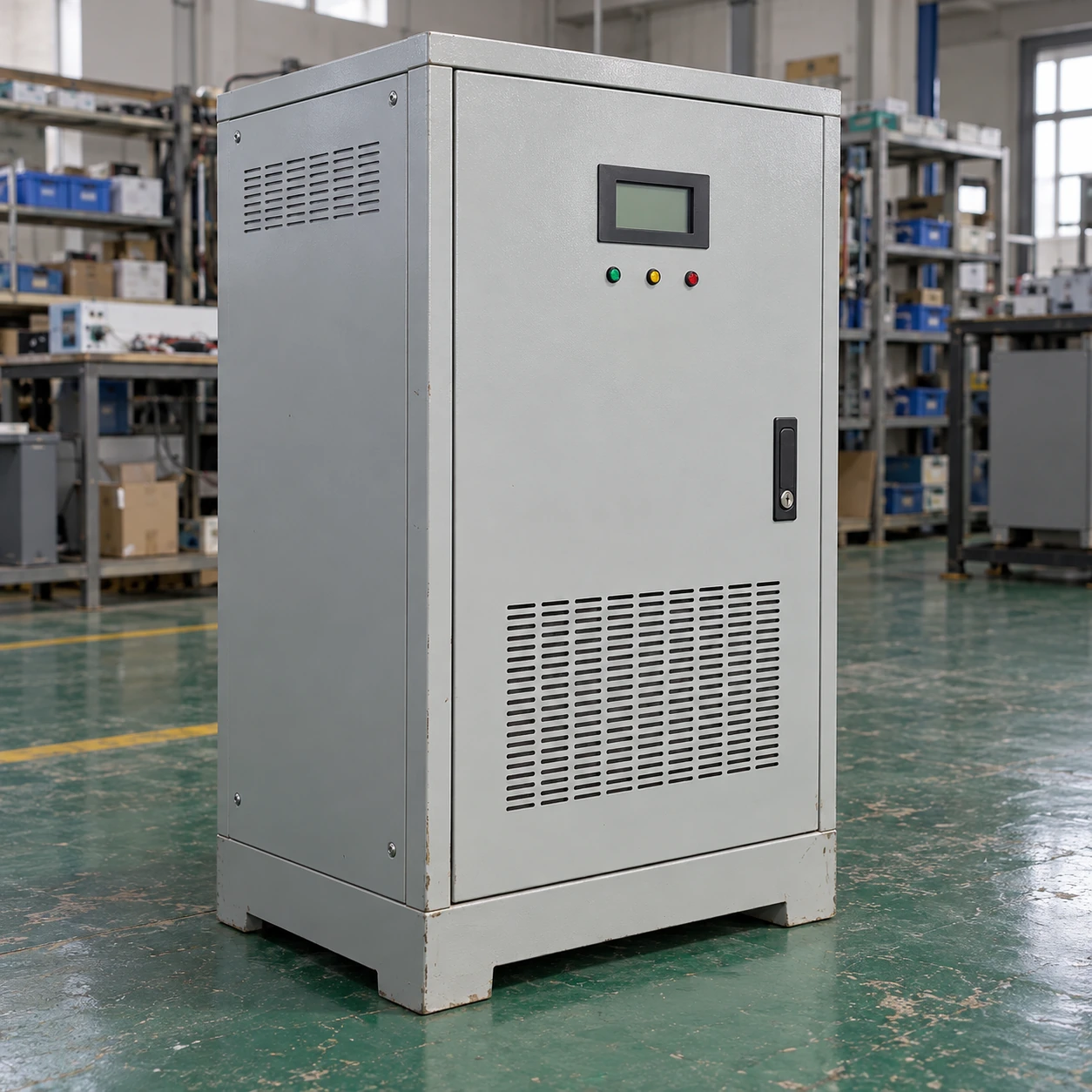
| Online inverter capacity options | 500 / 750 / 1000 / 1250 W classes |
|---|---|
| Cabinet, W × H × D (mm) | Approximately 597 × 870 × 464; battery complement varies with capacity |
| Optional support stand, W × H × D (mm) | Approximately 864 × 1016 × 559; stand dimensions are not an alternative inverter cabinet |
| AC output | 120 V or 277 V, 60 Hz configuration; selected input/output combination |
| System arrangement | Online double-conversion option, sine-wave output, monitored battery and controlled bypass arrangement |
| Required evidence | Emergency-lighting listing scope, load/runtime data, controls sequence and installation documentation |
Capacity options can share an enclosure while containing different battery sets. Cabinet size, a UPS label or an energy-efficiency mark alone does not establish emergency-lighting suitability.
Monitoring and service arrangements can be customized around the facility's approved emergency-lighting system, with capacity and battery duty supported by the selected equipment's documentation.
An emergency lighting UPS for a California facility must do more than keep an AC outlet live. Its documented emergency duty, connected lighting, batteries, controls and maintenance arrangement need to work as one system through loss of normal power and the return to normal operation.
Read beyond the UPS capacity label
A UPS rating describes particular electrical capabilities. Emergency lighting additionally needs documented behaviour for its intended life-safety function. A general UPS can have adequate nominal watts yet lack the required emergency-use investigation, discharge duty, controls interface or installation provisions.
UL 1778 concerns uninterruptible power systems, while UL 924 addresses emergency lighting and power functions within its defined scope. Some equipment is evaluated to both. The UL 924 scope also includes auxiliary equipment with a different performance basis, so the actual certification category matters. Obtain evidence for the selected configuration, not just a brochure carrying several standard numbers.
Compare the operating states
| State | What the power system does | What the lighting design must resolve |
|---|---|---|
| Normal supply available | An online double-conversion system supplies its output through its conversion path and maintains the battery. | Normal switching or dimming must coexist with the emergency control arrangement. |
| Normal source lost | The battery supports the inverter output within the documented load and operating limits. | Required luminaires must enter their emergency state and sustain the specified illumination. |
| Local lighting circuit failed | The UPS may still see healthy incoming power. | Suitable local failure detection must initiate the required response. |
| Bypass or maintenance | The power path changes according to the equipment design. | The effect on emergency reserve and availability must be understood and managed. |
| Normal power restored | The system returns to its normal state and recharges the battery. | Controls, fault reporting and reserve recovery require the intended sequence. |
Continuous output has a practical tradeoff
An online system can avoid a transfer interruption at its output when its normal source is lost, within the equipment's specified operation. That can be useful where the connected drivers or project require continuity. The topology also introduces continuous conversion losses and heat, so cabinet ventilation and the room environment remain important.
A fast output transition does not resolve every failure in the building. It cannot make a failed downstream driver work, detect every local circuit condition without the intended sensing, or illuminate a lamp held off by an incompatible controller. Evaluate continuity as one characteristic of the complete arrangement.
Capacity includes more than watts
Check the permitted load power factor, LED driver inrush and overload response as well as steady input. The backup duration must correspond to the selected battery set and load, including any future allowance. Two systems in identical cabinets can carry different batteries and therefore provide different service.
Do not use a nominal amp-hour figure as a direct runtime guarantee. Discharge rate, allowable voltage, temperature and conversion losses affect usable energy.
Maintenance changes availability
A bypass can make service possible, but its presence does not guarantee that emergency backup remains available in every bypass state. The operating instructions and system design should define the permitted sequence and the facility's arrangements during work.
Provide access for battery handling, isolation, inspection and replacement. Ventilation openings and the door swing need usable space after other equipment is installed.
Match California documentation to the proposed assembly
The 2025 California Title 24 edition took effect on January 1, 2026; the Building Standards Commission provides the official code access route. The project team and enforcing authority establish the applicable edition, amendments and installation requirements. Battery-charger energy obligations are a separate review under the California Energy Commission's guidance, including its scope and exclusions.
A useful submittal identifies the source, batteries, outgoing loads, controls, listing scope, environmental limits and maintenance arrangement. It also includes the emergency lighting calculation and a commissioning sequence for the relevant failure conditions. For a simpler local source architecture, compare emergency lighting power supplies for California projects. Selection should follow the approved design rather than a claim that every UPS is interchangeable with a lighting inverter.
Monitoring and service arrangements can be customized around the facility's approved emergency-lighting system, with capacity and battery duty supported by the selected equipment's documentation.