Emergency Lighting
emergency lighting power supply california
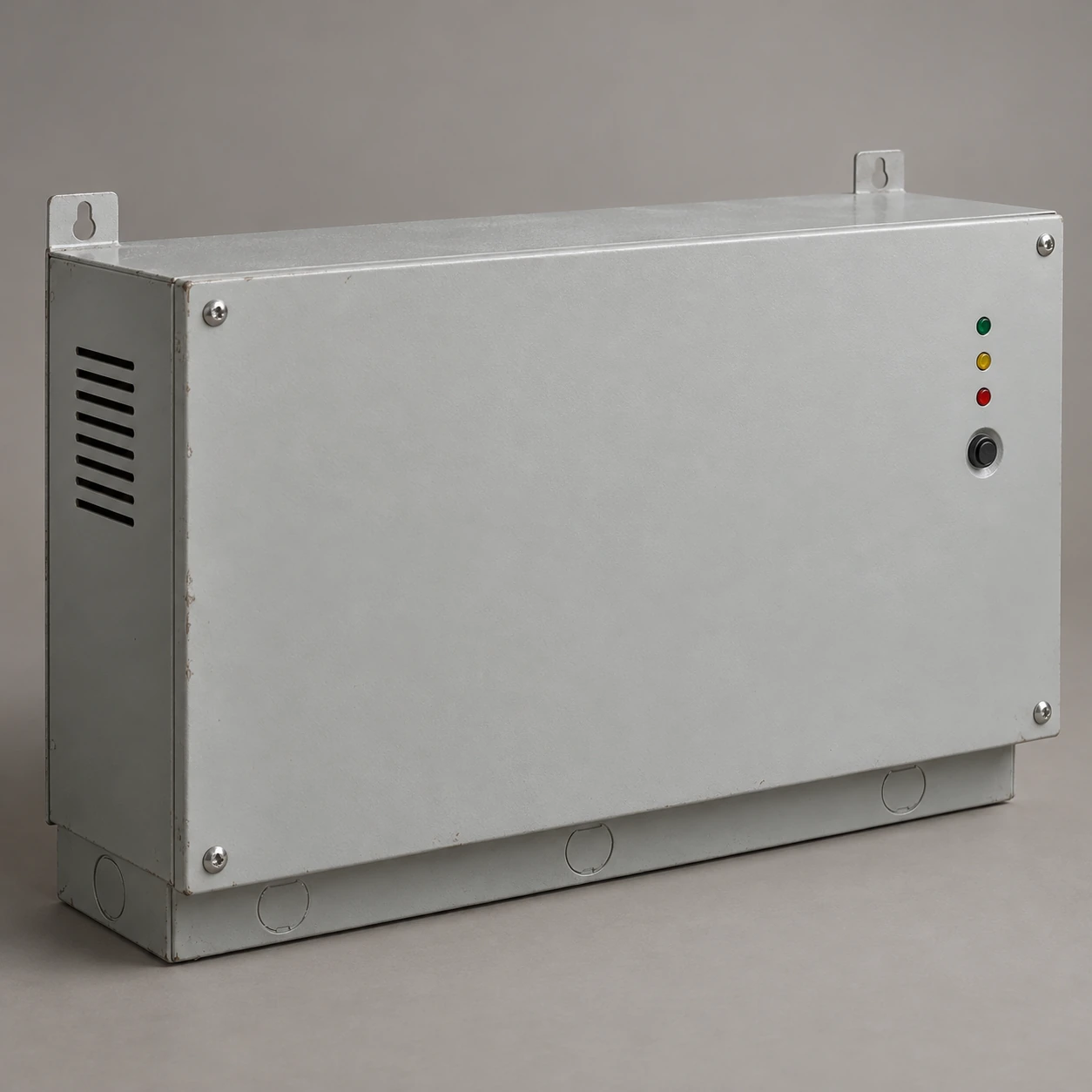
| Compact inverter option | 550 W class; cabinet dimensions approximately 559 × 502 × 279 mm |
|---|---|
| Floor-standing inverter options | 500 / 750 / 1000 W classes; common cabinet approximately 597 W × 870 H × 464 D mm |
| Output selection | 120 V or 277 V AC; match input, output and frequency to the actual schedule |
| Battery duty | 90-minute system configuration; selected battery/load combination must document the required duty |
| Controls | Normal-power detection; suitable switching/dimming override; status and test functions |
| Documentation | Emergency-use listing scope, installation instructions, load data and applicable California energy documentation |
Compact and floor-standing options are separate assemblies. Sizes exclude mounting and service clearances; dimensions do not establish California approval or product certification.
Cabinet arrangement and compatible control interfaces can be customized for the project's approved lighting design, with equipment documentation matched to the final configuration.
For a California project, an emergency lighting power supply needs to match the designated lighting loads, their control arrangement and the applicable approval requirements. Selecting a battery cabinet by wattage alone leaves important questions about fault detection, output during discharge and installation unresolved.
Define which lights the source must support
The load schedule should identify the emergency luminaires, exit signs and associated control equipment that depend on the source. Normal input watts are useful, but the selection also needs the driver's input characteristics, startup demand, power factor and intended emergency operating state. A collection of individually small LED loads can impose a significant combined starting demand.
Decide whether the equipment will power complete AC luminaires, selected LED arrays through emergency drivers, or dedicated DC lights. These are different electrical interfaces. A DC output intended for a compatible lamp cannot be connected interchangeably with the mains input of an ordinary luminaire.
Choose a source arrangement that fits the building
| Arrangement | Useful application | Design consequence |
|---|---|---|
| Emergency driver in or beside a luminaire | A local conversion where the luminaire and LED interface support it. | The approved conversion, reduced emergency output and service access need to be established. |
| Small lighting inverter | A defined group of designated AC lighting loads. | The battery duty, LED inrush, output circuits and local failure sensing need coordination. |
| Central source | Several lighting circuits with a planned central service location. | Distribution, fault isolation, bypass, environmental conditions and maintenance become system decisions. |
A compact source near the load can shorten some distribution runs. A central location can simplify battery access. The best arrangement balances those advantages with cable routing, circuit protection and the consequence of losing a shared component.
Separate three California documentation questions
Building requirements. California's Building Standards Commission identifies the 2025 Title 24 edition as effective from January 1, 2026. The permit basis, project type, local amendments and enforcing authority determine the requirements applicable to an installation. Start with the official code access information and the project's accepted design criteria.
Emergency-use equipment evidence. The scope of UL 924 includes emergency lighting and power equipment, but also distinguishes auxiliary equipment. Verify the exact listing scope and configuration rather than treating a reference to the standard as proof of the required emergency duty. Certification belonging to a source manufacturer's model does not transfer to a different assembled product.
Energy requirements. California also regulates covered backup battery charger systems. The Energy Commission's guidance explains the charger scope and exclusions. Establish which requirements apply to the selected equipment and obtain the corresponding documentation. Charger efficiency and emergency operating performance answer different questions.
A live output is not enough if the controls keep the light off
Normal lighting may be switched, dimmed or controlled by occupancy. During an emergency, the selected arrangement must establish the required light output despite those normal commands. That may require a suitable emergency control device and the correct normal-power sensing point. Its function must be coordinated with the source and luminaire instructions.
Local circuit failure deserves particular attention. The source can remain on normal power while a branch feeding an occupied area has failed. A design that detects only a building-wide outage may not respond to that condition. The responsible electrical designer should define the detection and operating sequence for the actual distribution.
Specify output and duration together
Battery capacity, discharge conditions and connected load determine the available duty. A larger inverter rating does not necessarily mean a longer operating period, and the charger input rating is not the emergency output rating. Use the selected equipment's load and duration information, including environmental conditions and permitted expansion.
The procurement package should include the load schedule, source and battery configuration, listing evidence, instructions, controls sequence and maintenance access. Equipment anchorage and service clearances belong in the installation design; an enclosure dimension is not an anchorage approval. Where continuous conditioned output is part of the project, compare the operating states discussed in emergency lighting UPS selection for California.
Cabinet arrangement and compatible control interfaces can be customized for the project's approved lighting design, with equipment documentation matched to the final configuration.