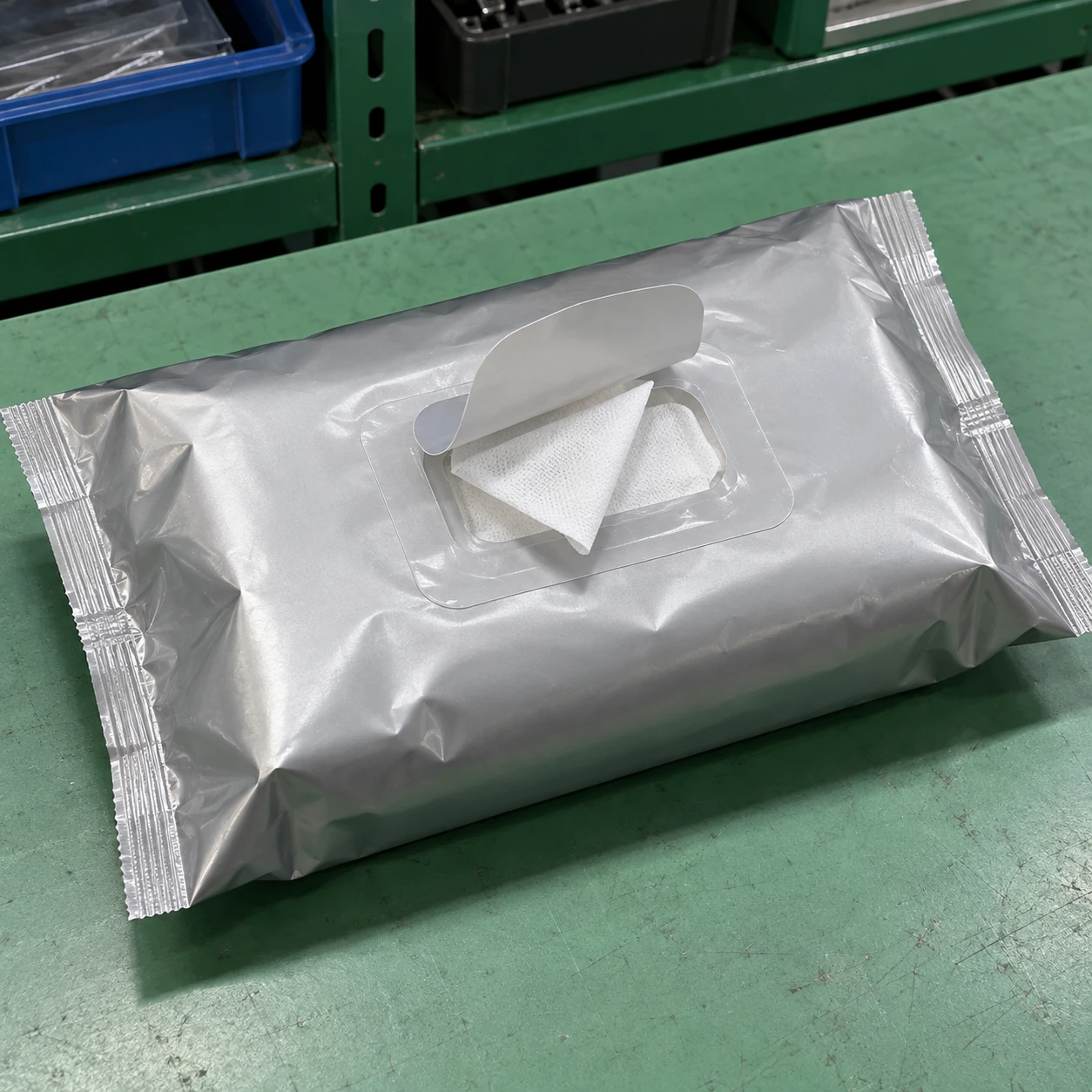
Cleanroom Wipes
presaturated cleanroom wipe
| Brand | shengtongJH |
|---|---|
| Product form | Pre-wetted industrial wiping sheets |
| Material options | Knitted polyester; nonwoven polyester; polyester/cellulose for compatible processes |
| Nominal sheet L × W | 150 × 230 / 230 × 230 / 305 × 305 mm |
| Common liquid option | 70% isopropyl alcohol / 30% deionized water; other blends selected for the process |
| Edge finish | Cut or sealed edge, according to fabric construction |
| Pouch quantities | 20 / 30 / 75 sheets, according to material and package format |
| Dispensing format | Peel-and-reseal or zipper pouch; compatible refill/dispenser format by specification |
| Wetness | Liquid loading selected independently from alcohol concentration |
| Sterility option | Non-sterile or separately specified validated sterile supply |
| Required product information | Liquid composition, safety data sheet, material compatibility, storage and lot identification |
| Customization | Sheet size, approved liquid blend, loading level and pack format |
Liquid concentration and the amount of liquid carried by the wipe are different specifications. Match both to the surface and cleaning method.
Wipe size, substrate, approved liquid formulation, saturation level and packaging can be customized for your production process.
A presaturated cleanroom wipe combines a wiping material with a defined cleaning liquid before it reaches the workstation. It is useful when manually wetting dry cloths gives inconsistent results, excess solvent handling or too much variation between operators.
A consistent starting point for each wipe
With a dry cloth and a separate bottle, one operator may apply a few drops while another soaks the whole sheet. A prepared pouch reduces that dosing step and keeps the selected cloth and liquid together. This is useful for repeated machine-panel cleaning, fixture preparation and compatible industrial component handling.
The benefit depends on choosing the right combination. An absorbent fabric with a high liquid loading behaves differently from a light cloth carrying the same alcohol concentration. Concentration describes the liquid blend; loading describes how much of that blend is held by the material. Specify them separately when comparing alternatives.
When the surface dries too soon
A cloth that feels wet at first may not cover the intended working area. Large areas, warm surfaces, air movement and a frequently opened pack can all change the available liquid during use. A larger or more absorbent sheet, a different loading level, or dividing the task into smaller areas may be more useful than changing alcohol strength.
Where the approved procedure requires a wet contact period, verify it on the actual surface using the selected product. Being presaturated does not by itself establish a disinfecting or sporicidal claim.
When the wipe leaves streaks
Streaking may come from redistributed soil, excessive liquid, the substrate or incompatibility with a finish. Use a fresh wiping face and evaluate the result after drying. If marks remain, identify their source before simply adding more liquid. Repeatedly moving a loaded cloth over a surface can spread contamination into an otherwise clean area.
Check the part before selecting the liquid
An IPA/water blend is a common option, but it is not a universal cleaner. Plastics, elastomers, coatings, adhesives and optical finishes can have specific restrictions. Water-sensitive components may also require a different approach. Review the component maker's cleaning guidance and assess a representative surface before adopting the wipe in production.
Alcohol-containing packs must be handled and stored according to their safety data sheet and workplace controls. Keep them away from incompatible storage and ignition sources. A convenient pouch reduces open-bottle handling; it does not remove the chemical properties of its contents.
Keep the last sheet useful
Choose a pack size that fits the actual consumption rate. A large pouch can be economical on a busy line but unsuitable for an infrequent maintenance task if it remains open or repeatedly handled. Close the seal immediately after dispensing and keep the closure area clear of folded cloth and debris.
Do not restore a drying pouch by adding an unapproved liquid. This changes the loading and possibly the blend, and can introduce contamination. Follow the selected product's storage, shelf-life and after-opening instructions; there is no single open-pack lifetime that suits every wipe and workplace.
For procurement, identify the surface, soil, required finish, preferred dispensing format and whether sterile supply is necessary. Compare dry cleanroom wipe options when your process needs to control the liquid separately. Choose a sterile cleanroom wipe when the process requires validated sterile supply; a sealed presaturated pouch is not sufficient evidence on its own.
Wipe size, substrate, approved liquid formulation, saturation level and packaging can be customized for your production process.