Cleanroom Telephones
Cleanroom Telephones
| Front panel, W × H (mm) | 305 × 305 |
|---|---|
| SIP recessed format, W × H × D (mm) | 273 × 273 × 53 rear mounting assembly; front panel as above |
| SIP surface format, W × H × D (mm) | 305 × 305 × 53 back enclosure |
| Telephone connection | Analog extension or SIP/IP version, matched to the facility system |
| SIP power | PoE or separate isolated 24–48 VDC supply, according to the selected unit |
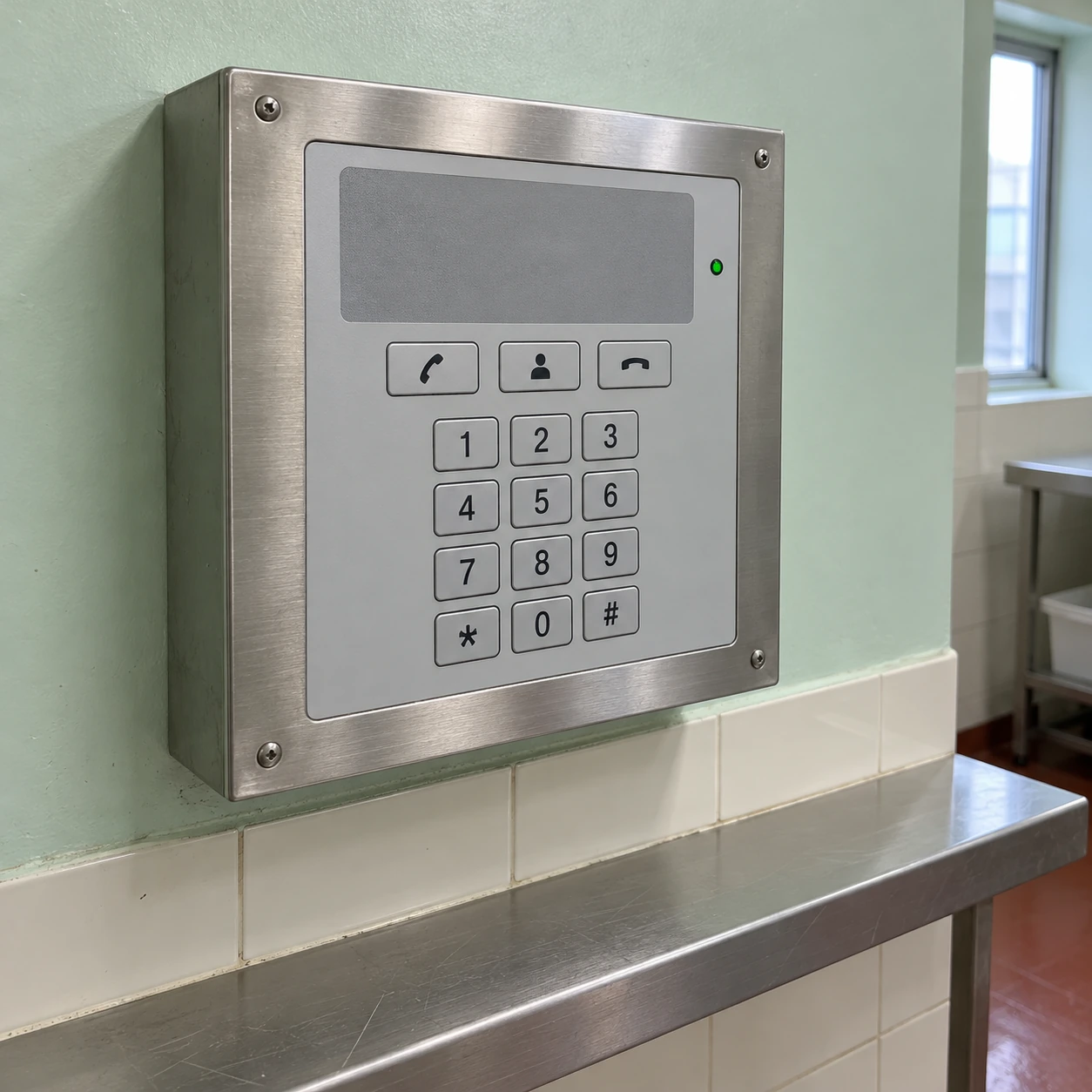
| User interface | Sealed membrane keypad, direct-dial keys, hands-free audio and call indication |
The dimensions describe two SIP mounting arrangements. Recessed rear dimensions are not the finished wall cut-out; analog units use their own matching installation details.
The telephone connection, mounting arrangement and call functions can be selected for the facility's operating requirements.
Cleanroom telephones bring extension calling into controlled production and laboratory areas through a wipeable wall interface. A hands-free panel removes the shared receiver and cord from the work area, while retaining familiar dialling and direct-call functions.
Start with the telephone service already in the building
A replacement telephone should match the available extension, not just the appearance of the old wall plate. An analog station connects through a compatible telephone-line interface. A SIP station connects to the data network and needs an extension account, call-server settings and an agreed power method. These connections are not interchangeable.
Where a facility is moving from a legacy PBX to IP telephony, decide whether an analog gateway is part of the transition or whether the cleanroom stations will be replaced with SIP versions. That decision affects support, fault diagnosis and future expansion. A gateway can preserve a suitable existing station, but it becomes another component in the call path.
Make routine calls easy with gloves
A flat membrane keypad provides a surface that can be wiped without cleaning around separate projecting keys. Clearly spaced dialling areas and a visible call indicator help the user establish whether the call has started or ended. Direct-dial keys are useful for a small number of frequent destinations.
The station position matters as much as the keypad. Operators should be able to reach it without leaning across an exposed product or placing a hand on an unsuitable surface. Keep the microphone away from a direct air jet and avoid mounting the speaker beside another permanently active audio device.
Choose the mounting arrangement for the wall
Flush mounting saves projection into the room but requires a compatible cavity and a properly finished opening. A thin sandwich panel may need an independent support or a purpose-made recess. The telephone must not be held in place solely by a decorative edge seal.
A surface box can be easier to fit in an occupied facility. Its top edge, cable entry and wall perimeter still need an accessible cleaning detail. The service route should allow the front assembly to be removed without disturbing adjacent wall finishes.
Cleaning compatibility is a material question
A stainless enclosure does not establish the resistance of the membrane overlay, printing, adhesive or perimeter seal. Use the actual cleaning agent, dilution, contact time and method when checking compatibility. A wipeable telephone is not automatically suitable for direct spraying, steam treatment or every room decontamination cycle.
Damage may first appear as a lifting membrane edge, a cloudy display area or a change in button response. Including those items in routine inspection helps identify a problem before liquid reaches the electronics. Avoid adding an improvised protective film over the audio area because it can interfere with speech.
Agree what happens when a call is unanswered
Call forwarding and fallback destinations should follow the facility's shift pattern. Hands-free automatic answering can be useful for a controlled internal connection, but it can also make room conversations audible to a remote caller. Enable it only where the operating policy calls for that behaviour.
If the telephone is expected to remain available during a power interruption, the complete chain needs attention: the station supply, network equipment, call server and any gateway. A local battery beside the station does not maintain a failed upstream service. This product type should not be assumed to provide an approved emergency communication system without the required system design and evidence.
Bring the extension into service as a working tool
Check incoming and outgoing calls, dialled digits, direct-call destinations, call termination and speech at the normal working position. Keep a record of the selected mounting assembly, connection method and configured extension with the facility maintenance information.
For repeated station-to-station requests or supervised control-desk communication, Cleanroom Intercom Systems provide another arrangement. The choice follows the required call workflow and existing infrastructure.
The telephone connection, mounting arrangement and call functions can be selected for the facility's operating requirements.