Cleanroom Tables, Benches & Stools
Cleanroom Inspection Workstations
| Worktop W × D (mm) | 1219 × 762; 1524 × 762; 1829 × 762 |
|---|---|
| Worktop height (mm) | 762 fixed; 711–1092 electric adjustment option |
| Work surface | 304 or 316 stainless steel; sealed dissipative laminate option |
| Task lighting | Dimmable overhead LED; adjustable light position; optional side lighting |
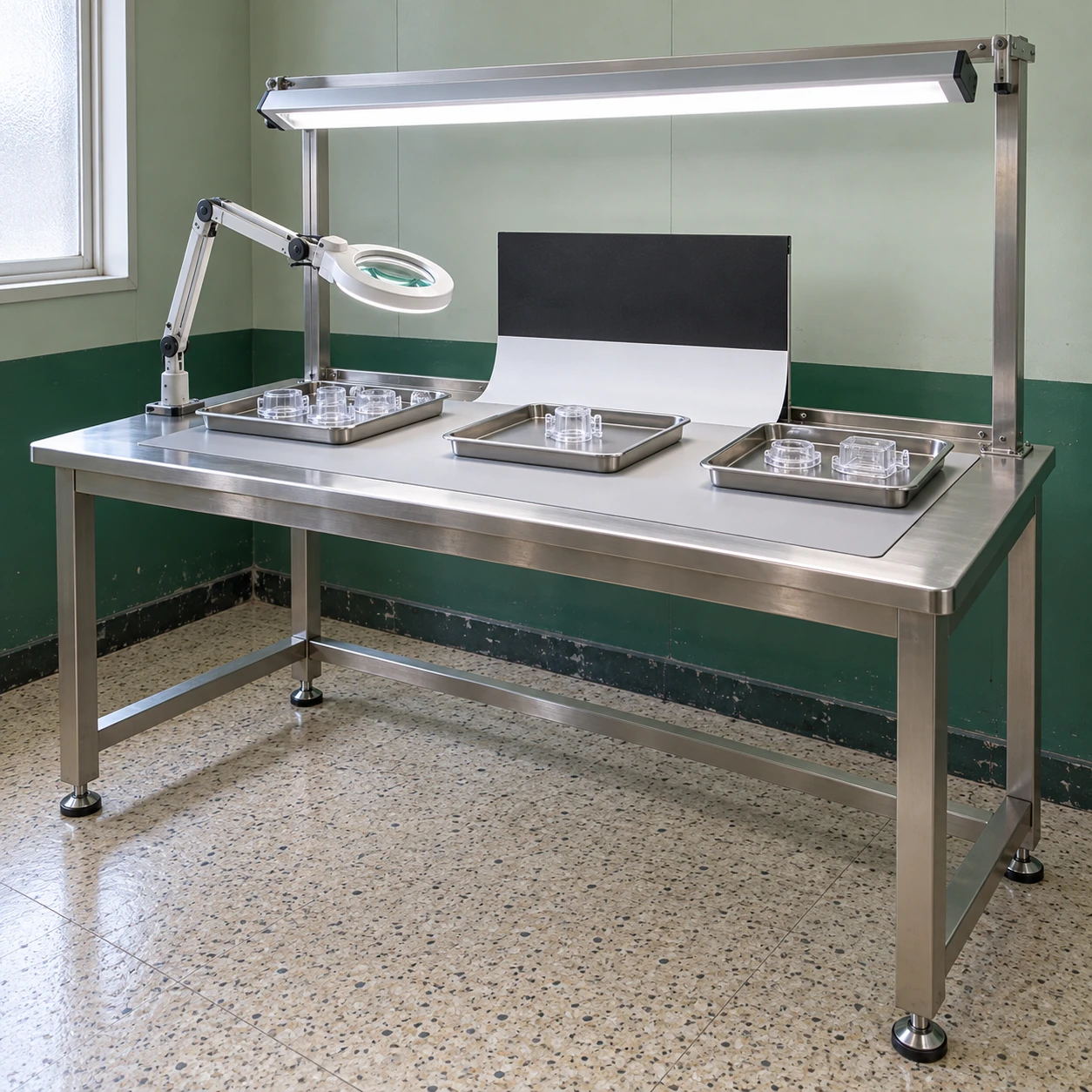
| Observation fittings | Magnifier or camera arm; matte contrast panels; separate sample trays |
| Base arrangement | Open knee space; leveling feet or suitable locking casters |
| ESD configuration | Dissipative contact surface and grounding provisions for sensitive parts |
| Electrical supply | Lighting and optional lift selected for the destination voltage and frequency |
Metric dimensions are rounded from nominal inch sizes. W × D describes the worktop; lighting supports and accessories add to the overall envelope. Select a matched package with dimensions and load capacity stated on the approved drawing.
Worktop dimensions, lighting, viewing aids and handling accessories can be customized to your inspection process and cleanroom requirements.
Cleanroom inspection workstations bring the part, lighting and operator into a repeatable viewing position. A cleanable bench with suitable observation aids supports checks on surfaces, small assemblies and transparent components while keeping uninspected and completed work separate.
Make the defect visible before adding more equipment
A bright bench can still be difficult to inspect on. A reflection may hide a scratch, a hand can cast a shadow over a small assembly, and a clear component can disappear against a similar background. The useful arrangement depends on the defect being checked and the angle at which the operator views it.
| Inspection difficulty | Useful workstation arrangement | What to establish with the actual part |
|---|---|---|
| Glare on polished or transparent surfaces | Diffuse task lighting, adjustable direction and a matte viewing background | A light position that reveals the feature without reflecting directly into the operator's eyes |
| Fine features hidden by hands or fixtures | Supplementary side lighting and a repositionable magnifier or camera | Working distance, access for both hands and whether shadows conceal the reject condition |
| Small particles or marks difficult to distinguish | Interchangeable light and dark backgrounds with a defined observation area | Contrast for each material, including the effect of container shape or surface finish |
Agree the lighting setup using representative acceptable and defective samples. Record the viewing position and measure illumination where the part is inspected. Lamp wattage alone does not describe that condition. If a procedure requires fixed settings, the controls should support that procedure instead of encouraging operators to compensate for changing light by eye.
Give each inspection decision a physical destination
The worktop should make part status easy to follow. Reserve space for the incoming tray, the item under examination and completed work. A separate hold position is useful when a result needs review; placing uncertain parts back into the incoming tray can obscure whether they have already been examined.
- Present: bring a manageable quantity within easy reach, with the remaining batch kept clear of the viewing area.
- Observe: position the part against the selected background without crossing over finished components.
- Separate: move accepted, rejected and held items to distinct, identified locations under the site's handling procedure.
Removable trays simplify changeovers and cleaning. Tray edges, labels and holders must remain compatible with the cleanroom process; loose paper, exposed foam and improvised adhesive fixtures can complicate cleaning around the inspection zone.
Clean the complete assembly
Consider the underside of the worktop, light brackets, arm joints and cable routes as well as the visible surface. Smooth joints and accessible supports reduce places that are difficult to wipe. Keep power connections away from routine wet cleaning and choose the light enclosure for the cleaning method.
Stainless steel suits many wipe-down routines, but the grade and finish must match the cleaning chemistry. Laminate needs intact sealed edges. A removable contrast panel should withstand the same handling and cleaning routine without shedding, swelling or losing its matte finish.
Support the view without forcing the posture
Set the observation position around the operator's eyes and hands. A taller instrument may require a lower bench; frequently used trays should remain within comfortable reach. Allow knee clearance, forearm support where needed and enough cable movement for an adjustable station.
A magnifier arm must stay in position when the operator releases it. For microscopy, check instrument stability separately: a high load rating does not establish vibration isolation. Floor traffic, a flexible support arm or movement of the bench can disturb the image even when the frame safely carries the equipment.
Choose cleanliness and static control as separate functions
This workstation provides furniture and observation facilities within the room's environmental controls. It does not create a particle-classified work zone by itself. When exposed product needs local filtered airflow, review a vertical flow clean bench and assess how the inspection equipment affects its working area.
Electronic assemblies may also need an ESD-controlled work surface, compatible tools and an established personnel-grounding system. A stainless top or a pair of gloves alone does not establish the performance of that complete system. Specify electrical properties and verification for the selected configuration.
Define the station around the inspection task
For a quotation, identify the part and defect types, sample size, handling sequence, cleaning agents and any viewing instrument already in use. Include available floor space, seated or standing operation, destination power supply and whether the procedure specifies lighting or static-control conditions. These details determine which accessories are useful and which would obstruct the work.
For handling tasks that only need a clear support surface, compare the Stainless Steel Cleanroom Worktable. For an equipped inspection station, shengtongjh can coordinate the bench and selected accessories as a defined supply package, with the final arrangement agreed before ordering.
Worktop dimensions, lighting, viewing aids and handling accessories can be customized to your inspection process and cleanroom requirements.