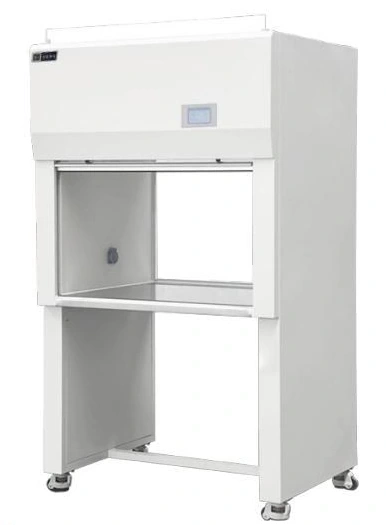
Clean Benches & Local Clean Air Systems
Vertical Flow Clean Bench
| Specification | SW-CJ-1FD | SW-CJ-1FD-2 | SW-CJ-2FD | SW-CJ-2FD-2 |
|---|---|---|---|---|
| External size, W × D × H (mm) | 980 × 750 × 1670 | 980 × 820 × 1670 | 1610 × 750 × 1670 | 1610 × 820 × 1670 |
| Working space, W × D × H (mm) | 820 × 680 × 500 | 820 × 680 × 500 | 1450 × 680 × 500 | 1450 × 680 × 500 |
| Access | Single-sided | Double-sided | Single-sided | Double-sided |
| Housing / worktop | Coated steel / brushed 304 stainless steel | |||
| Filter arrangement | One filter | One filter | Two filters | Two filters |
| Air velocity setting | 0.45 m/s ±20% | |||
| Front screen | Aluminium frame with 5 mm tempered glass | |||
| Power supply | 220 V, 50 Hz | |||
| Controls | Fan speed, lighting and UV lamp controls | |||
| Customization | Dimensions and access arrangement can be adapted to the application | |||
Dimensions and configurations can be customized for your application.
Protect an exposed assembly, sample or component with filtered air delivered from above the work surface. Choose the access arrangement around the way people actually handle the product.
Keep the clean air path open above the product
The bench supplies filtered air downwards towards the work surface. This creates a local working zone for tasks such as inspecting components, handling clean packaging or assembling small parts where exposure to surrounding room particles is undesirable.
The position of the work is as important as the enclosure. A large instrument directly above an open container can interrupt the clean air path. Place the most sensitive exposed surface where air can reach it without first passing around hands, tools or equipment. Keep storage outside the active working zone so that the bench remains a workspace rather than a cupboard.
One access face or two?
Single-sided handling
A single access face suits a workstation operated from one side. Materials enter, work takes place and finished items leave through a controlled handling sequence. This can make it easier to separate clean items from incoming packaging and prevent another operator from reaching across exposed work.
Shared access
A double-sided arrangement provides access from both sides for a coordinated task. It also creates more opportunities for cross-drafts and conflicting hand movements. Agree where materials are placed and which side handles each stage; two openings should not become an uncontrolled shortcut through the work zone.
Build the workstation around the task
Check the complete instrument height, including lids, tubing and the operator's hands. An instrument that physically fits may still block downflow or make its rear surfaces difficult to clean. Leave room to wipe the worktop around equipment, and avoid placing fans or heat-producing devices where they redirect air across the product.
The stainless work surface supports routine wiping. Cleaning agents still need to suit the materials being processed, the screen, seals and exposed components. Remove loose contamination without directing it into filter surfaces or control openings. Keep unrelated cardboard, personal belongings and frequently handled packaging away from the clean work area.
Product protection has a defined boundary
A clean bench is not a biological safety cabinet or a chemical fume hood. Its air movement is intended to protect the work, and should not be relied on to contain infectious aerosols, hazardous powders or solvent vapours. Choose containment equipment when the process requires operator or environmental protection.
Room doors, supply grilles and passing traffic can disturb the bench opening. Position it away from these disturbances, establish the intended operating condition before exposing product, and verify airflow after installation or filter service. A fan running and a lamp illuminated do not establish that the working zone is performing correctly.
Dimensions, access and workstation details can be customized for your handling process. Discuss your product, equipment and workflow to develop the appropriate arrangement.