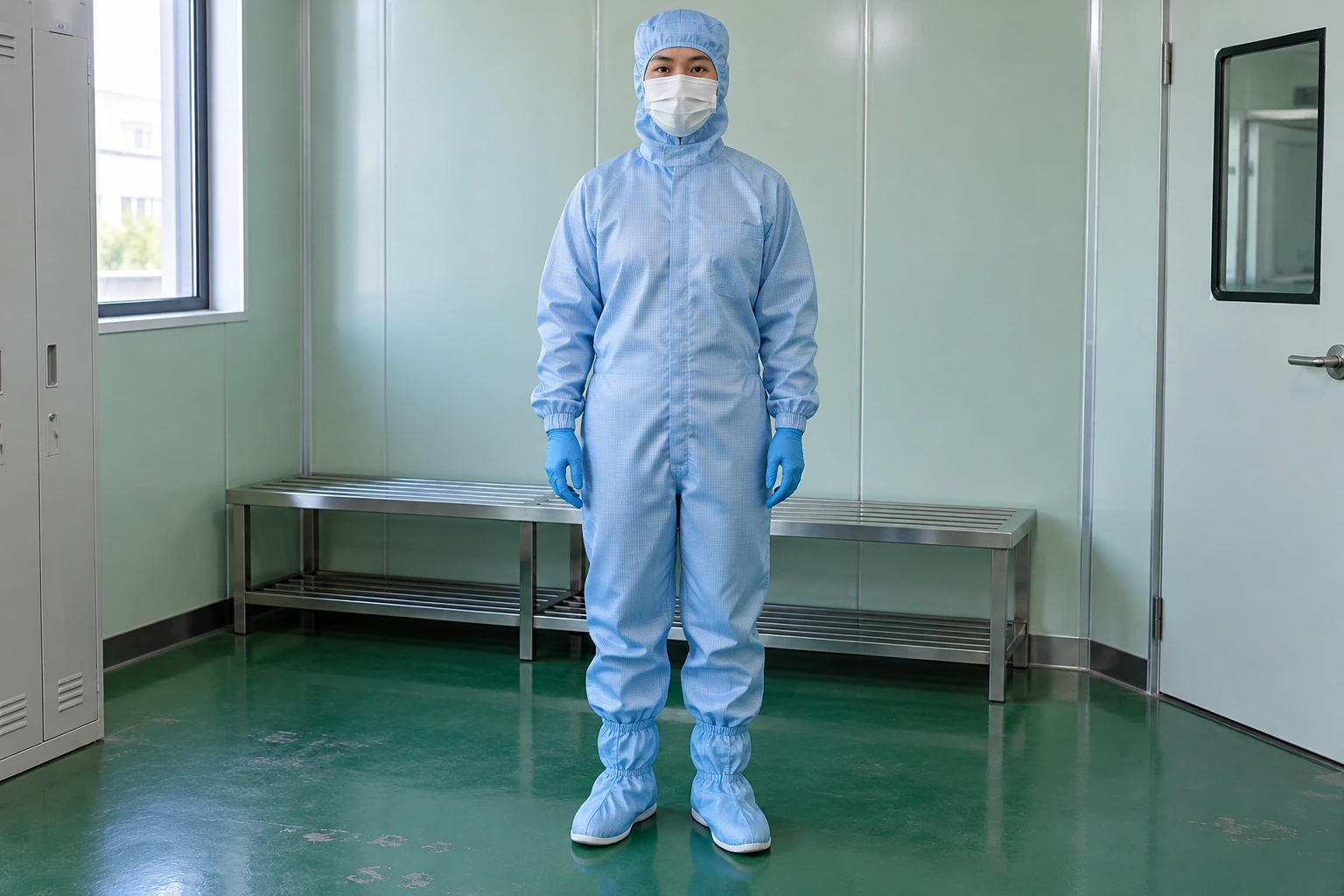
Cleanroom Suits
semiconductor cleanroom suit
| Garment format | Reusable full coverall with separate or integral hood |
|---|---|
| Fabric options | Polyester filament fabric with 1% or 2% conductive yarn, by selected construction |
| Size choices | XS–3XL; short, regular and tall patterns where required |
| Measurement basis | Body height, chest, hip and inside leg in cm; confirm finished garment ease separately |
| Closure layout | Covered zipper; adjustable or elastic wrists and ankles |
| Head and feet | Matched hood opening and overboot interface; components specified as a system |
| ESD requirement | Garment construction and grounding arrangement to the site's approved ESD control plan |
| Processing | Controlled laundering and clean packing; garment identification and service records as specified |
A conductive grid is a construction feature. Particle-control suitability and electrostatic performance require evidence for the supplied garment and its intended use.
Fabric, fit, hood arrangement and garment identification can be customized for your semiconductor process and gowning system.
A semiconductor cleanroom suit must suit the contamination sensitivity of the process and the site's electrostatic control arrangements. Those are related purchasing requirements, but each needs its own evidence. The garment should contain wearer-generated particles while allowing operators to handle tools and work at equipment without dragging fabric across exposed surfaces.
Two acceptance questions for one garment
What can reach the product?
Particles can come from the wearer, the underclothing, the garment itself or contamination picked up during handling. The cut, seam finish and opening arrangement help determine how well the suit contains those sources. A fabric sample alone cannot show what happens at a cuff or zipper when an operator reaches forward.
Where can charge go?
Ordinary clothing can generate charge. A conductive yarn network changes the electrical behaviour of the outer garment, but a visible grid does not establish an effective path to ground. Select the garment together with the approved personnel-grounding method and verify that arrangement under the site's ESD programme.
The EOS/ESD Association's garment guidance distinguishes static-control garments, groundable garments and garment systems that also ground the person. The selected category matters more than the presence of the word “antistatic” on a quotation.
Fit the suit to the workstation
At a seated inspection station, check hip and knee movement as well as chest fit. At a tool-loading position, assess overhead reach and the contact between sleeves, gloves and equipment edges. The same wearer may need a different length option rather than simply a larger overall size.
Keep functional details away from exposed work
Unnecessary outside pockets, loose tabs and exposed closures add features that can catch or contact equipment. A covered zipper gives a simpler front surface, while cuffs should hold the glove overlap without making hand movement uncomfortable. Long loose legs can touch the floor during dressing; a garment that must be pulled into place repeatedly is difficult to use consistently.
Evaluate the chosen undergarments with the outer suit. Warmth, friction and freedom of movement are properties of the worn combination, not just the outer textile. For material choices, see cleanroom suit material.
Qualify the combination that will actually be worn
- Define the exposed process. State whether people handle open wafers, packaged devices, optical components or enclosed equipment. Include the site's contamination limits and electrical-control requirements.
- Agree the full clothing build. Identify fabric, seams, zipper, cuff, hood, boots and any grounding connections. Evaluate a complete garment with its normal accessories, rather than approving only a small swatch.
- Include processing and wear. Set acceptance criteria for new and processed garments. The laundry method, permitted repairs and retirement rules belong in the specification because the suit will not remain in its original condition throughout service.
Keep wet-process protection separate
A cleanroom suit used around semiconductor equipment is not automatically suitable for acids, solvents or hot surfaces. Where those hazards exist, the task-specific protective ensemble must be selected for the actual exposure and checked for compatibility with the contamination-control arrangement. Do not substitute a lightweight grid coverall for a chemically rated garment.
shengtongJH can coordinate the garment configuration and supporting supplier documentation around the approved site requirements. For issue, return and replacement planning, use the companion page on semiconductor garment use.
Fabric, fit, hood arrangement and garment identification can be customized for your semiconductor process and gowning system.