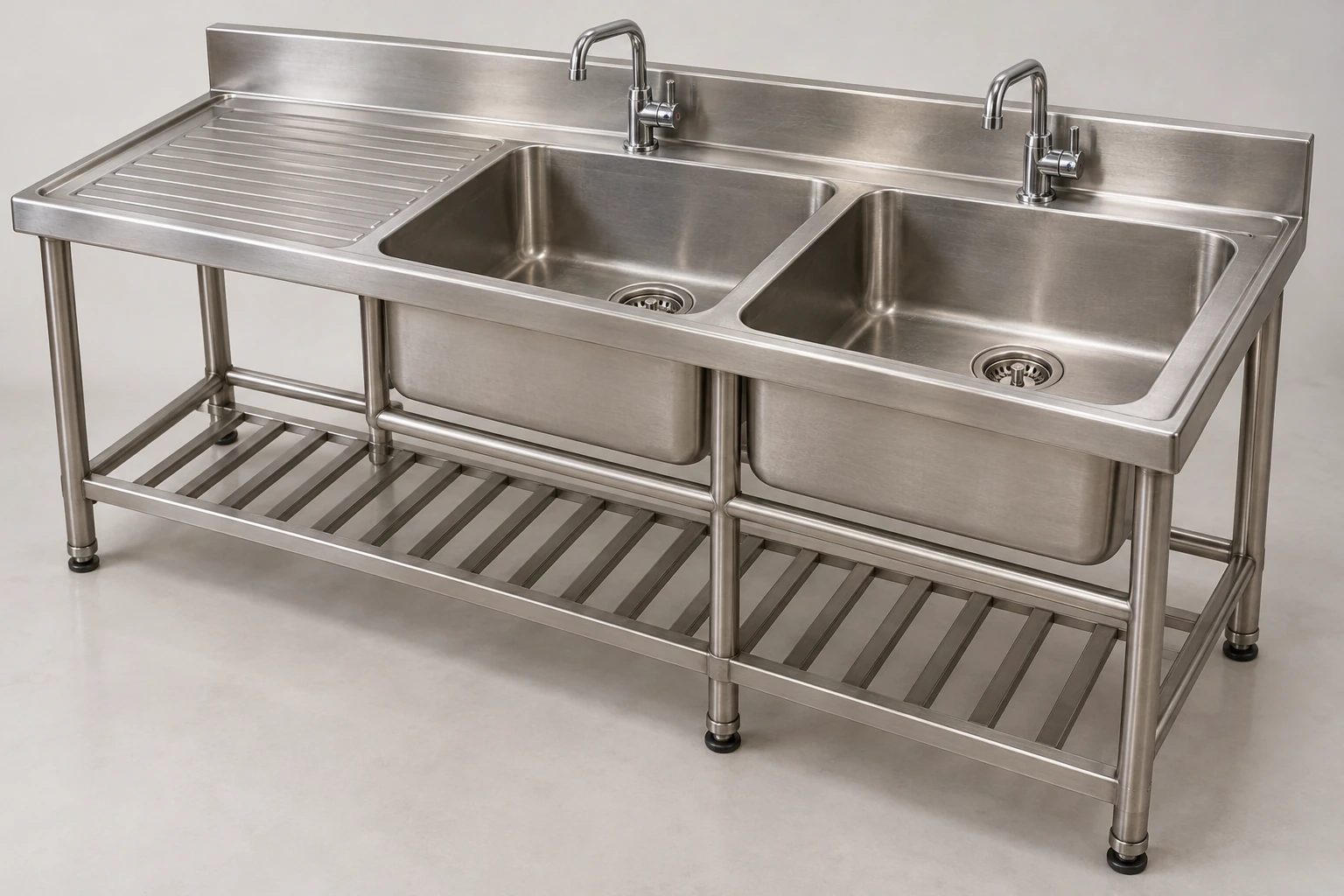
Cleanroom Sinks & Wash Stations
premium stainless steel sinks
| Individual bowl plan W × D (mm) | 508 × 508; 610 × 610 |
|---|---|
| Steel and surface | 304 stainless steel; consistent satin finish with blended welded areas |
| Nominal sheet thickness (mm) | 1.2 or 2.0, specified separately for the bowl and deck |
| Bowl construction | Formed or fabricated bowls with accessible rounded internal transitions |
| Deck arrangement | Single or multiple bowls; integrated left, right or twin drainboards |
| Structure | Stainless supports, reinforcing plates, cross braces and adjustable feet |
| Service components | Removable strainers, accessible waste fittings and replaceable tap components |
Dimensions describe individual bowl plans, excluding rims and drainboards. Bowl depth, number of compartments and support layout determine the complete station dimensions. Sheet thickness is a component specification, not an overall load or corrosion rating.
Premium stainless steel sinks can be customized around the washing workload, material requirements, finish, bowl layout and maintenance priorities.
Premium stainless steel sinks suit washing stations where frequent use makes surface quality, rigidity and maintenance access especially important. The useful upgrades are tangible: appropriate sheet and material, smooth transitions, well-supported bowls, effective drainage and serviceable fittings. The specification should connect each added feature to the work performed at the station.
Put the specification behind the word premium
At a frequently used wash station, small construction details affect daily work. A rigid tap ledge resists movement during operation; accessible bowl corners shorten cleaning; a stable frame supports wet containers; and replaceable fittings make service easier. These are useful reasons to select an upgraded sink.
Agree those details before comparing quotations. Two visually similar units can use different sheet thicknesses in the bowl and deck, different support materials and different waste fittings. A clear component schedule makes the comparison more meaningful than a general description such as heavy duty.
Specify the metal and the joints
The selected steel needs to suit the water, cleaning agents and substances entering the bowl. Identify the material grade for the wetted surfaces and the supporting frame separately. A polished appearance does not identify an alloy or establish chemical compatibility.
Sheet thickness contributes to stiffness, but formed edges, bowl geometry and reinforcement also matter. Extra material in the rim does not describe the thickness at the bowl bottom. Specify the relevant components rather than accepting one ambiguous thickness for the entire unit.
Welded areas should form smooth, accessible transitions without exposed sharp edges or pockets that trap residue. Finishing should address the weld area as well as the broad visible panels. A consistent satin surface is useful for routine cleaning and makes local repair easier to assess.
Look at the structure below the surface
Legs, gussets, cross braces and bowl supports carry the actual load. They need to work together when the bowl is filled or an item is placed on a drainboard. The frame layout matters particularly with long drainboards or concentrated loads at one end.
Adjustable feet help set the station at its intended level, allowing the built-in drainage slope to work. A low shelf can add useful storage but should leave the trap and cleaning areas accessible. For a regularly moved station, mobility changes the support and restraint requirements and needs its own configuration review.
Water impact and utensils can make thin panels resonate. An appropriate underside treatment may reduce that effect, provided it is compatible with the temperature and cleaning exposure. A sound-deadening layer is a separate feature and should not conceal an inaccessible service connection.
Choose upgrades that address the station's workload
- Frequent washing of heavy containers
Prioritize bowl support, stable loading edges and a convenient landing position. Specify the real load location and handling method so reinforcement is applied where it is useful.
- Repeated cleaning between tasks
Favor reachable internal transitions, a cleanable wall junction and removable strainers. More corners and accessories can create extra cleaning work even when the main metal surface is well finished.
- Several successive wash stages
Select the number and size of compartments around the sequence. A Double-Bowl Stainless Steel Sink can organize separate stages, but every bowl still needs to accommodate its load and fittings.
- Limited maintenance access
Give priority to reachable tap connections, removable waste components and a frame that permits service. Standard replaceable parts can be more valuable over the working life of the unit than decorative additions.
Define the delivery and handover details
A complete supply schedule should identify the bowl layout, drainboard handing, tap holes, support arrangement and included waste fittings. Specify whether taps, traps, wall restraints and installation seals form part of the package. These interfaces are common sources of avoidable site work when different suppliers are involved.
At handover, confirm that the agreed material and components match the supply record, the frame stands securely and the fittings are accessible. Check the installed water connections for leaks and verify that the bowl and drainboard discharge as intended. Any required certification must apply to the actual supplied product and its intended use.
Keep the cleaning and parts information with the installation records. Rinse away compatible cleaning solutions as directed and remove deposits before they become persistent staining. A well-specified sink remains a maintained working asset, rather than a surface that is expected to look untouched indefinitely.
shengtongjh can coordinate an upgraded commercial sink around the workload and maintenance priorities you identify. Send the washing sequence, item dimensions, cleaning exposure and the features that matter most to the site. Discuss the required construction and fittings.
Premium stainless steel sinks can be customized around the washing workload, material requirements, finish, bowl layout and maintenance priorities.