Cleanroom Sinks & Wash Stations
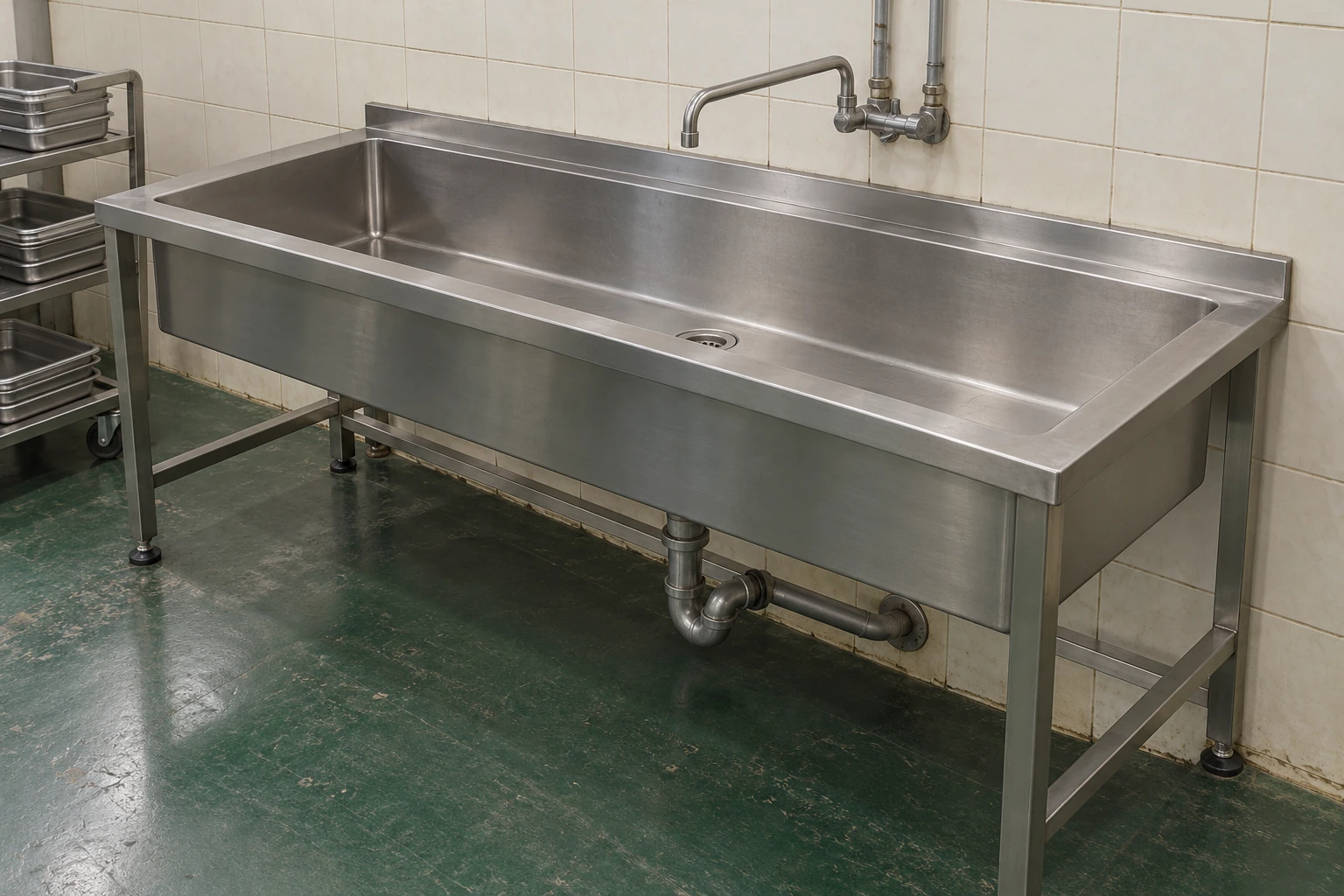
large stainless steel sinks
| Freestanding unit W × D × H (mm) | 1000 × 600 × 800; 1500 × 600 × 800; 2000 × 600 × 800 |
|---|---|
| Corresponding bowl W × D × vertical depth (mm) | 920 × 520 × 300; 1420 × 520 × 300; 1920 × 520 × 300 |
| Material | 304 stainless steel; 1.2 mm nominal sheet configuration |
| Wash space | One continuous rectangular bowl |
| Support | Stainless square-tube frame with adjustable feet |
| Tap arrangement | Wall or separately supported supply fitting; reach matched to the bowl |
| Waste and overflow | Strainer and standpipe overflow; connection size selected with the drainage layout |
Exterior and bowl dimensions correspond in the same order. D is front to back; H is floor to the top of the freestanding unit, excluding separate taps and any added splashback. Allow additional loading, access and service space.
Large stainless steel sinks can be customized for the item dimensions, loading method, available floor space, drainboard arrangement and drainage requirements.
Large stainless steel sinks create an uninterrupted washing space for trays, containers and other bulky items that do not sit comfortably in a compact bowl. A longer basin can reduce awkward rotation and allow an item to rest inside the washing area. Its value depends on the clear internal space and the loading route, not simply the overall length of the unit.
Measure the object, then allow room to handle it
A large sink is useful when the item fits inside the clear bowl rather than resting awkwardly on its edges. Measure handles, rims and projecting fittings as well as the main body of the tray or container. Allow space for hands and brushes around it, and consider whether it must turn during washing.
Rounded bowl corners reduce the space available for a rectangular item near the edges. A diagonally placed tray may fit across the opening but remain difficult to lower flat or remove when wet. Where an item is close to the available space, compare its complete shape with the internal bowl drawing instead of relying on the sink's advertised overall length.
More length and more depth solve different problems
A long tray needs horizontal clearance. A tall vessel may need more vertical space even when its footprint is modest. Increasing every dimension can make a station harder to reach and more expensive to fill. Select the dimension that resolves the actual obstruction, with an appropriate margin for handling.
Keep a long item in one basin
A continuous bowl avoids a central divider obstructing long utensils, removable covers or trays. It also allows the washing position to shift along the station. A temporary basket or support can organize smaller pieces, but it should be removable and should not block drainage or create an inaccessible cleaning pocket.
For a low-volume task, a long basin can still be used with a controlled working fill. Filling the entire space simply because it is available increases water use and the mass carried by the frame. Choose the water level and procedure for the actual load.
Divide the space when the process needs separation
Several compartments may be more useful when different stages must remain distinct. Each stage needs adequate usable space and an accessible drain. The total length includes partitions and edges, so it cannot be treated as the available length of any one bowl.
A double-bowl arrangement can keep successive tasks organized; a continuous trough better accommodates an item that would bridge those compartments. The choice follows the work sequence and item shape.
Plan the route from trolley to bowl to drying position
- Bring the item alongside. Leave a clear approach for the loaded trolley, including its handles and turning space. The operator needs room to stand near the sink without trapping the trolley in the passage.
- Lower and work on the item. Keep the loading edge at a suitable working height and avoid stretching across a broad front-to-back span. Heavy or awkward loads may need a separate handling aid and an agreed lifting method.
- Drain and transfer. Provide a supported landing or drying area close to the bowl. A long wet item should not depend on a narrow rim as a temporary shelf. Match the outgoing side to the next operation.
A large station also needs a viable delivery route. Door clear openings, corridor turns and the position of installed taps can determine whether the complete unit reaches its final location. Confirm any separable frame arrangement before selecting the delivery format.
Support the wet load and keep the drain accessible
The operating load includes water, the items being washed and any accessories resting on the unit. Water contributes approximately one kilogram per litre. Use the intended working level for this assessment, then consider where the load is concentrated: a heavy container placed at one end loads the structure differently from an evenly filled bowl.
Bracing and support positions control movement along a long span. Added drainboards or relocated feet can change the load path, so the complete frame must suit the final layout. The stated sheet thickness alone does not establish the capacity of the bowl or the assembled station.
A larger bowl is not automatically faster to empty. The strainer, outlet, trap and downstream pipework all affect discharge. Keep solids out of the waste path with suitable collection and cleaning procedures, and leave room to remove the strainer and service the trap without dismantling the frame.
For selection, provide the largest item's outline and wet mass, its loading method, the intended fill level and the available installation route. Include the tap reach, incoming and outgoing positions, and any need for a separate drainer. shengtongjh can coordinate these details into the complete sink arrangement. Discuss a large wash station.
Large stainless steel sinks can be customized for the item dimensions, loading method, available floor space, drainboard arrangement and drainage requirements.