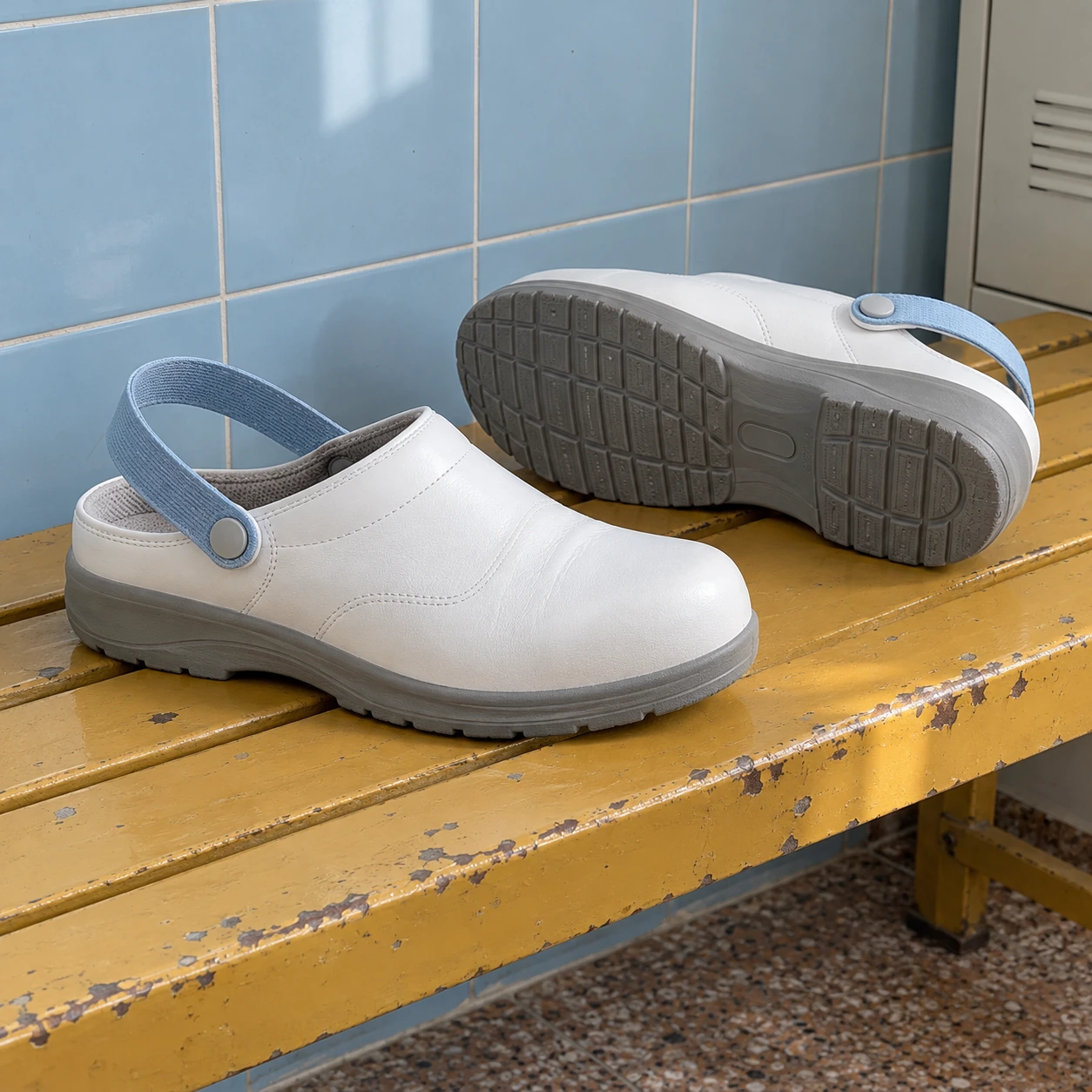
Cleanroom Shoes
anti static cleanroom shoes
| Style options | Closed slip-on or fastening shoe; closed-toe clog with heel retention where permitted |
|---|---|
| Closed-shoe sizes | Selected EU 35–48 sizes, confirmed using the supplied fit chart |
| Clog size options | Paired EU 35/36, 37/38, 39/40, 41/42, 43/44 and 45/46 |
| Upper and sole | Smooth microfibre with matched PU/TPU sole, or an approved moulded polymer construction |
| Electrical specification | Declared antistatic properties with test method and conditions; ESD suitability assessed separately |
| Fit components | Compatible footbed and secure retention; changes to inserts reviewed before use |
| Cleaning selection | Approved wiping or washing for the construction; temperature and chemical limits supplied with the selected shoe |
Antistatic footwear is not electrical-insulating footwear. Any ESD, slip, impact or chemical-protection requirement must be specified and supported for the selected product and use conditions.
Anti static cleanroom shoes combine a specified electrical path with footwear suitable for controlled work. Select them around the actual floor, cleaning routine and required protection rather than the antistatic label alone.
Define what the electrical requirement is protecting
Antistatic footwear is intended to limit charge accumulation through an appropriate discharge path. It is not insulating footwear for work on live electrical equipment. A lower resistance should therefore not be treated as a universally safer result.
For electronics, the relevant question is whether the complete personnel-grounding arrangement meets the site's ESD programme. A broad antistatic claim does not provide all the evidence needed for that decision. Hazardous atmospheres and electrical work also require their own risk assessment and specified protective equipment.
Keep contamination control in the selection
The electrical specification does not describe particle release, coverage or cleanability. Examine the upper surface, seam arrangement, sole condition and garment interface as separate features. A shoe that provides an appropriate electrical path can still be unsuitable for the room's cleaning or entry procedure.
Similarly, an easy-to-clean moulded clog is not automatically qualified for exposed electronic assemblies. Choose the construction against both sets of requirements before routine issue.
Investigate changes in the whole contact path
Results change after cleaning
Check whether the prescribed agent, concentration, rinsing and drying conditions were followed. Residues on the sole or a changed floor finish can alter contact. Introducing an unapproved polish or treatment to obtain a better reading can create a different, unqualified surface.
One wearer differs from another
Compare fit and the actual socks, inserts and footwear condition. An added cushioning pad may interrupt the intended path. Check the measuring setup as well; a single result should not be interpreted without knowing what combination was measured.
Performance changes during use
Inspect tread contamination, wear and component damage. The condition of the walking surface matters alongside the shoe. Keep footwear verification and floor maintenance connected so a recurring issue is not addressed only by replacing pairs.
Replace components without changing the approved shoe
A soft replacement insole can improve comfort while changing the electrical behaviour. Use the documented compatible part and review the combination after any change that affects the path. Adding a second insole or an unqualified overshoe should not be treated as a harmless cosmetic adjustment.
Cleaning access and secure fit also influence sustained use. A retention strap that no longer holds the heel, a cracked sole or an upper that cannot be cleaned deserves attention even if the electrical check still passes. The footwear must remain usable as a complete work item.
Turn “antistatic” into a clear purchase requirement
Identify the intended work, floor type, cleaning routine and the test evidence required. Where personnel grounding protects sensitive electronics, use the ESD system qualification approach alongside the footwear specification. Where the main need is dedicated, cleanable work footwear, start with construction, fit and the changing boundary, then add the relevant electrical requirement.
Style, fit assortment and packing can be customized for your workplace, with the electrical and care requirements confirmed for the approved material combination.