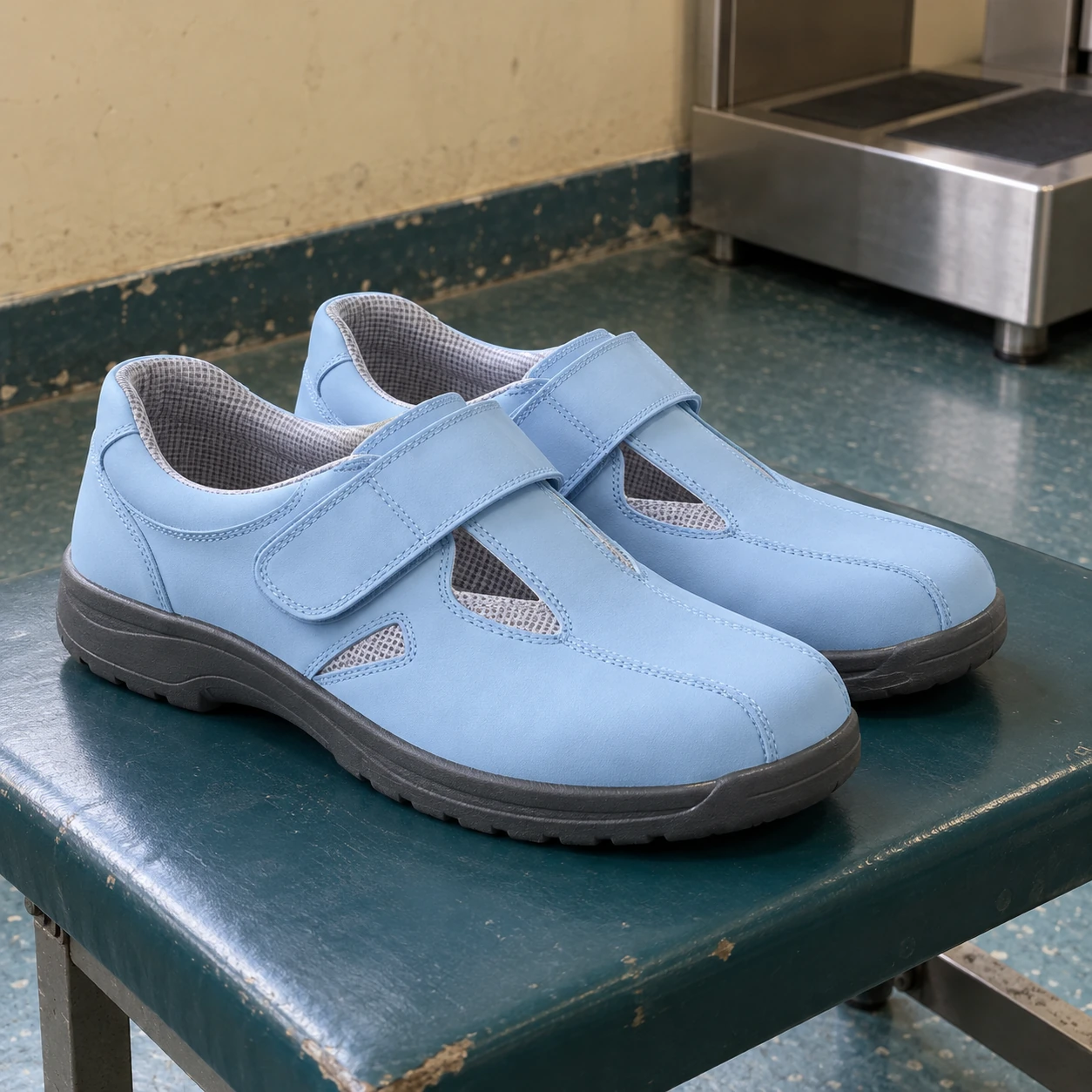
Cleanroom Shoes
esd cleanroom shoes
| Design options | Closed slip-on or adjustable-fastening occupational shoe; retained-heel clog where permitted |
|---|---|
| Size options | EU 35–48 for selected closed styles; final fit follows the supplied size chart |
| Upper construction | Smooth microfibre with cleanable seams; coverage and ventilation selected for the process |
| Sole and footbed | Dissipative PU or TPU sole arrangement with its specified compatible footbed |
| Closure | Elastic instep or adjustable strap; fit maintained during walking and turning |
| Electrical evidence | Footwear resistance report plus qualification of the person–footwear–floor combination |
| Verification plan | System resistance and walking-voltage assessment; routine checks under the site's ESD programme |
| Care and replacement | Approved cleaning method; replacement insoles and any overshoes reviewed for electrical compatibility |
Electrical acceptance limits and test conditions must match the site's ESD programme. A shoe-only value does not qualify the complete grounding arrangement.
ESD cleanroom shoes form one part of a personnel-grounding system. The selected footwear must suit both the room's contamination controls and the electrical behaviour of the wearer, footwear and floor together.
Follow the charge path through the complete system
Walking and other movements can charge a person. ESD footwear provides a controlled route toward the floor, but a route through the shoe is useful only when it continues through an appropriate floor to ground. A dissipative sole on an insulating surface does not create the missing connection.
- Foot to footwear. The footbed, lining and contact with the wearer affect the electrical path. An extra comfort insert can change the combination even when the original shoe remains intact.
- Footwear to floor. Contact changes as the heel and forefoot move. Sole material, surface condition and the floor finish influence both charge generation and discharge.
- Floor to ground. The installed flooring arrangement and its maintenance must preserve the intended path. A suitable shoe cannot correct an ungrounded or incompatible floor.
This is why separate favourable test results for a shoe and a flooring sample are not enough to establish the behaviour of their combination.
Qualification answers the selection question
Before introducing a footwear type, evaluate it with the intended floor and relevant wearing conditions. The assessment needs both the resistance of the person–footwear–floor system and the voltage generated while walking. These measurements answer different questions: whether charge has a path away, and how much charge accumulates during movement.
Record the footwear construction, floor, conditioning and test method so another pair can be compared meaningfully. A result for a different sole, replacement insole or floor coating should not automatically release the proposed combination.
Routine checking answers the continued-use question
An entry tester can identify a problem with the person and footwear being checked. It is useful within the site's verification procedure, but it does not reproduce every contact and movement on the production floor. Keep initial qualification and routine verification as distinct parts of the control plan.
Set check frequency, acceptance limits and the response to failure through the ESD programme. A recurring failure should trigger investigation of fit, components, contamination and the test arrangement rather than repeated testing until a pass appears.
Retain the approved combination when improving comfort
A different insole, thick added pad or unqualified overshoe can interrupt the path or alter its resistance. Evaluate these changes before routine issue. The same applies to replacing only one worn component with a visually similar item from another source.
Comfort still matters: secure retention and an appropriate fit help operators wear the footwear consistently. Select socks and any additional covering as part of the working arrangement, and assess the combination under the conditions that matter at the site. Where work requires a wrist strap or another grounding method, footwear does not remove that requirement.
Specify two kinds of suitability
Send the floor type, required ESD programme, cleaning process, size distribution and gowning arrangement with your enquiry. Cleanroom suitability concerns contamination as well as electrostatic behaviour. For a purchasing term that only says “antistatic,” the antistatic footwear page explains which additional evidence may be needed.
Closure, size mix and supply packaging can be customized for your operators, subject to confirming the selected footwear's cleanroom and ESD requirements.