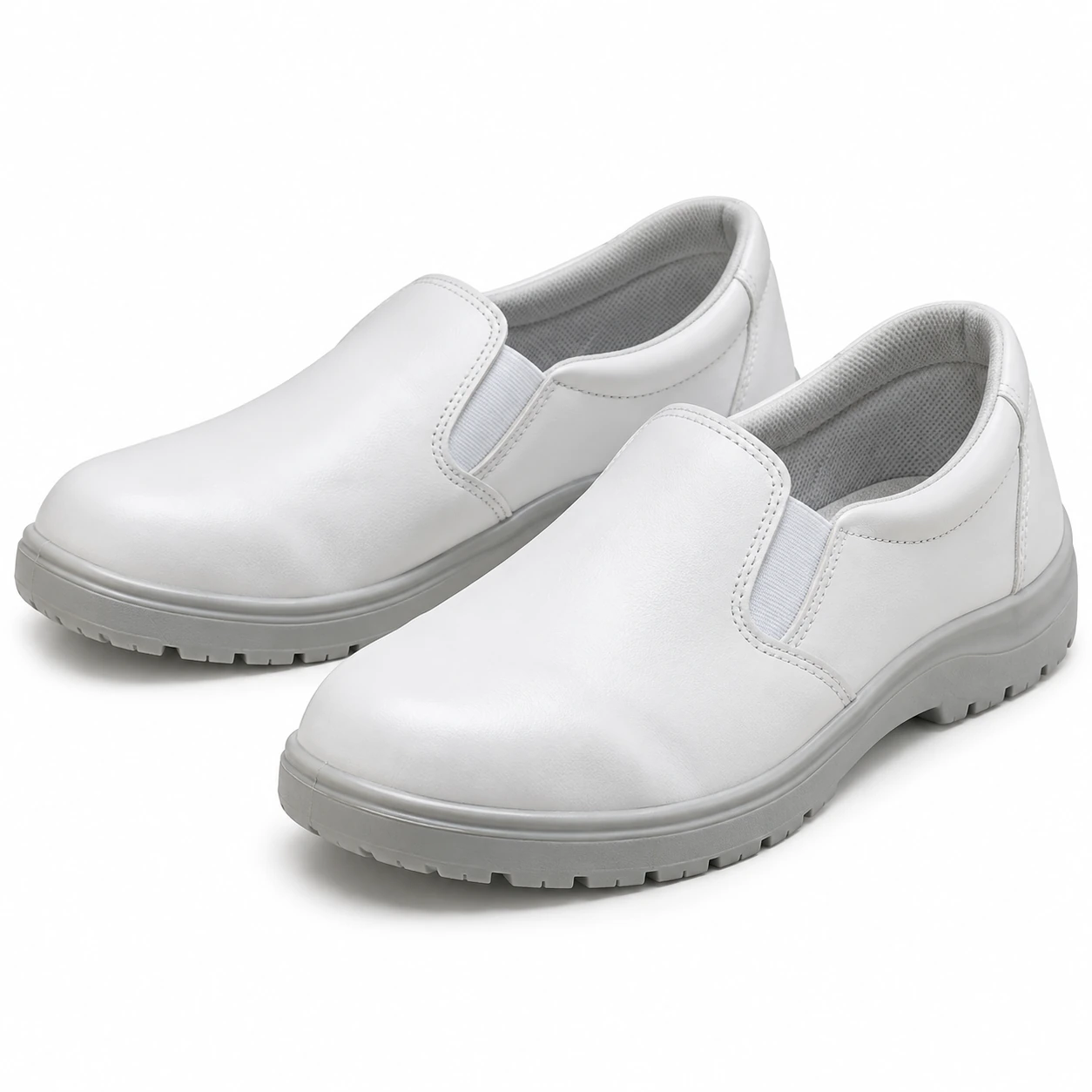
Cleanroom Shoes
cleanroom shoes
| Footwear forms | Closed-heel slip-on or fastening shoe; heel-strap clog where the entry procedure permits |
|---|---|
| Size selection | Closed-shoe options EU 35–48; paired-size clogs EU 35/36, 37/38, 39/40, 41/42, 43/44 and 45/46 |
| Upper options | Smooth microfibre or selected moulded polymer; closed or permitted ventilated construction |
| Outsole options | PU or TPU for matched closed-shoe designs; compatible moulded sole for clogs |
| Retention and fit | Elastic instep, adjustable fastening or heel strap; footbed matched to the selected shoe |
| Electrical selection | Antistatic or ESD configuration with relevant test evidence; floor compatibility assessed separately |
| Cleaning route | Wipe cleaning or approved washing by construction; steam processing only for a documented autoclavable version |
Size labels describe footwear fit, not outsole dimensions. The selected style, size chart, processing instructions and required evidence form part of the agreed supply configuration.
Cleanroom shoes provide dedicated footwear for controlled production and laboratory areas. Select the upper, sole and fastening around the work, then match the pair to the facility's changing and cleaning routine.
Control what crosses the changing boundary
Outdoor footwear can carry material into a controlled room on its tread and upper. A dedicated pair works only when the entry arrangement keeps the clean-side footwear away from the uncontrolled floor. The changing position, storage location and return route deserve the same attention as the shoe material.
A worn sole can also become a local source of debris. Inspect the edges, tread and upper-to-sole joint rather than judging cleanliness from the colour of the shoe. A white upper makes some marks easier to see, but it does not establish low particle release or suitability for a particular process.
Choose the form around the work
Closed footwear
A closed heel and covered upper can support secure walking and greater coverage. Smooth surfaces and restrained seams make routine cleaning easier to plan. Check the opening and trouser or overboot interface so the footwear remains practical within the full gowning arrangement.
Ventilated footwear
Openings can improve comfort in warm areas, but they also expose more of the sock and foot environment. Use this form only where the facility permits it. Ventilation features should not be treated as splash protection or a substitute for the required garment coverage.
Heel-strap clogs
A retaining strap can reduce heel movement compared with a loose open-back fit. The strap should hold the foot comfortably during turns and normal walking. Easy donning is useful at a changing station, provided the approved entry procedure and workplace risks allow the design.
Evaluate fit with the working clothing
Try the selected shoe with the socks and any overboots actually used. Check toe room, heel retention and pressure over the instep during movement. An oversized pair can rub or slip; an undersized pair can discourage correct wear through a full shift.
Do not assume that the same nominal size fits identically across two constructions. A moulded clog and a closed shoe may use different lasts or paired sizes. Retain the approved size chart with the purchasing specification.
Keep the clean pair usable
Define how used shoes reach cleaning and how released pairs return to storage. Wet footwear left in a closed compartment may not dry as intended. Storage should separate personal outdoor shoes, used work shoes and pairs ready for issue.
A shoe cabinet or crossover bench can support that routine when its layout fits the changing sequence. It does not remove the need to inspect and clean the footwear itself.
Add only the protection the job requires
Contamination control, electrostatic control and foot protection are separate selection questions. For exposed electronics, review the footwear-and-floor grounding arrangement. Where impact, chemical splash or electrical hazards are present, the relevant documented protective footwear must be specified; an ordinary cleanroom shoe should not be assumed to cover those risks.
Style, size assortment and packaging can be customized for your working environment, with cleaning and performance requirements reviewed for the selected configuration.