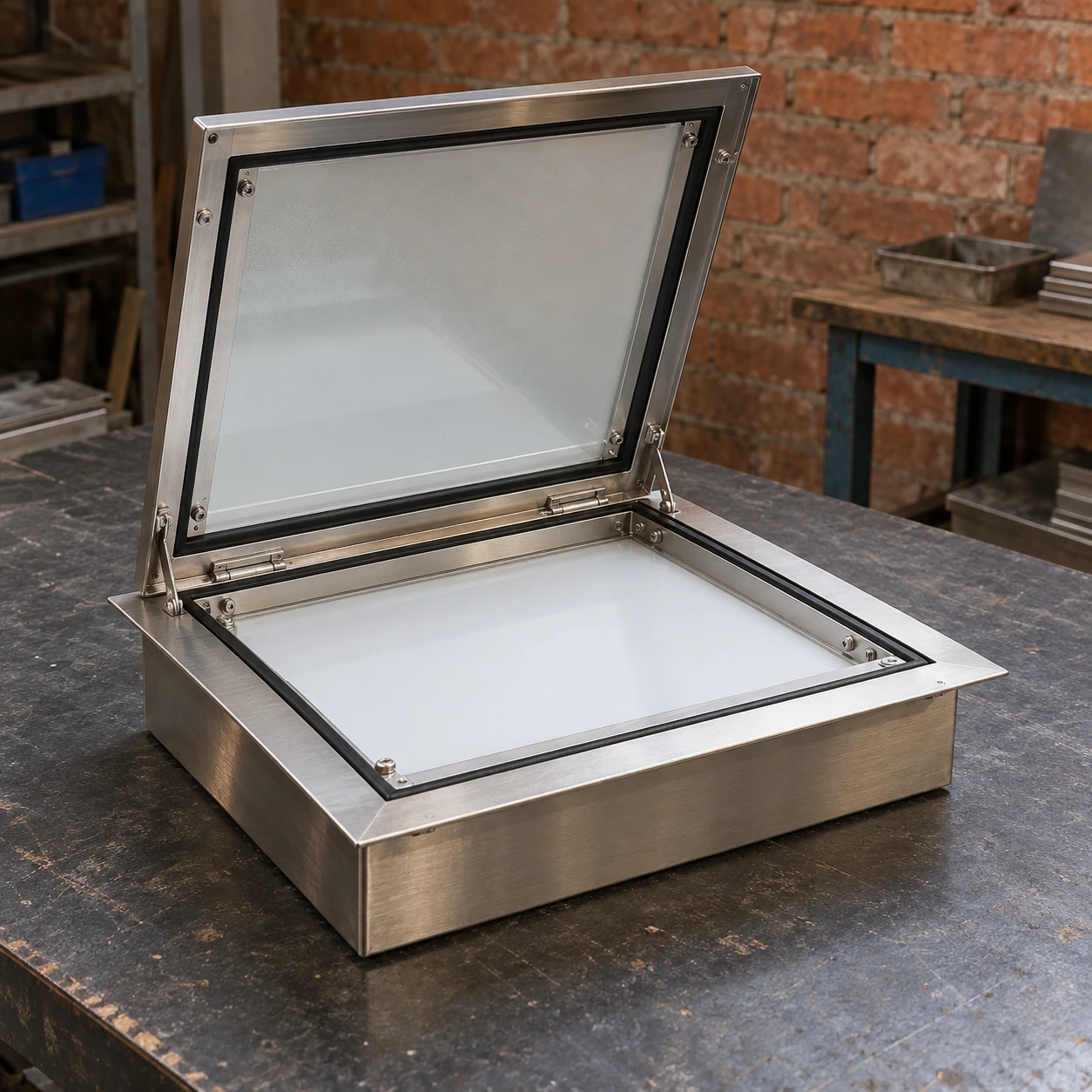
Cleanroom Lighting
cleanroom lighting fixtures
| Square housing | 598 × 598 × 139 mm (L × W × H) |
|---|---|
| Narrow rectangular housing | 1198 × 298 × 139 mm (L × W × H) |
| Wide rectangular housing | 1198 × 598 × 139 mm (L × W × H) |
| Frame and finish | Coated metal or stainless construction selected for the cleaning environment |
| Diffuser | Smooth glass or suitable polymer optical face with a continuous sealing detail |
| Service hardware | Retained front frame, accessible fixings and room-side or rear access |
These are fixture housing formats. Ceiling cutouts, support points and service clearances must follow the selected construction drawing; they are not the same as nominal ceiling modules.
Fixture size, frame material, sealing arrangement and service hardware can be customized to suit the ceiling and cleaning procedure.
The fixture is the physical boundary around the light source: housing, optical face, frame, seals and fixing hardware. Its construction determines how it meets the ceiling, withstands the cleaning routine and opens for maintenance.
Inspect the joints as a connected assembly
- Optical face to frame
- The diffuser needs stable support and a compatible seal. An uneven edge or damaged lens can compromise the joint even when the surrounding metal looks sound.
- Frame to housing
- Closure pressure should be distributed through the intended hardware. A loose corner and an over-tightened corner can create different sealing problems in the same fixture.
- Housing to ceiling
- The ceiling interface has its own gasket or approved seal detail. Sealing the front cover does not automatically seal the perimeter opening.
- Cable entry
- Connections and entry plates belong within the specified enclosure arrangement. Unused holes and improvised entries can undermine the original construction.
Match the face material to the cleaning method
A smooth glass face can provide a durable wiping surface, but its weight and breakage controls need to suit the application. A polymer diffuser may offer a different balance of weight, impact behaviour and optical diffusion. Chemical compatibility varies with the actual material and cleaning solution, so neither material is universally preferable.
The frame finish matters as well. Coating damage, rough weld finishing or crevices around fixings can make the perimeter more difficult to clean. Stainless construction still needs a suitable grade, surface condition and cleaning procedure; the material name alone does not resolve every exposure.
Room-side access
A hinged or retained frame gives access from below where the ceiling space is unavailable. Check how the open frame is supported and whether a lens, LED assembly or driver can be removed without dismantling the ceiling joint. Plan protection for the work area beneath it.
Rear access
A serviceable rear compartment can keep work away from the production side, but only if a proper access route exists above the ceiling. The installation must allow the cover to open and components to pass adjacent ducts, supports and cable containment.
Fixture size, frame material, sealing arrangement and service hardware can be customized to suit the ceiling and cleaning procedure.