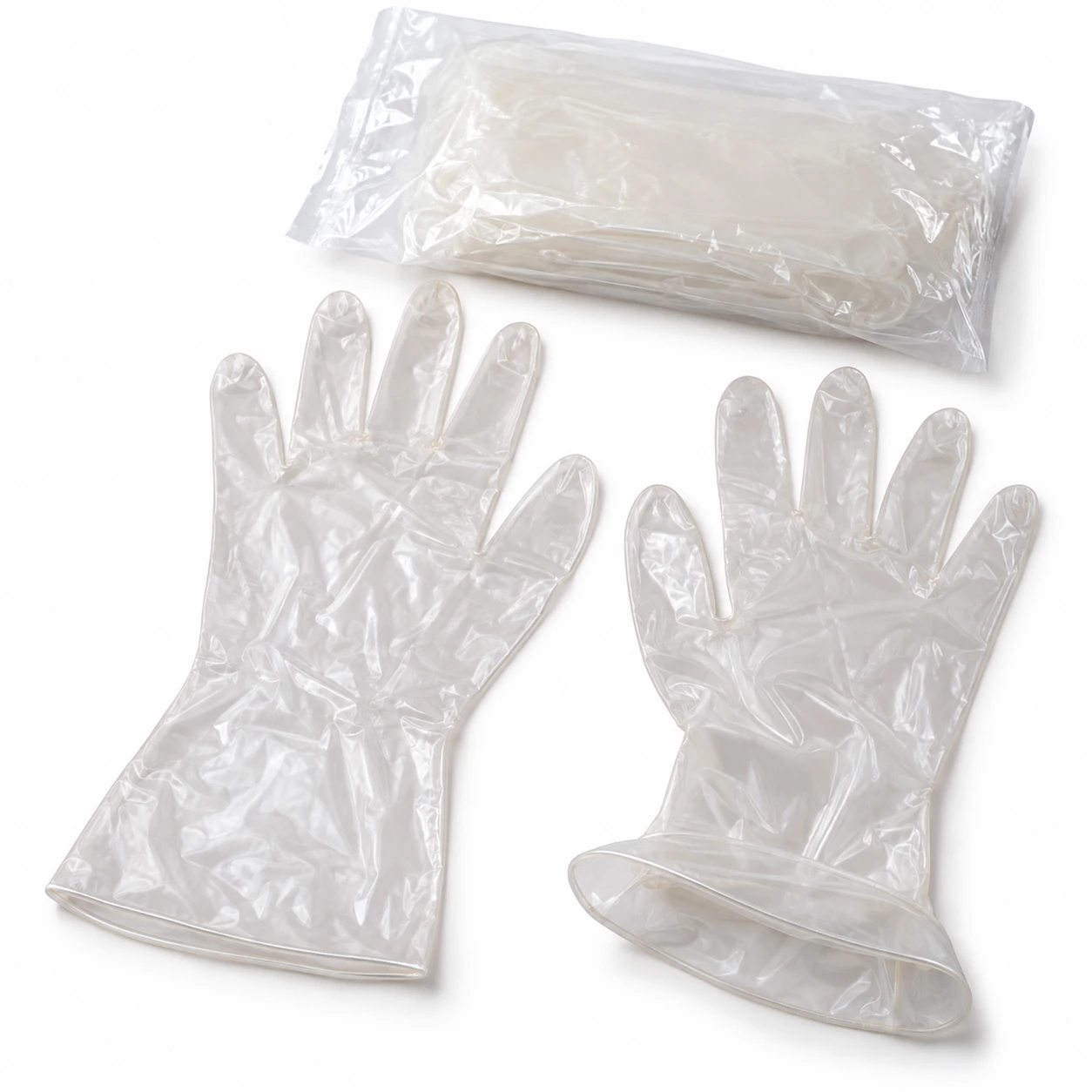
Cleanroom Gloves
vinyl cleanroom gloves
| Material | Vinyl / polyvinyl chloride (PVC); powder-free |
|---|---|
| Hand sizes | S, M, L and XL in the selected family |
| Nominal size designations | S 6.5–7.0; M 7.5–8.0; L 8.5–9.0; XL 9.5–10.0 |
| Total glove length (mm) | 300 |
| Single-wall thickness (mm) | Palm 0.09; finger 0.10; cuff 0.06 configuration |
| Shape and surface | Ambidextrous, smooth, beaded cuff |
| Supply state | Non-sterile cleanroom construction; suitability supported by product-specific data |
| Packing | Nested PE bags with size and lot identification |
Size designations are glove size labels, not millimetre dimensions. The vinyl construction must be qualified for the intended contact, cleanliness and exposure requirements.
The size mix and approved bag presentation can be customized for your light controlled-handling workflow.
Vinyl cleanroom gloves use a PVC film that offers a different fit and handling feel from nitrile or latex. A qualified construction can suit selected light tasks when its cleanliness and protective limits match the process.
Use the fit characteristics deliberately
Vinyl has a different elastic response from natural rubber and nitrile. A looser-fitting construction may be convenient for a short, light handling task, but extra film at the fingertips can interfere with fine manipulation. Check the actual component and tool rather than assuming that the same size letter gives the same feel.
Do not overstretch a tight glove to imitate another material's close fit. If the work requires repeated flexing, forceful gripping or precise fingertip feedback, compare an appropriate alternative construction.
Qualify the surface for the product
Only a specified cleanroom vinyl glove should be considered for a controlled process. A general-purpose PVC glove does not become suitable because it is transparent, powder-free or packed in a plastic bag.
Assess the relevant particle and residue information against the contact operation. The smooth surface, formulation and any additives can matter when the glove touches a prepared component or sensitive finish.
Keep the task within the selected protection limits
Light dry handling is a useful starting point for assessing this construction. Chemical, biological and mechanical exposures require evidence for the actual glove. A low purchase price should not drive substitution where the existing material was chosen for a specific protective property.
Do not infer ESD suitability from the PVC material name. Electrical behaviour must be checked for the selected glove and application, alongside contamination requirements. A favourable result for one property does not establish the others.
Compare the cost of the working task
The useful comparison includes how easily operators handle the item, how frequently gloves need replacement and whether the pack fits the transfer procedure. A cheaper glove that causes awkward manipulation or cannot meet the required evidence may not be an appropriate economy.
Keep size labels and product identity clear when replenishing bags, and replace gloves according to the approved handling procedure. For a material comparison, review cleanroom gloves; for a more elastic synthetic option, see nitrile cleanroom gloves.
The size mix and approved bag presentation can be customized for your light controlled-handling workflow.