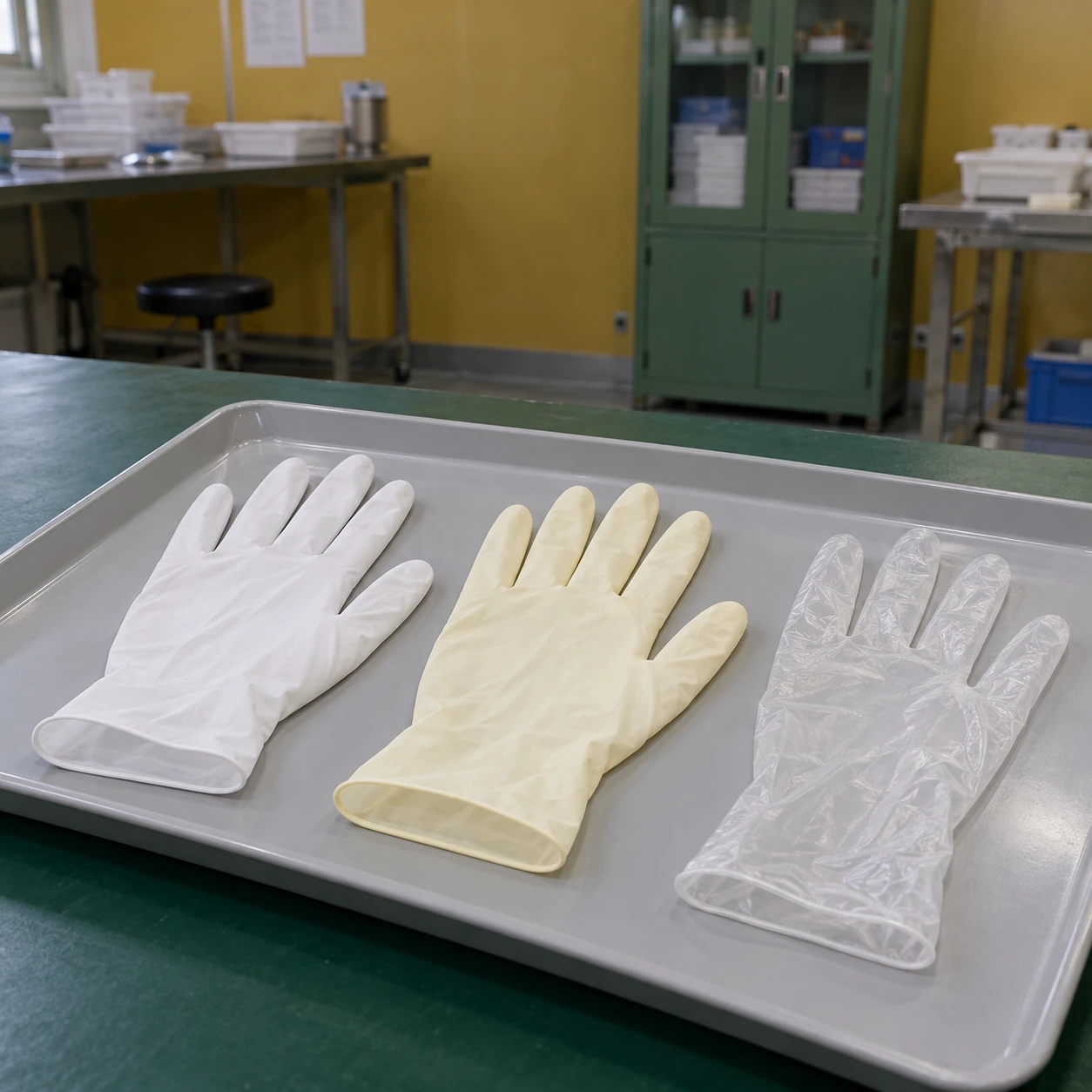
Cleanroom Gloves
cleanroom gloves
| Material options | Nitrile, natural rubber latex or vinyl/PVC |
|---|---|
| Hand-size choices | XS–XXL nitrile/latex families; S–XL vinyl families; numbered hand-specific sizes where selected |
| Total length choices (mm) | 300 or 305 for selected extended-cuff barrier gloves |
| Nominal nitrile flat palm widths (mm) | 75, 85, 95, 105, 115, 125 across the size range |
| Surface and shape | Smooth, fingertip-textured or fully textured; ambidextrous or hand-specific |
| Cleanroom requirement | Documented glove compatibility with the specified process and cleanliness level |
| Special requirements | Validated sterile presentation, ESD characteristics or layered cut protection when specified |
| Packing | Nested PE bags, pair wallets or pouches according to the selected glove |
These are selection families, not interchangeable ratings. The proposed material, dimensions, cleanliness evidence and any protective claims must be checked together.
The material selection, size assortment and packing arrangement can be customized around your process and approved workplace procedure.
Cleanroom gloves help control contamination at the point where hands meet a product, tool or working surface. Selecting them means balancing process cleanliness with the protection and dexterity required by the operator.
Begin with the contact operation
Identify what the gloved hand actually touches. A polished optical surface, an electronic assembly and a sealed container present different contamination concerns. Direct product contact may make residues or ionic extractables important, while an operator who only moves closed packs may have a different acceptance requirement.
Also identify the worker's exposure. Protection of the product does not automatically provide protection from a chemical, a sharp edge or another hazard. When both functions are required, select a glove or approved layered arrangement that addresses both.
Choose the construction that suits the task
Thin barrier gloves
Nitrile, latex and vinyl create different combinations of elasticity, feel and surface behaviour. Compare them through the actual grip and movement rather than colour or a broad “clean” label.
Sterile presentation
When aseptic handling requires sterile gloves, the validated supply state, pouch integrity and opening method become part of the choice. A clean non-sterile glove cannot be substituted solely because it has low particles.
Additional functions
ESD control and cut resistance require their own evidence. A specialist feature can affect fit, layering or cleanliness, so evaluate the complete working arrangement.
A useful comparison is more than a price per glove
| Purchasing question | Why it changes the selection |
|---|---|
| How will the pack reach the workstation? | Bag layers and opening methods must fit the transfer boundaries. |
| How precisely must the fingers move? | Fit, texture and film flexibility affect handling and repeated adjustment. |
| What makes a glove unacceptable during use? | The replacement procedure needs clear triggers such as damage or contamination. |
| What evidence must follow each delivery? | Lot identification and agreed documentation support repeat-order consistency. |
Build a small, controlled glove range
A facility often benefits from a defined selection for its different tasks rather than one glove forced into every operation. Keep enough sizes for individual wearers and distinguish packs that may look similar but have different sterility or cleanliness requirements.
Start with nitrile cleanroom gloves for general material selection, or review sterile cleanroom gloves where the process requires them. shengtongJH can coordinate a supply proposal against your task list and approved product requirements.
The material selection, size assortment and packing arrangement can be customized around your process and approved workplace procedure.