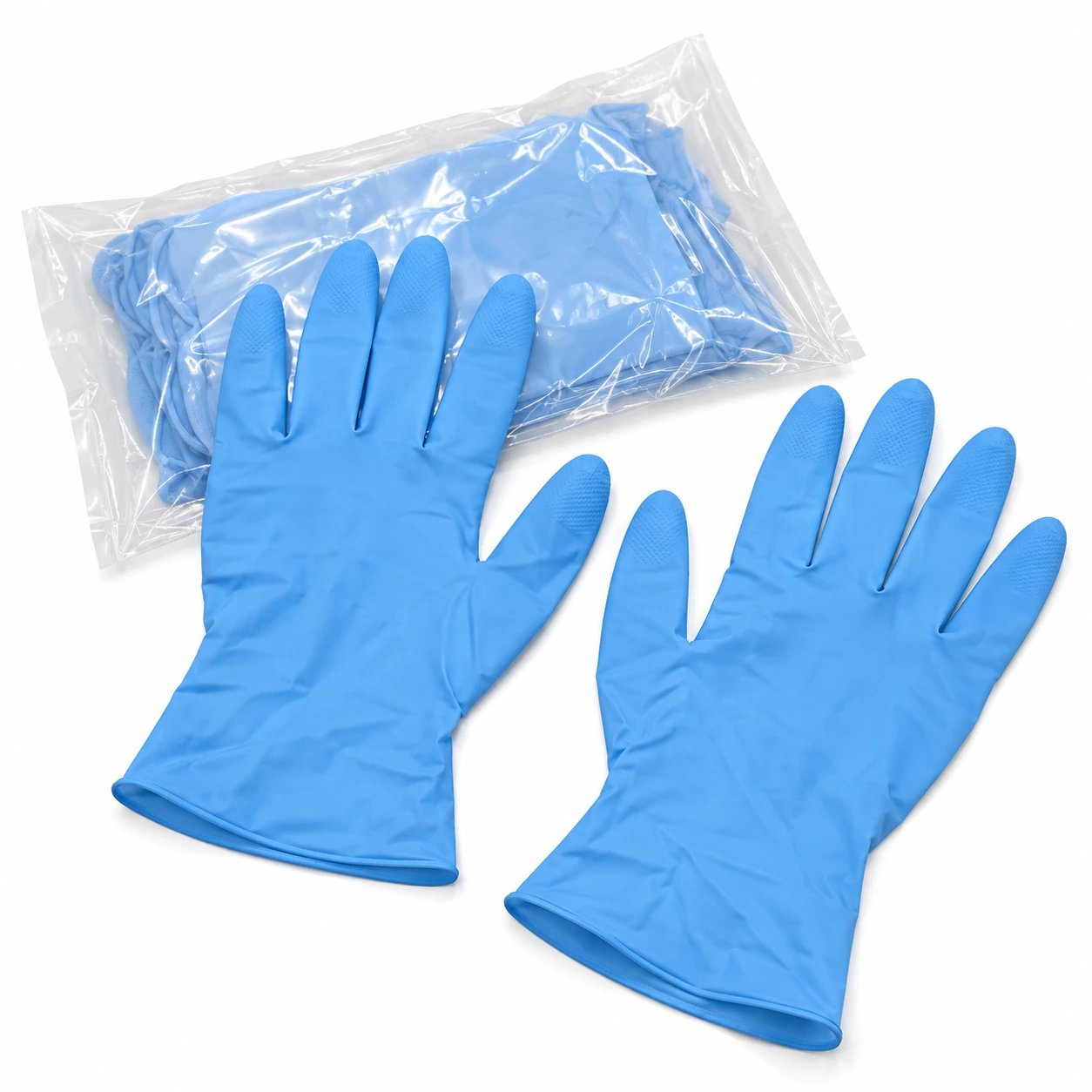
Cleanroom Gloves
nitrile cleanroom gloves
| Material | Synthetic nitrile; powder-free cleanroom construction |
|---|---|
| Hand sizes | XS, S, M, L, XL and XXL in selected families |
| Nominal flat palm width (mm) | XS 75; S 85; M 95; L 105; XL 115; XXL 125 |
| Total length (mm) | 300 or 305, according to glove family |
| Single-wall palm thickness (mm) | 0.10–0.12 or 0.13 options |
| Form and grip | Ambidextrous or hand-specific; textured fingertips or textured working surface |
| Cleanliness and sterility | Process-qualified cleanroom grade; non-sterile or separately validated sterile supply |
| Packing | Nested PE bags; individual pair presentation for selected sterile options |
Palm width is measured across the relaxed, flat glove and is not hand circumference. Dimensions, tolerances and cleanliness evidence belong to the selected glove specification.
The size assortment, cuff and packaging selection can be customized for your handling process within the selected glove family's documented specifications.
Nitrile cleanroom gloves form a flexible contact barrier between the operator and sensitive parts. Their value comes from controlled cleanliness, a reliable fit and a usable cuff interface, rather than the material name alone.
Control what reaches the product
A glove can prevent direct skin contact yet still introduce contamination from its own surface. Residual particles, soluble substances and material transferred from packaging matter when operators touch optics, small components or prepared surfaces. A cleanroom glove is selected with these contact routes in mind; an ordinary powder-free examination glove is not automatically an equivalent substitute.
Match the required cleanliness evidence to the actual process. Electronics assembly may be particularly sensitive to ionic residues or electrical behaviour, while a sterile operation introduces a separate microbiological requirement. One broad label cannot settle all of these questions.
Preserve feel without overstretching the film
A close fit helps operators pick up small parts and use simple tools without gathering loose material at the fingertips. Excessive tension across the palm, however, makes repeated gripping uncomfortable and can stress the glove during donning. A larger glove should not be used merely to obtain a longer cuff; hand width and arm coverage are separate selections.
Texture can improve handling of a component, but an aggressive surface may be undesirable against a delicate finish. Trial the intended contact operation with the selected glove and the actual sleeve before committing to a size distribution.
Chemicals require a separate decision
Nitrile is not a universal solvent barrier. Cleaning agents, mixtures and process chemicals must be checked against the actual glove's permeation and degradation information. Concentration, temperature, exposure pattern and mechanical handling affect the decision. A laboratory breakthrough result is not a guaranteed safe wearing time.
Similarly, nitrile does not by itself establish suitable ESD performance. Where static-sensitive components are exposed, choose a documented glove and assess it within the workstation's grounding arrangements.
Make replenishment consistent
Keep the approved material, size family, cuff arrangement and packing unit together in the purchasing description. A change from bagged pieces to walleted pairs affects issuing and waste handling even when the nominal glove size appears unchanged. Record the lot when required by your process and withdraw replacement gloves without contaminating the remaining stock.
For a defined cleanroom requirement, review nitrile cleanroom gloves class 100. shengtongJH coordinates the supply selection around your approved specification and the evidence available for the proposed product.
The size assortment, cuff and packaging selection can be customized for your handling process within the selected glove family's documented specifications.