Cleanroom Gloves
sterile cleanroom gloves
| Material choices | Nitrile or natural rubber latex, selected for the task and wearer |
|---|---|
| Shape and sizes | Hand-specific 6.0, 6.5, 7.0, 7.5, 8.0, 8.5, 9.0 or 10.0 in selected families |
| Total glove length (mm) | 305 in the listed hand-specific families; longer validated cuff options by separate selection |
| Single-wall palm thickness (mm) | 0.13 nitrile or 0.20 latex construction options |
| Cuff and surface | Beaded cuff; textured contact surface according to product |
| Sterile supply | Validated sterilization and lot-specific evidence for the actual supplied glove |
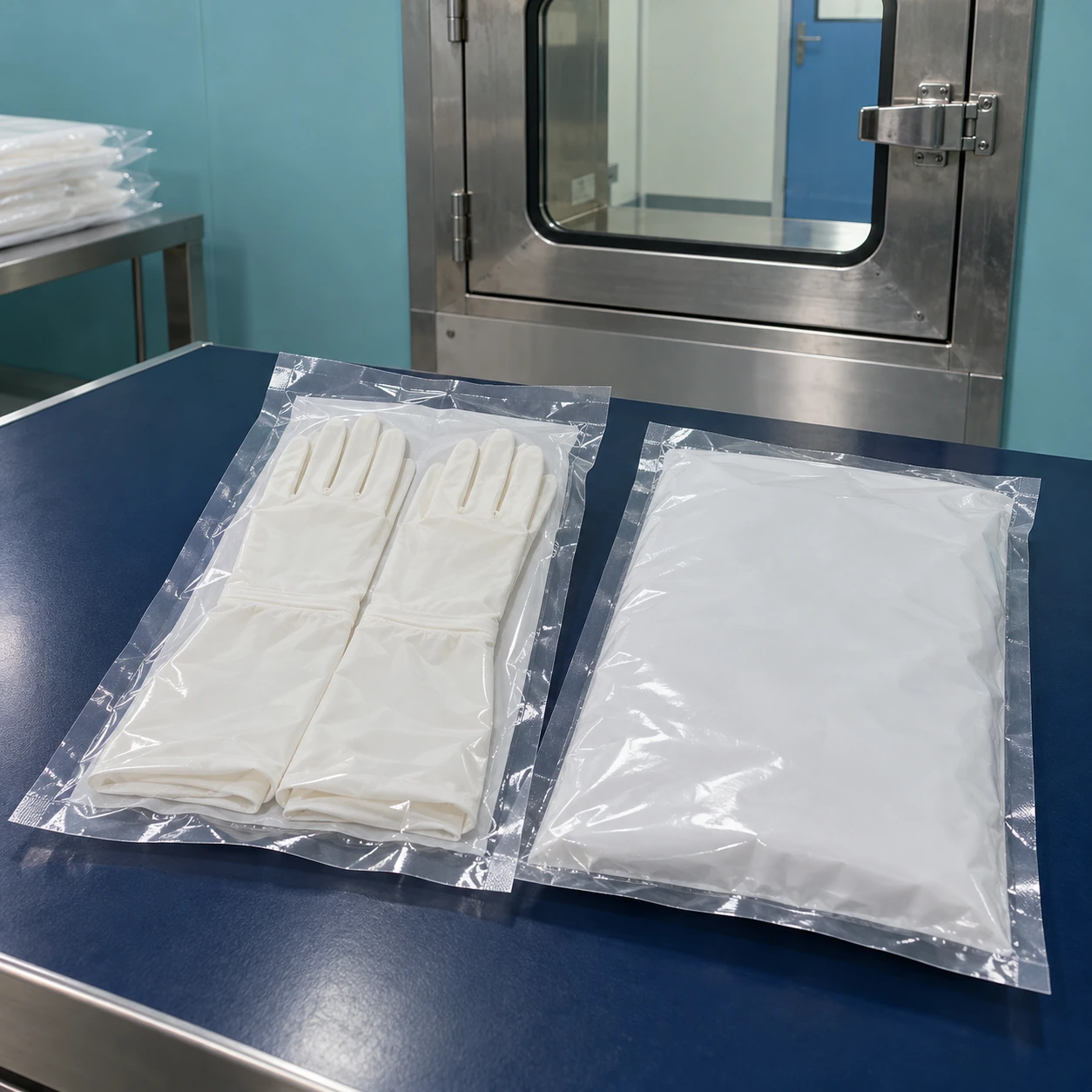
| Presentation | Paired inner wallet, sealed pouch and protective outer PE bag |
| Identification | Product, size, lot and expiry information retained through controlled issue |
Sterility, particulate cleanliness and chemical protection are separate requirements. Qualification and documentation must match the actual material, pack and supplied lot.
Material, hand-size assortment and qualified pouch presentation can be customized for your aseptic workflow while preserving the product's validated sterile supply arrangement.
Sterile cleanroom gloves combine a qualified glove construction with a validated sterile supply state. Their packaging and opening sequence matter because the glove must reach the operator without losing the condition required by the process.
Look beyond the unopened appearance
A sealed-looking pouch does not establish validated sterility. The product identity, sterilization evidence, applicable expiry and package integrity all belong to the decision. Check that the documentation covers the specific glove and packing arrangement being supplied, rather than a different item from the same manufacturer.
Sterilization also does not remove every particle or chemical residue. A sterile glove for a controlled process still needs appropriate cleanliness and material compatibility. Avoid treating a sterility claim as a replacement for those requirements.
Plan the package route to the point of use
At receipt
Keep the lot and expiry identifiable, and assess the packaging for damage under your receipt procedure. Questionable packs should not enter routine stock merely because the outer carton is intact.
Across area boundaries
Identify which packaging layer is removed at each transfer step. Choose a presentation that can be handled without bringing an uncontrolled outer surface into the critical handling zone.
At donning
The wallet, cuff fold and left/right identification need to support the approved technique. Confirm that the chosen pack can be opened and used without unnecessary contact or adjustment.
Fit the actual glove combination
Where double gloving is required, trial the complete combination. Inner and outer gloves influence friction, finger space and ease of donning. Two independently comfortable gloves do not automatically form a comfortable pair.
Include the gown cuff and the operation's reach. Excessive pulling or repeated repositioning can undermine the intended handling procedure even when the gloves began in a suitable pack.
Preserve the qualified state during work
Follow the site's approved disinfection and replacement procedure. Compatibility with an agent and exposure sequence must be established for the actual glove; repeated wiping is not permission to retain damaged or contaminated gloves indefinitely.
Do not attempt to restore an opened disposable pair to its original validated supply state by repacking it. If sterile supply is unnecessary for the process, compare non sterile cleanroom gloves under the appropriate cleanliness requirements instead.
Material, hand-size assortment and qualified pouch presentation can be customized for your aseptic workflow while preserving the product's validated sterile supply arrangement.