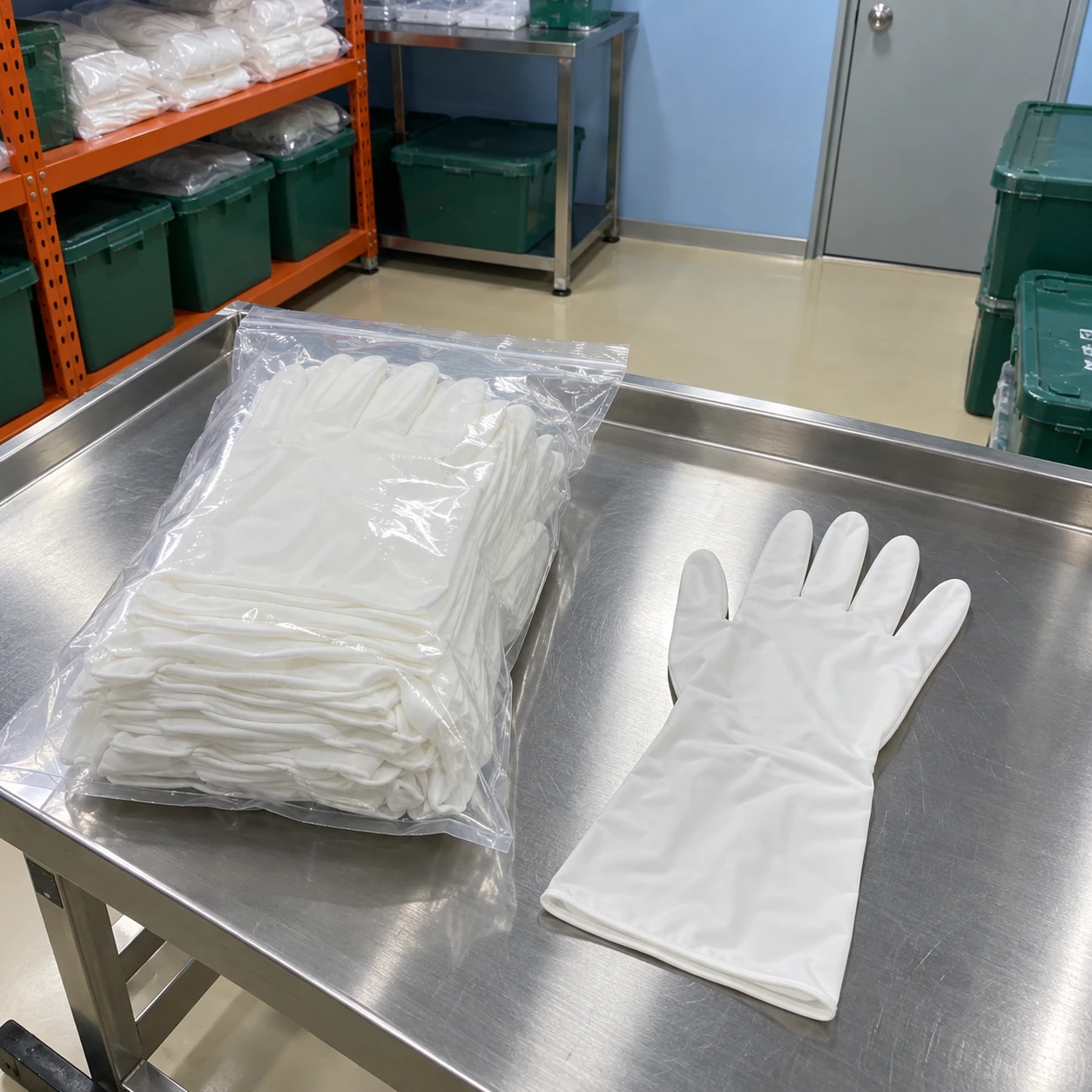
Cleanroom Gloves
non sterile cleanroom gloves
| Supply state | Non-sterile; single-use barrier gloves |
|---|---|
| Material options | Nitrile, natural rubber latex or vinyl/PVC |
| Hand-size ranges | XS–XXL in selected nitrile/latex families; S–XL vinyl |
| Total length (mm) | 300 extended-cuff options |
| Single-wall palm options (mm) | Nitrile 0.11; latex 0.18; vinyl 0.09, according to selected family |
| Surface | Smooth, textured fingertips or textured working surface |
| Cleanliness requirement | Product-specific particle/residue evidence matched to the operation |
| Packing | Nested cleanroom PE bags with size and lot identification |
Non-sterile does not mean uncontrolled cleanliness. It also does not meet a requirement for sterile gloves; select and document those supply states separately.
The material choice, size distribution and bag quantities can be customized for your non-aseptic controlled-handling procedure.
Non-sterile cleanroom gloves can provide controlled cleanliness for operations that do not require a validated sterile supply state. They still need appropriate material selection, intact packaging and careful handling at the point of issue.
Choose the supply state the operation actually needs
Many controlled assembly and inspection tasks aim to reduce direct skin contact, particles and residues without specifying sterile gloves. For these operations, a qualified non-sterile construction can be the appropriate choice. The decision should follow the process requirement rather than a general preference for the strongest-sounding label.
Where aseptic handling requires sterile gloves, this supply state is not a substitute. Low particle release and a cleanroom-compatible pack do not establish validated sterility.
Make withdrawal from a bulk bag controlled
A bag can protect the remaining gloves only if its position and opening procedure preserve the intended boundary. Avoid placing it where tools, uncontrolled sleeves or outer packaging can contact the opening. Use the pack presentation and donning method approved for the area.
Decide how partly used stock is held, who may access it and when it should be replaced. The relevant procedure depends on the environment and task; a general product page cannot supply one universal open-bag holding time.
Replace for the task, not just for visible dirt
A glove may have contacted an uncontrolled surface or an incompatible substance without appearing heavily soiled. Define replacement triggers around the actual handling sequence as well as obvious damage.
Routine wiping, where approved, does not make a disposable glove indefinitely reusable or create a validated sterile product. Keep its use within the selected glove's instructions and the site's qualified procedure.
Avoid accidental substitution
Separate sizes and material families clearly at issue. Similar-looking white gloves may differ in sterility, texture, cleanliness specification or chemical suitability. Retain the product and lot identity instead of treating all open bags as one common supply.
When a size or material is unavailable, have the proposed alternative reviewed rather than asking the operator to compensate with an unsuitable fit.
Plan the order around actual consumption
Compare pieces and pairs correctly, and choose pack quantities that suit the stations using them. Include normal replacement frequency and all required hand sizes in the purchasing plan. shengtongJH can coordinate the material and packing selection for the defined task; for validated sterile presentation, use the separate sterile cleanroom gloves page.
The material choice, size distribution and bag quantities can be customized for your non-aseptic controlled-handling procedure.