Cleanroom Doors / Windows
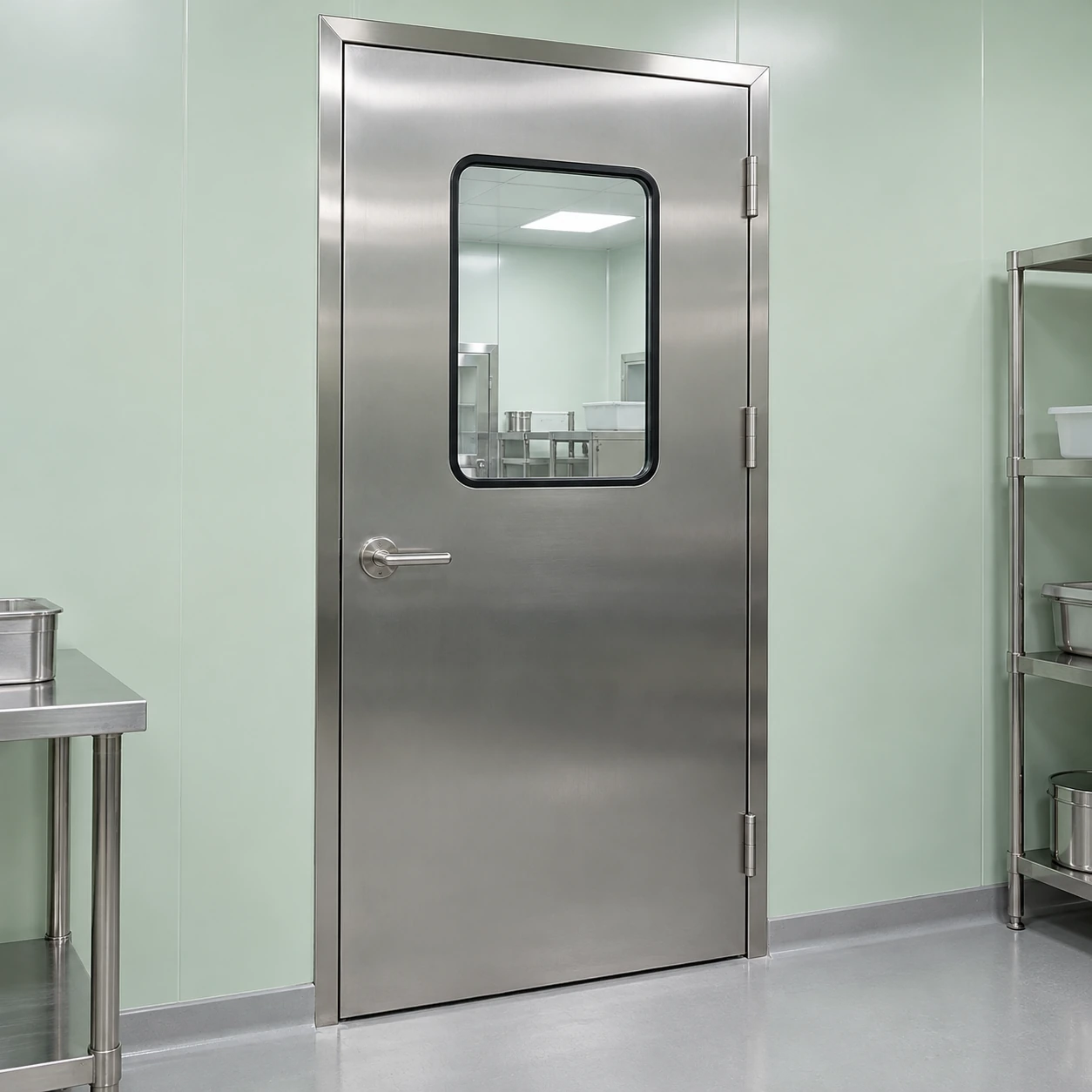
stainless steel cleanroom doors
| Construction | Stainless steel faces; stainless or compatible aluminium frame |
|---|---|
| Nominal door sizes, W × H × T (mm) | 900 × 2100 × 42; 1828 × 2100 × 42 |
| Opening | Single or double swing; handing to the room layout |
| Surface and joints | Brushed finish; sealed edges and flush glazing options |
| Seals | Replaceable perimeter gasket; bottom seal to floor detail |
| Hardware | Compatible hinges, latch, closer and lower impact protection |
Nominal sizes are separate from the clear opening. Steel grade, surface finish and seals are selected together for the actual cleaning chemicals and exposure.
Steel grade, surface finish, glazing and sealing can be configured for the application and cleaning conditions.
Stainless steel cleanroom doors provide a metal surface suited to selected hygiene-sensitive industrial environments. Their performance depends on the steel specification, fabrication, joints and cleaning regime as well as the visible finish.
Specify more than a stainless appearance
A brushed face can look similar across different materials and constructions. The leaf skins, frame, hinges and fasteners should have identifiable material specifications. Selecting the grade and finish requires the actual exposure, including cleaners and any persistent moisture at the lower edge.
Stainless steel should not be treated as immune to every chemical or surface damage. Cleaner residues, abrasive tools and contamination introduced during installation can affect the surface. The operating team needs a cleaning method appropriate to the supplied finish.
Where to look beyond the broad face
The glazing perimeter, latch cut-out, hinge attachment and bottom corner are more likely to expose construction differences than the centre of the leaf. These areas need stable, cleanable closures and sufficient reinforcement for their fittings.
Control the joint details
A folded or joined skin has to meet the frame and edge construction without leaving an open pocket. Welded details need appropriate finishing, while sealed joints need compatible material and access for renewal. The correct method depends on the selected assembly rather than a blanket preference for visible welds or extra sealant.
Flush glazing avoids a projecting ledge, but the seal around the glass remains a separate material. It should tolerate the same cleaning routine without shrinking, lifting or leaving an exposed edge. Glazing replacement also needs a defined method that preserves the surrounding finish.
Balance stiffness, weight and everyday use
Increasing metal thickness is not a complete solution to a flexible or poorly supported leaf. Core construction, bonding, edge reinforcement and hinge placement contribute to stiffness. Additional weight also changes the demand on the closer and frame support.
For a large leaf, opening effort and controlled closing need to be considered with the room pressure. The most useful doorset is one that staff can operate normally without defeating the closer or holding it open with a trolley.
Maintain the finish as part of the room
Protection during building work helps keep grinding debris and aggressive residues away from the surface. After installation, use the specified cleaner and tools, paying attention to lower corners and areas behind hardware. A scratch or dent that creates a difficult-to-clean recess should be assessed for an appropriate repair.
For a wet-duty alternative, FRP cleanroom doors use a different material system with their own chemical and repair considerations. The choice should follow the room conditions rather than assuming one surface is best everywhere.
Steel grade, surface finish, glazing and sealing can be configured for the application and cleaning conditions.