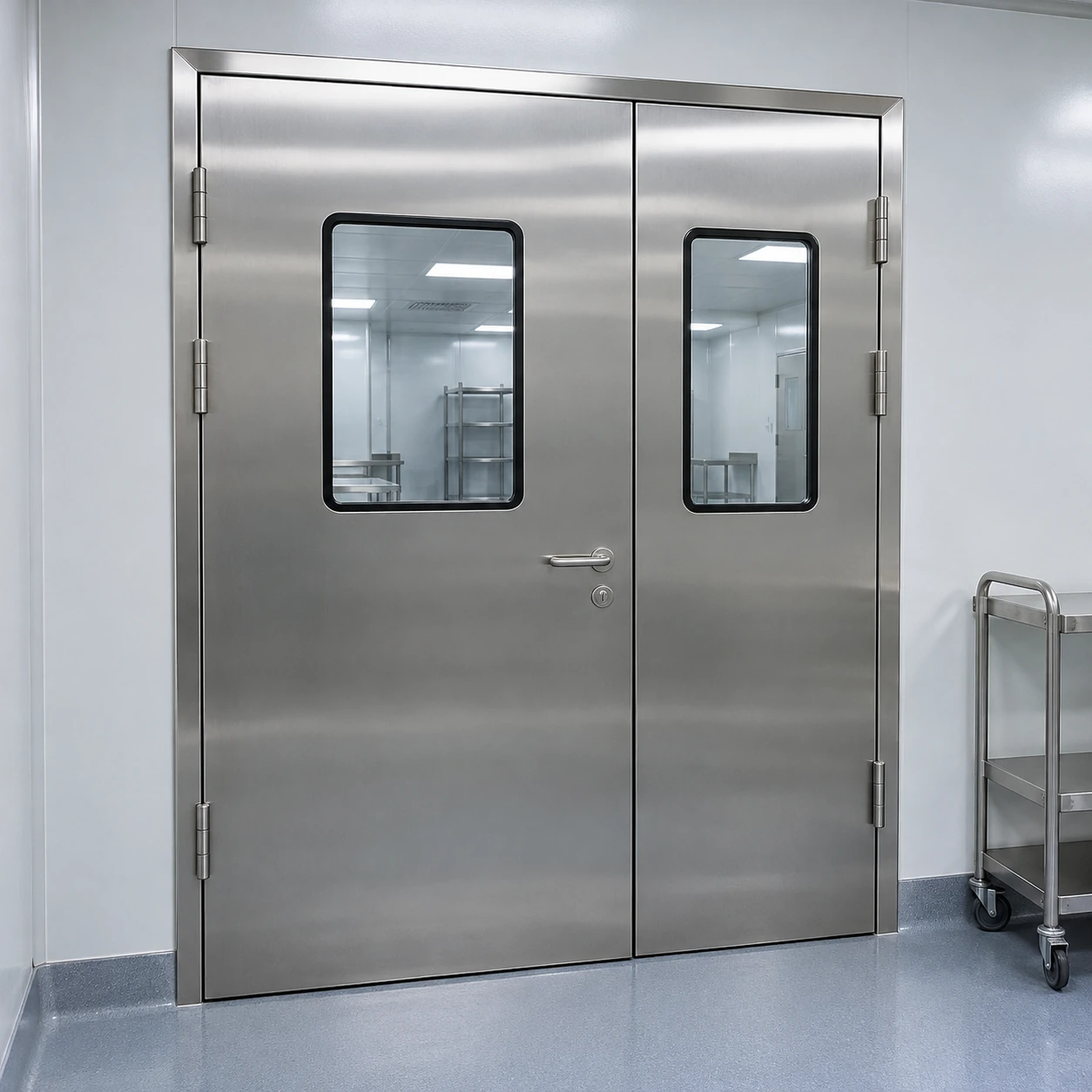
Cleanroom Doors / Windows
biopharmaceutical cleanroom doors
| Construction | Stainless steel faces; stainless or compatible aluminium frame |
|---|---|
| Nominal door sizes, W × H × T (mm) | 900 × 2100 × 42; 1828 × 2100 × 42 |
| Opening | Single or double swing; handing to the room layout |
| Surface and joints | Brushed finish; sealed edges and flush glazing options |
| Seals | Replaceable perimeter gasket; bottom seal to floor detail |
| Hardware | Compatible hinges, latch, closer and lower impact protection |
Nominal sizes are separate from the clear opening. Steel grade, surface finish and seals are selected together for the actual cleaning chemicals and exposure.
Door construction and control interfaces can be configured around the biopharmaceutical process and facility risk assessment.
Biopharmaceutical facilities combine personnel movement, equipment preparation and processes with different protection needs. The doorset must support the boundary selected for each operation rather than treating every room as the same clean area.
Product protection and containment can pull in different directions
Some operations focus on protecting exposed product from the surrounding environment. Others also need to contain biological material or process hazards. The pressure concept and transfer procedure must be established by the facility design before a door leakage or sealing requirement is selected.
A standard cleanroom door should not be described as a containment barrier solely because it has a gasket. Dedicated airtight constructions, monitored seal arrangements or particular decontamination interfaces may be needed where the process assessment requires them. Those features need evidence for the offered configuration.
Map the opening to the process
Identify what is exposed during passage: people after gowning, wrapped components, a cleaned vessel or waste leaving the area. The condition of that load determines the transfer method. Increasing door size does not make an unsuitable transfer procedure acceptable.
Equipment routes need more than a wide opening
Mobile preparation equipment may have projecting connections, handles and protective covers. The route must accommodate those features while allowing the operator to steer without contacting the frame. A removable or secondary leaf can provide occasional access, but its release and re-establishment should be part of the operating procedure.
Floor transitions can interrupt a smooth move. A raised sill may force a cart to tilt and increase the risk of contacting the doorway. Where a flush route is needed, the lower seal and floor finish should be developed together rather than corrected with an improvised ramp.
Decontamination reaches small components too
The broad metal face is only one exposed material. Glazing seals, adhesives, access-reader housings and gaskets may see the same repeated cleaning or vapour exposure. Compatibility depends on the full cycle conditions and drying process. A material description such as stainless steel is not a complete compatibility statement.
Maintenance should restore the agreed boundary. Replacing a damaged gasket with a similar-looking section can change compression and operating force. Retaining the exact seal profile and installation details helps avoid a repair that closes visually but performs differently.
Controls should communicate the room state
Door position and access availability can be linked to the facility control sequence. Users need a clear response when entry is delayed or refused. Emergency release should be coordinated with escape requirements and the procedure for returning the affected area to use.
Keep the supporting equipment distinct
A VHP pass-through chamber addresses a particular material-transfer process. It does not remove the need to plan the personnel doorway, equipment route and wall interfaces separately.
Door construction and control interfaces can be configured around the biopharmaceutical process and facility risk assessment.